
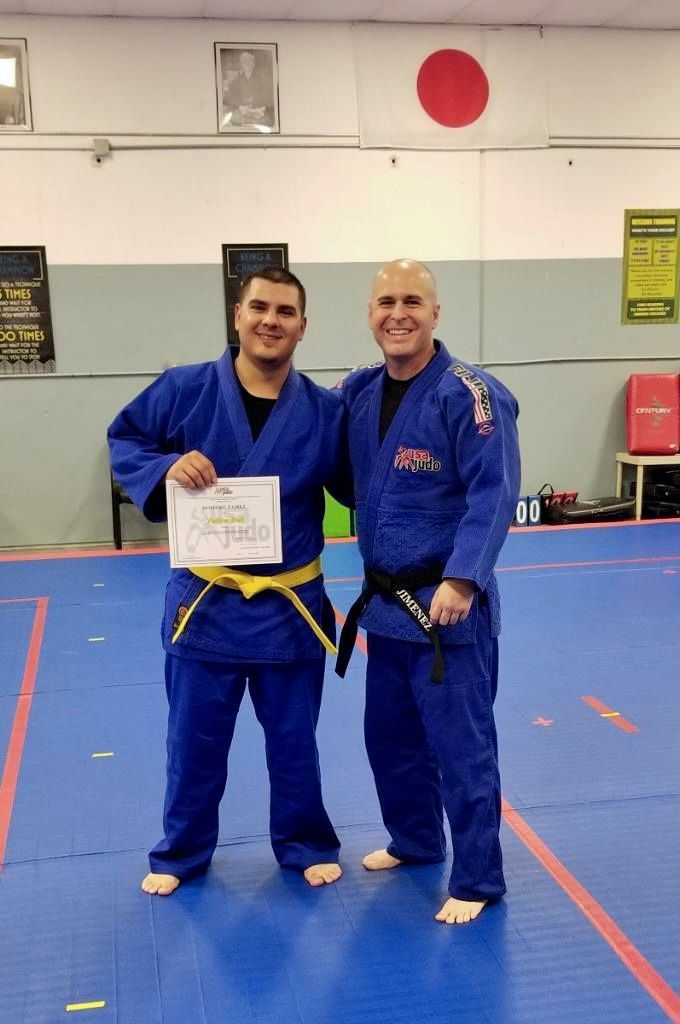
Judo turns nervous energy into calm capability, one safe throw and one small win at a time.
Confidence is a tricky thing with kids: you cannot lecture it into existence, and you cannot gift wrap it and hand it over on a tough day. In our experience, confidence grows when your child learns a skill, tries it under pressure, and realizes, I can do hard things.
That is why we love Judo for kids. It is practical, structured, and surprisingly fun once the basics click. Kids learn how to move with balance, how to fall safely, how to work with a partner, and how to stay composed even when something does not go perfectly. That kind of training shows up in school, on the playground, and at home.
If you are looking into Judo in Pasadena, you are probably not just shopping for an activity. You want your child to stand a little taller, speak up a little more, and handle mistakes without crumbling. That is exactly the kind of confidence Judo is built to develop.
What “confidence” really means for kids (and why Judo builds it)
Confidence is not loudness. It is not being fearless. For kids, real confidence usually looks like steadiness: trying anyway, speaking clearly, and bouncing back after a setback. We focus on building that steadiness through a simple loop of effort and progress.
Judo fits this beautifully because it is measurable. Your child learns a stance, a grip, a foot placement, a safe fall, and then puts it together with a partner. Each class has clear goals, and those goals stack. When kids see their own progress, they start trusting themselves.
One of the quiet superpowers of Judo is that it teaches control, not chaos. Kids learn that technique beats wild strength, and that staying calm helps them think. That lesson is confidence in real time: your child learns to regulate, decide, and act.
The hidden confidence booster: learning how to fall safely
A big reason kids lose confidence is fear of embarrassment: fear of getting knocked down, getting it wrong, or looking silly in front of others. Judo addresses that head-on in the safest way possible by teaching breakfalls early.
When your child learns to fall safely, “falling” stops feeling like failure. It becomes feedback. They get up, adjust, and try again. That changes how kids interpret challenge, not just in training, but in everyday life.
We see it in small moments: a kid who used to freeze now resets and tries again. A kid who used to blame others starts asking, “What can I do differently next time?” Those are confidence skills, even if nobody calls them that.
Why Judo feels different from many kids activities
Some activities build confidence by cheering; Judo builds it by proving. The mat is honest. If your base is off, you wobble. If your timing is right, the technique works. Kids learn that results come from practice, not luck.
Judo also has a built-in culture of respect. Bowing, listening, partnering up, and following instructions are not “extra,” they are part of the art. Kids who struggle with impulse control often benefit from the clear structure, because it gives them something solid to lean on.
And yes, it is physical, but it is not just about being tough. We teach kids to be safe training partners. That responsibility is a confidence-builder too: your child learns, I can be strong and careful at the same time.
How our kids classes build confidence step by step
We do not throw kids into advanced techniques and hope for the best. We teach progressively, and that progression is what makes confidence stick. A child who knows what to do next feels safer, and a child who feels safer tries more.
Here is what that progression usually looks like over time:
1. Fundamentals first: posture, movement, grips, and basic mat awareness
2. Safety skills: breakfalls and controlled ways to go to the ground
3. Core techniques: simple throws and pins that emphasize timing and balance
4. Partner practice: cooperative drilling to build accuracy and comfort
5. Light resistance: learning to apply skills when a partner is not “letting you win”
6. Goal setting: stripes, rank milestones, and personal improvement targets
Kids do not need to be “natural athletes” to thrive here. Judo rewards consistency. The confidence you want for your child is usually on the other side of repetition, not talent.
Confidence without aggression: the Judo mindset we teach
A common worry we hear from parents is, “Will this make my kid more aggressive?” We get it. Our goal is the opposite: we teach kids to stay calm and use skill, not anger.
Judo is a grappling art built around balance, leverage, and control. That naturally supports a healthier mindset because kids learn to manage distance, grips, and movement rather than “hit harder.” The mat becomes a place to practice emotional control with real consequences: if you panic, you lose position.
Over time, kids learn to breathe, think, and act. That is what confidence looks like under pressure. It is not swagger. It is composure.
Social confidence: partners, respect, and being part of a team
Some kids need physical confidence; others need social confidence. Training helps with both because kids work with partners every class. They learn how to introduce themselves, make eye contact, and communicate clearly.
We also see shy kids come alive when they realize they belong on the mat. Judo gives them a role. They are not “the quiet kid” or “the awkward kid,” they are a student learning real skills alongside everyone else.
A few social skills that grow naturally in training include:
- Taking turns and cooperating during drills
- Speaking up to ask questions or request a different partner pace
- Encouraging teammates while still focusing on your own goals
- Handling wins and losses without melting down or bragging
- Listening to coaching and applying it without taking it personally
Those are life skills, and they transfer fast when kids feel them in their body, not just hear about them.
What parents usually notice first (and what shows up later)
In the first few weeks, parents often notice posture changes: shoulders back, eyes up, less fidgeting. You might also see better sleep, because physical training plus structured focus can do that.
A little later, the deeper confidence shows up. Kids start handling correction better. Instead of “I cannot do it,” you hear “I am working on it.” Instead of quitting when it gets hard, they ask for another try. That shift is huge.
Judo also gives kids a safe place to fail. That sounds odd, but it matters. When your child can fail in a supportive environment and still be respected, confidence becomes durable.
Judo in Pasadena: what to look for in a healthy kids program
When families come in asking about Judo in Pasadena, we guide the conversation toward outcomes and environment, not hype. A strong kids program should be structured, safety-first, and encouraging without being chaotic.
We keep training age-appropriate, with clear expectations and steady coaching. Kids do best when class has a rhythm: warm-up, skill work, partner drills, and a controlled challenge. That rhythm reduces anxiety and helps kids settle in, especially if they are new to sports or group settings.
Most importantly, kids should leave feeling proud, not overwhelmed. Challenged is good. Lost is not. Our job is to keep the difficulty level moving forward while still letting kids collect wins along the way.
How confidence carries over into school, sports, and daily life
Judo confidence is not abstract. It is practical and visible. A child who practices grips and footwork understands what preparation feels like. A child who practices breakfalls understands what recovery feels like.
That carries into school when a tough assignment shows up. It carries into sports when a mistake happens. It carries into friendships when your child needs to say “No” without getting pulled into drama.
We also like that Judo rewards focus. Kids learn to watch closely, copy details, and remember sequences. When they see that focus leads to success on the mat, they start believing focus can help them elsewhere too.
A note for families with multiple kids (and different personalities)
Not every child learns the same way. Some kids want to move nonstop. Some need time to warm up. Some want to be perfect before they try, which is exhausting for them and for you.
We build classes so different personalities can succeed. We give clear cues, we repeat key points, and we coach kids where they are. The goal is not to create tiny robots; it is to build capable, respectful kids who trust themselves.
If your child is hesitant at first, that is normal. The first class can feel new and a little awkward. Then something clicks: they learn one breakfall, one throw entry, one pin escape, and you can almost see the confidence land.
Adult Judo in Pasadena: confidence is not just for kids
While this article is focused on kids, we also hear from parents who want the same kind of growth for themselves. Adult Judo in Pasadena is a powerful way to build confidence because it teaches you how to stay calm in close contact, solve problems under pressure, and keep showing up even when you feel like a beginner again.
Adults often tell us they like how technical Judo is. You can train hard without relying on brute force, and you can measure progress in real skills: better balance, cleaner entries, smarter movement, and more control in live rounds.
If you have ever wanted to do something that feels challenging and real, training alongside a supportive group makes a difference. And frankly, kids notice when parents practice courage too.
Take the Next Step
If you want your child to build confidence in a way that is earned, repeatable, and grounded in real skill, we would love to show you how our Judo classes work. The right program should feel safe, structured, and encouraging, with just enough challenge to keep your child growing week after week.
That is exactly what we focus on at Champion Martial Arts & Fitness: helping kids develop steady confidence on the mat that carries into daily life, while also welcoming families who are curious about training for themselves.
Develop strong fundamentals and elevate your training by joining a Brazilian Judo class at Champion Martial Arts & Fitness.