
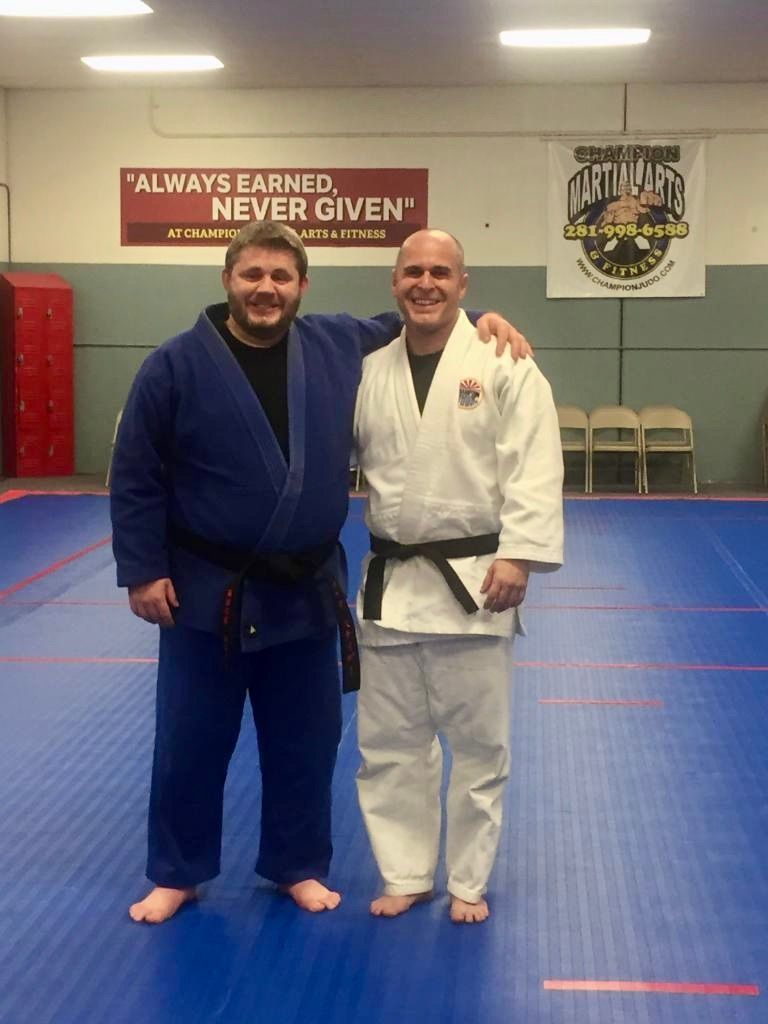
Judo is one of the few workouts that trains your body, your brain, and your confidence at the same time.
Judo has a way of surprising people. Many newcomers arrive thinking it is only throws and takedowns, then realize it is also balance training, breath control, problem-solving, and a steady kind of confidence you can actually feel when you walk back out to the parking lot. Around Pasadena, where schedules are busy and stress can stack up fast, that mix of physical training and mental reset matters.
In our gym, we see Judo work for a wide range of goals. Some students want a better workout that does not feel like grinding through another hour of machines. Some want practical skills and more control in close-range situations. Others want structure, community, and a sport that keeps them learning for years, not weeks. The health benefits are real, but what makes them stick is the way training stays engaging.
If you are curious about what Judo can do for your body and your mindset, this guide breaks down the biggest benefits we see, how they happen, and what you can expect when you start training consistently in Pasadena.
Why Judo is a full-body fitness system, not just a sport
Judo uses your entire body in connected, athletic movement. When you practice throws, you are not only using strength, you are learning timing, posture, footwork, and how to generate power through your hips and core. That coordination turns into real fitness quickly because every technique asks your body to move as a unit.
Unlike many workouts where you repeat one motion until you are bored, Judo changes constantly. Each round feels a little different because your partner moves differently, your balance shifts, and your job is to adapt without tensing up. That combination builds functional strength and conditioning without needing to chase novelty.
Over time, students often notice changes that go beyond a smaller waistline or stronger arms. You move with better control, you recover faster, and you start to understand how your body works under effort, which is a health benefit by itself.
Cardiovascular health and endurance that sneaks up on you
A typical Judo session includes technical practice, drilling, and controlled sparring. Even when you are learning slowly, your heart rate climbs because you are using big muscle groups and changing levels, gripping, stepping, turning, and resetting again and again. The work is interval-based by nature, which is excellent for cardiovascular conditioning.
You will also learn how to breathe under pressure. That might sound small, but it is huge. People who hold their breath in stressful moments tire out quickly and feel overwhelmed. As you train, you begin to time your breathing with movement and effort. Your stamina improves, and so does your ability to stay calm when you are working hard.
If you want a workout that feels athletic, practical, and honestly a little more fun than counting reps, Judo is one of the most effective options we teach.
Strength, power, and a more resilient body
Judo builds strength in a way that is hard to fake. Gripping alone develops forearm and hand strength, but it does not stop there. Throws demand leg drive, hip engagement, and core stability. Ground control requires pressure, posture, and steady force, not frantic pushing.
We also like the kind of strength that comes from learning to transfer power. You are not just lifting something heavy, you are aligning your body so your technique does the work. That reduces wasted energy and helps you train longer with less strain.
A consistent routine supports:
- Stronger legs and hips for driving movement and staying stable
- A more capable core that resists twisting and collapsing under pressure
- Better upper-back posture from gripping and pulling mechanics
- Improved joint support from balanced muscular development
- Useful strength that carries into daily life, not just the gym
That list is not marketing language, it is what we see in people who train steadily and do not skip the fundamentals.
Balance, coordination, and fewer “clumsy” moments
One of the most underrated health benefits of Judo is what it does for balance. Every throw starts with controlling your base, breaking your partner’s balance, and keeping your own posture intact. You learn how to place your feet, how to turn without wobbling, and how to recover when you get bumped off-line.
For adults, that can translate into fewer little injuries caused by missteps or awkward twisting. For teens and kids, it often shows up as better body awareness, improved athleticism in other sports, and more confidence moving through space.
Coordination improves because Judo asks your hands, feet, hips, and eyes to work together. You are reading movement, responding in real time, and building a better connection between intention and action.
Mobility and flexibility without “stretching for stretching’s sake”
Judo naturally encourages mobility because techniques require you to move through varied ranges of motion. Turning in for throws, lowering your center of gravity, and shifting angles on the ground all ask for flexible hips, ankles, shoulders, and spine. Warmups and drills support that, but the biggest gains often come from simply practicing movement with purpose.
We also emphasize safe technique and progressive intensity. Mobility is helpful, but it should not come from forcing joints. It should come from repeated, well-coached movement that teaches your body it is safe to move well.
Many students notice their hips loosen up, their posture improves, and everyday stiffness eases. It is not magic. It is repetition, consistency, and the fact that Judo gives your mobility a job to do.
Mental health benefits: stress relief, resilience, and better mood
Judo is physical, but it is also a mental reset. When you are learning a throw or working to escape a hold, your attention narrows to what matters right now. That focus can be a relief if your mind is usually juggling work, family, and the never-ending to-do list.
Research on judo training has shown improvements in psychological resilience over relatively short training periods, and we see a practical version of that in class. Students learn to stay composed, try again after a mistake, and handle discomfort without panicking. Over time, that tends to spill into daily life in a good way.
Training also supports mood. Exercise helps, of course, but there is something particular about a structured martial arts environment. You show up, you work with a partner, you solve problems, you learn, and you leave feeling like you did something real.
Brain benefits: focus, reaction time, and executive function
Judo is often called “physical chess,” and that description is not far off. You are making decisions quickly while managing balance, grips, timing, and risk. That kind of training challenges executive function skills like attention control, impulse management, and planning.
Studies have linked judo practice with improvements in selective attention and faster reaction times compared to non-practitioners, and you can feel the difference as you progress. Beginners often react late because everything is new. With practice, you start reading cues earlier. You get calmer, your choices get cleaner, and you stop wasting energy on panic reactions.
For students who want to feel sharper and more present, Judo can be a surprisingly effective tool. It is not a workbook, but it does train your brain to stay organized under pressure.
Confidence built on ability, not hype
Confidence can be a tricky word. We are not talking about fake bravado. We mean the quiet kind that comes from knowing you can learn hard things, work with resistance, and handle yourself in close contact without freezing.
Judo gives you repeated proof. You learn how to fall safely. You learn how to control someone without needing to be the biggest person in the room. You learn that effort matters, but technique matters too. That builds self-trust, and it tends to show up outside the gym as better posture, better eye contact, and less hesitation in stressful moments.
If you have ever wanted a confidence boost that is earned, not talked about, this is it.
Community and social health: training partners who help you grow
Health is not only physical. Social connection matters, and martial arts training creates a unique kind of community because you need partners to improve. In a good Judo room, training partners challenge you while still keeping you safe. You learn to communicate, to respect boundaries, and to cooperate even when the training is intense.
That environment can be especially helpful for people who feel isolated or who want a healthier routine that includes other humans, not just earbuds and a treadmill. Students often build friendships naturally because you see the same faces, you struggle through the same learning curve, and you celebrate small wins together.
For many of our members, this becomes one of the biggest reasons they keep showing up.
What to expect in our Judo classes in Pasadena
Starting anything new can feel awkward, and Judo is no exception. The good news is that awkward is normal, and we plan for it. Our classes are structured so you learn fundamentals first, then build complexity at a pace that makes sense.
Here is a simple progression most beginners experience:
1. You learn stance, movement, grips, and how to fall safely before intensity increases.
2. You drill core techniques with a partner so your body learns the patterns.
3. You practice controlled rounds where you apply skills without chaos.
4. You build conditioning and confidence as the basics become more automatic.
5. You continue leveling up with new combinations, strategy, and sharper timing.
If you are worried about being “behind,” you do not need to be. We coach the basics carefully, because basics are what keep you safe and make Judo work.
Training safely: how we reduce injury risk and build longevity
Any contact sport has risks, and we take that seriously. Our approach is to build a strong foundation before pushing intensity. That starts with learning breakfalls and body positioning, then adding resistance gradually as you gain control.
We also match partners thoughtfully. Size and experience matter, but so does attitude. Safe training requires good communication and respect for your partner’s learning process. When students train with care, Judo becomes a long-term practice that supports health instead of beating you up.
If you have old injuries or mobility limitations, we can usually modify drills and choose training goals that fit your body. The key is telling us early, so we can coach you properly.
How Judo fits different goals in Pasadena lifestyles
Some people want weight loss, some want strength, and some want a hobby that does not feel like a chore. Judo can support all of that, but your results depend on consistency and a realistic plan.
If your schedule is tight, we recommend committing to a sustainable rhythm. Two classes a week can create noticeable changes in fitness, movement, and confidence. If you can train more often, progress accelerates, but the foundation is still the same: show up, practice the fundamentals, and stay patient when learning feels slow.
Our memberships are designed to support ongoing training, not a short crash program. Judo works best when it becomes part of your weekly routine, like brushing your teeth for your nervous system.
Take the Next Step
If you want a training method that improves fitness, focus, and real-world body control, Judo delivers in a way few activities can match. At Champion Martial Arts & Fitness, we teach Judo with an emphasis on fundamentals, safety, and steady progress, so you can train hard without feeling thrown into the deep end on day one.
Whether your goal is better conditioning, stress relief, or learning a martial art that stays interesting for years, we would love to help you get started with Judo classes in Pasadena and build a routine that fits your life at Champion Martial Arts & Fitness.
Strengthen both your body and mind through consistent Brazilian Judo training at Champion Martial Arts & Fitness.