
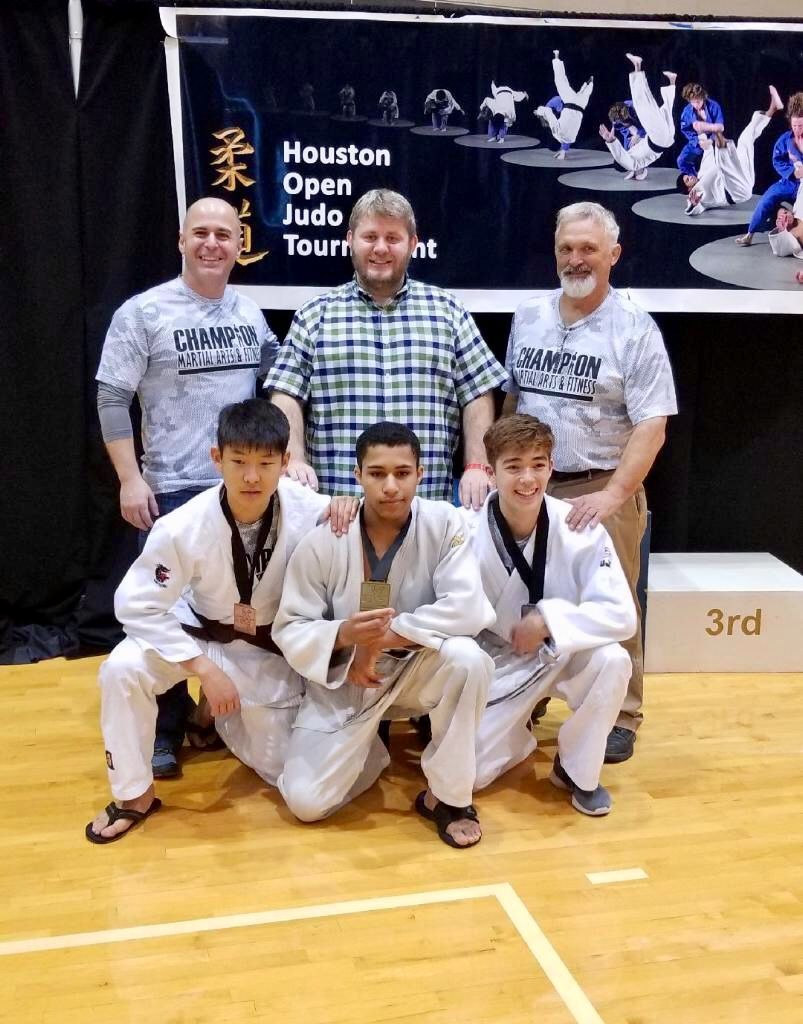
Judo turns attention, balance, and self-control into real skills you can use at school, work, and home.
If you are looking for a martial art that trains your body and your mind at the same time, Judo is hard to beat. In our Pasadena gym, we see students walk in with scattered attention, nervous energy, or everyday stress and gradually trade that for steadier focus and calmer decision-making. It is not magic. It is repetition, structure, and a training environment that asks you to stay present.
Judo is also practical for real life because it teaches timing, posture, balance, and how to respond under pressure without panic. You are not just learning moves. You are learning how to think while something is happening, which is exactly what focus and discipline really are.
Parents often ask us if this is just for kids, and adults ask us if it is too late to start. Our answer is the same: focus and discipline are trainable at any age, and the mat is a surprisingly good classroom for both.
Why Judo builds focus differently than many sports
In many activities, you can drift mentally and still “get through it.” On the mat, drifting usually means you lose your balance, miss an opening, or react a half-second late. That immediate feedback is one reason Judo sharpens selective attention so well. Research has even shown that people with judo experience demonstrate stronger neuroelectrical activity during attention-demanding tasks, along with quicker reaction times compared to non-practitioners. In simple terms, practice changes how you pay attention.
We build focus in layers. Early on, it starts with learning stances, footwork, and safe falling. Later, it becomes reading an opponent’s posture, anticipating movement, and staying calm through transitions. The “focus” you build is not just staring harder. It is noticing more, faster, while staying relaxed enough to act.
The hidden mindfulness inside every round
A lot of people think mindfulness means sitting still. On the mat, mindfulness means feeling your weight distribution, hearing your breathing, noticing grips, and staying in the moment even when your heart rate climbs. Because Judo demands full presence, you end up practicing attention control without having to label it as attention control.
When we coach you through a drill, we are constantly bringing you back to what matters right now: where your feet are, how your hips are aligned, what your hands are doing. Over time, that habit carries into everyday life. You start finishing tasks instead of bouncing between them. You start noticing when your emotions are pulling you off course.
Discipline in Judo is not punishment, it is a system
Discipline gets misunderstood. People picture harsh rules or someone barking orders. Our experience is that real discipline feels more like a reliable routine that makes progress possible. You show up, you bow in, you train with respect, and you keep going even when you feel awkward at first. That is discipline, built the honest way.
A 6-week training regimen in judo has been associated with strong improvements in psychological resilience, with meaningful positive impact on initiating self-control. That matches what we see. Students start making better choices faster, not because someone forced it, but because the practice teaches cause and effect. If you rush technique, it falls apart. If you breathe and execute step by step, it works.
What discipline looks like on the mat
Discipline shows up in small, repeatable behaviors that are easy to recognize:
• You take feedback without taking it personally, then try again with one adjustment.
• You learn to pause before reacting, especially when you feel off-balance or surprised.
• You train safely with partners by controlling intensity and respecting taps and boundaries.
• You accept slow progress on purpose, because strong basics beat sloppy speed.
• You finish rounds tired but composed, which is a skill most people rarely practice.
Those habits sound simple, but once they become normal, your days start looking different. Homework gets done. Work projects get finished. Arguments cool down faster. That is the quiet power of disciplined training.
Executive function: the brain skills Judo trains on repeat
Executive functions are the mental tools behind planning, impulse control, working memory, and flexible thinking. Judo improves these skills because it constantly asks you to make decisions under changing conditions. You are not following a choreographed routine. You are solving a moving problem.
We see this clearly with newer students. In the beginning, it is common to freeze when things speed up. With consistent practice, freezing turns into choosing. You begin to recognize patterns, select an option, and commit to it. That is executive function in action.
Impulse control is especially important. Judo rewards patience. If you force a throw at the wrong moment, you often get countered. So you learn to wait, create an opening, and then move. That is a physical lesson with a mental payoff, and it tends to show up outside the gym too, especially in stressful situations.
How Judo supports kids and teens in school and at home
When parents look for Martial Arts in Pasadena, they are usually balancing a few goals: better listening, more confidence, healthier activity, and less screen time. We respect that. We also know kids are not robots. Some days they are energetic. Some days they are overwhelmed. Judo gives them a consistent structure that still lets them move and express themselves.
Research on youth training shows judo improves motor development across strength, endurance, speed, coordination, flexibility, balance, and posture compared with control groups. Longer programs of several years show the biggest differences, but even shorter training periods of a few months can help, especially in muscular endurance. For a growing body, those fundamentals matter.
Focus improvements you may notice first
Families often tell us the earliest changes are not flashy. They are practical:
1. Your child starts following multi-step instructions with less repetition.
2. Teachers notice better waiting turns and fewer impulsive blurts.
3. Homework time becomes more predictable, even if it is not perfect yet.
4. Your child handles small frustrations with less meltdown energy.
5. Bedtime can get easier because the body has actually worked that day.
We never promise overnight transformation, but we do see consistent training create consistent behavior.
Adults: stress management, clarity, and a better kind of workout
Adults come to us for a lot of reasons. Some want fitness that feels alive, not boring. Some want a challenge that is mental as well as physical. Some just want an hour where the phone is not in their hand. Judo fits all of that.
When you train, you are forced to be present. Stress has fewer places to hide because your attention is busy with grips, balance, and breathing. That is one reason many people report feeling mentally “lighter” after class, even when the workout is tough. Judo also teaches you how to stay composed when you are uncomfortable, and that skill transfers directly into work pressure, family responsibilities, and everyday chaos.
There is also a community benefit that is easy to overlook. Judo is partner-based, respectful, and structured. That makes it a strong antidote to isolation. With mental health concerns rising across all age groups, having a place where you are known, supported, and challenged in a healthy way matters more than people like to admit.
Seniors and older adults: balance, coordination, and confidence
Judo is often misunderstood as only intense throwing. In reality, we scale training to the person in front of us. For older adults, the benefits can be huge: better balance, more coordinated movement, and cognitive engagement through learning new patterns.
Even learning safe falling principles and controlled movement can build confidence. Fear of falling can make people stiff and cautious, which ironically increases risk. Training helps you move with awareness and steadiness. We keep safety at the center, and we progress at the pace that makes sense for your body.
What a typical class feels like in our Pasadena gym
People want to know what they are walking into, and we get it. Our classes are structured, but not cold. You will sweat, you will think, and you will probably laugh at yourself once or twice in the beginning because everyone starts somewhere.
Most classes follow a rhythm: warm-up and movement prep, technique instruction, drilling with a partner, then controlled practice that matches skill level. Throughout, we coach posture, breathing, and decision-making. Those details are where focus is built.
If you are new, we spend time on fundamentals like breakfalls, movement, and how to train with a partner safely. If you have experience, we refine timing and efficiency. Either way, you leave class feeling like you practiced something real.
How quickly will you notice changes in focus and discipline
This is one of the most common questions we hear about Judo in Pasadena. The honest answer is that it depends on consistency. Many students feel a difference in mood and stress after the first few classes because training is so immersive. Behavioral changes, like better follow-through and calmer reactions, usually become noticeable after several weeks of regular attendance.
Research supporting judo shows measurable improvements in resilience in as little as six weeks, and broader developmental improvements with longer commitments. We like to set expectations that are both motivating and realistic: you will get benefits quickly, and the deeper benefits build over months and years.
Consistency is the real multiplier. One class can inspire you. A steady schedule changes you.
Judo as a long-term practice, not a quick fix
Some activities are designed for short bursts. Judo is more like a craft. The longer you train, the more you refine your decision-making, your movement efficiency, and your emotional control under pressure. That is why multi-year training shows especially strong results in youth development research, and why adults often describe Judo as something that improves their whole life, not just their fitness.
Our goal is to help you build a sustainable practice. We want you training in a way that fits your schedule, supports your body, and keeps you progressing without burning out.
Ready to Begin
Building focus and discipline is not about wanting it harder. It is about practicing the right habits in a setting that makes those habits stick. That is what we aim for every day, whether you are a brand-new beginner or returning with experience.
When you train at Champion Martial Arts & Fitness, you are not just joining a workout. You are stepping into a structured practice that strengthens attention, self-control, and resilience through real Judo training, right here in Pasadena.
Ready to train? Join a Brazilian Judo class at Champion Martial Arts & Fitness today.