
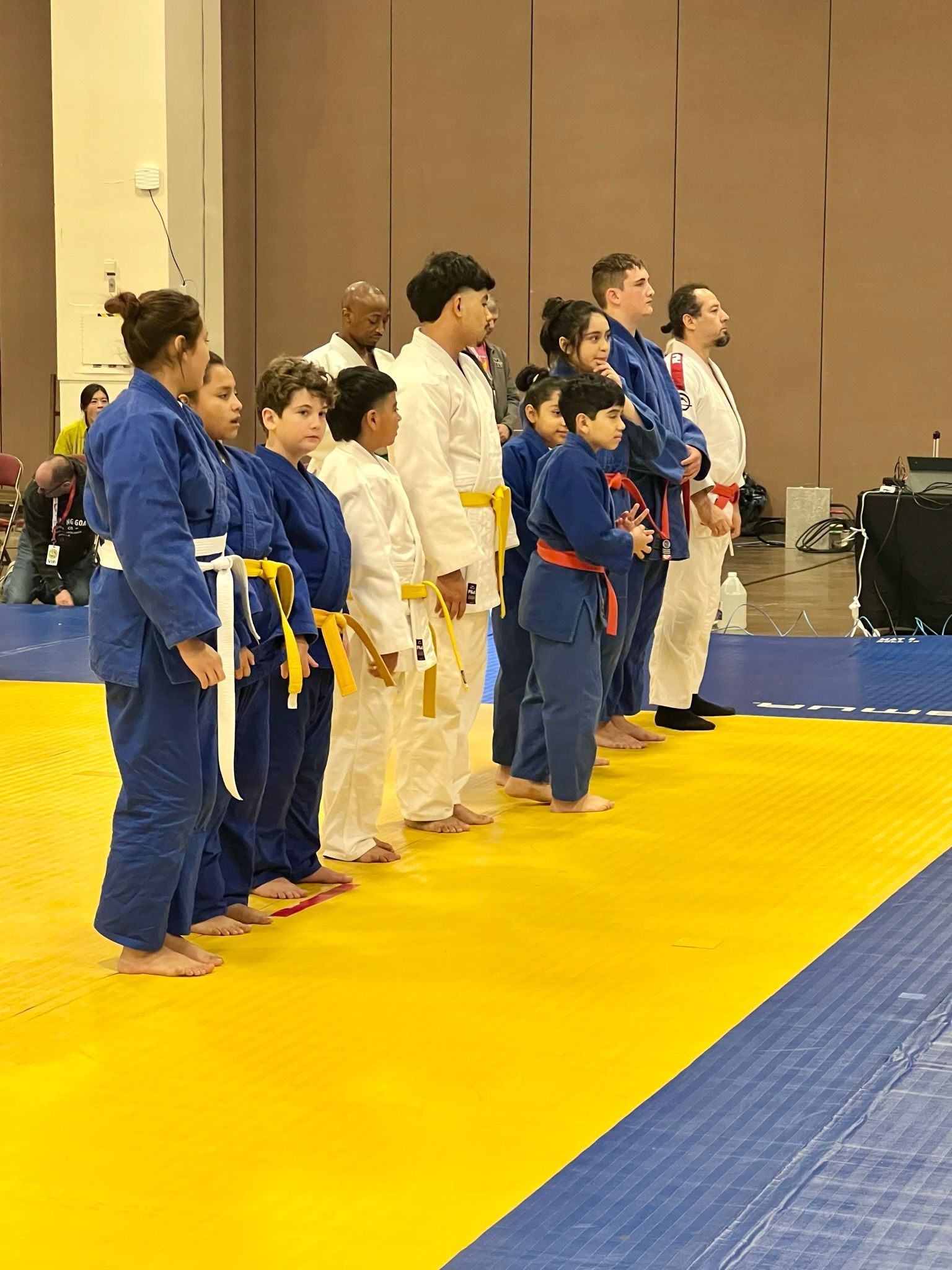
Judo builds discipline through repetition, respect, and body control, and kids feel that structure fast.
Families in Pasadena stay busy, and youth sports are already a big part of local life, with thousands of kids participating in city programs each year. That’s great news, but it also means many parents are still searching for an activity that does more than “wear kids out” for an hour. You want something that builds follow-through, focus, and better choices when no one is watching.
Judo fits that need because it’s both a traditional martial art and an Olympic sport, which means the training has clear structure and proven fundamentals. In our youth classes, we use that structure to teach skills like balance, coordination, and safe movement, while reinforcing respect, consistency, and listening skills that carry into school and home.
When you’re looking for Martial Arts in Pasadena, it’s normal to wonder if the training will be too intense, too rough, or too competitive for beginners. Our approach starts with fundamentals and safety, so your child can build confidence step by step instead of being thrown into the deep end.
Why Judo works especially well for Pasadena kids
Pasadena has a strong youth sports culture, and that matters. When kids already see teammates, practice schedules, and coaches as part of normal life, it’s easier to introduce a program that rewards consistency. Judo thrives on steady repetition and gradual improvement, not quick hacks or instant results.
Our youth training also gives kids something many sports don’t emphasize as directly: body control under pressure. That doesn’t mean chaos. It means learning to stay calm, follow instructions, and move with purpose, even when things feel fast. Over time, kids start to recognize that discipline is not a punishment. It’s the tool that helps them get better.
Another reason Judo connects with local families is that it offers a clear “progress path.” Kids can start with simple movement patterns, improve coordination, and eventually learn more advanced throwing and groundwork concepts as readiness grows. That sense of progression is motivating, especially for kids who get bored easily or quit when activities feel random.
Judo fundamentals we teach first (and why it matters)
A solid foundation makes everything else safer and more fun. Before kids worry about flashy techniques, we focus on the building blocks that keep training controlled and productive. Judo is famous for throws, but good throwing comes after learning how to move, fall, and protect a partner.
Safe falling comes before throwing
One of the most parent-friendly parts of Judo is the emphasis on learning how to fall safely. We teach breakfalls early because it reduces fear and helps kids relax, which actually makes the rest of class smoother. When a child knows how to land correctly, confidence rises and tension drops.
Safe falling also supports everyday life. Kids trip, slip, and collide during recess and sports. A child who understands how to absorb impact and protect the head and wrists has a real-life skill that goes beyond the mat.
Balance, posture, and grips build real control
Judo fundamentals include posture, footwork, and learning how to connect to a partner through grips in a respectful, rule-based way. This is where discipline shows up in a practical form: kids learn that strength without control doesn’t work. If they pull wildly, they lose balance. If they rush, technique falls apart.
We reinforce the idea that good technique is calm and repeatable. That mindset is a discipline lesson in disguise, and kids usually don’t even realize it’s happening until you notice better patience at home.
How discipline is trained, not lectured
We don’t try to “talk kids into” discipline. We build it through the way class is structured. Judo rewards the student who shows up, listens, and practices the same movement until it improves. That’s the heart of the art.
What discipline looks like on the mat
Discipline in youth training is simple, observable, and repeatable. You’ll see it when your child lines up without being reminded, responds to instruction quickly, and practices with care instead of goofing off when no one is looking.
Here are a few habits our youth program consistently reinforces:
• Listening for a short instruction and applying it immediately, even when the drill feels challenging
• Controlling speed and strength so partners stay safe and learning stays productive
• Repeating fundamentals with attention to detail, not rushing ahead to “cool” techniques
• Showing respect in partner work by helping each other improve rather than trying to win every moment
• Staying focused through short, structured rounds that build endurance and mental toughness
Those habits add up. Over time, many parents notice kids becoming more coachable in other activities, more aware of their body, and less reactive when something doesn’t go their way.
Why repetition is a superpower for kids
Repetition can sound boring, but for kids it’s actually reassuring. A consistent warm-up, familiar drills, and clear expectations create a rhythm. That rhythm helps energetic kids settle in, and it helps shy kids feel safe enough to participate.
Judo is also honest. If a technique isn’t working, the feedback is immediate. That teaches kids to adjust, not argue. They learn to accept coaching, try again, and keep going, which is exactly what discipline looks like in the real world.
Age-appropriate training: when should a child start Judo?
Most kids can begin learning Judo fundamentals when they can follow basic instructions, stay with a group, and participate safely with a partner. Age matters less than readiness, and we keep youth training focused on development rather than pushing adult-style intensity.
In beginner youth classes, we prioritize coordination, movement patterns, and safe partner interaction. We also keep the environment structured. Kids usually do best when expectations are clear and consistent, and that’s how we run our class flow.
If your child is very energetic, that’s not a problem. Judo gives high-energy kids a place to move, but it also teaches them to apply the brakes. If your child is shy, partner drills can be a gentle way to build social confidence without forcing loud, performative behavior. Either way, the mat becomes a place where kids can practice being steady.
Is Judo safe for beginners?
Safety is not an afterthought in Judo. It’s built into the training method. We teach beginners how to fall and how to work with a partner before we spend time on advanced throwing. We also coach how to grip, how to move, and how to stop when an instructor calls time.
A big piece of safety is supervision and proper instruction. Our youth Judo is taught by USA Judo-registered instructors, and we maintain clear rules for partner work. Kids learn early that control is not optional. It’s part of the art.
Parents also appreciate that Judo has a strong “take care of your training partner” culture. That lesson lands. When kids understand that training only works when everyone is safe, respect becomes practical instead of abstract.
What a typical youth Judo class feels like
A good youth class has energy, but it’s organized energy. We keep classes moving with a predictable structure, so kids know what’s next and can settle into the routine. The goal is steady progress, not exhaustion for its own sake.
Most youth sessions include a warm-up that builds coordination, followed by fundamental movement drills. Then we add partner practice in a controlled format, where kids learn timing and balance with guidance. Depending on the day and the group level, class can include basic groundwork positions as well, because Judo is not only about throws.
Our class schedule includes dedicated youth Judo times, which supports consistent weekly practice. That consistency is where discipline is built. When kids train regularly, they start to identify as someone who follows through, and that identity shift is powerful.
How often should kids train to see progress?
Progress in Judo is closely tied to repetition and consistency. Many kids do well starting with one to two classes per week, especially if they’re new to structured training. As comfort grows, adding another day can help skills “stick” faster and improve conditioning naturally.
What you’ll typically notice first is not a perfect technique. It’s better body awareness and better attention. Kids start remembering steps, adjusting posture, and responding faster to coaching. Those are discipline wins, even before you see big athletic changes.
The key is keeping the schedule realistic. A routine your family can actually maintain beats an ambitious plan that burns out after three weeks.
What should your child wear to the first class?
If you’re visiting for the first time, comfort and mobility are the priorities. We can guide you on uniform details and what’s appropriate for your child’s level, but you can generally plan for athletic clothing that allows safe movement. We recommend arriving a little early so you can ask questions, meet our team, and help your child feel settled before stepping onto the mat.
As your child continues, a Judo uniform becomes part of the discipline process. Putting it on, tying the belt, and taking care of gear reinforces responsibility in a simple, tangible way. It’s a small routine, but it adds structure to the week.
Judo vs other martial arts: a simple parent-focused explanation
If you’re new to martial arts, the names can blur together. The easiest way to understand Judo is this: it focuses on balance, leverage, and controlled throwing, with groundwork included. The aim in youth training is not to create chaos, but to teach kids how to move well, fall safely, and work with a partner respectfully.
We also present Judo as an Olympic sport and a traditional martial art, which means your child gets both athletic development and a value-based training environment. That combination is a big reason Youth Judo in Pasadena has become such a practical choice for families who want fitness with structure.
When parents ask whether Judo is “good for discipline,” we point back to the daily training realities. Kids line up, they learn rules, they practice safely, and they improve because they show up. That’s discipline in action.
Take the Next Step
If you want an activity that supports better focus, stronger body control, and a real sense of respect, Judo is a straightforward place to start. We’ve built our youth program to be beginner-friendly, structured, and consistent, so your child can grow without feeling overwhelmed.
When you’re ready, Champion Martial Arts & Fitness offers Youth Judo in Pasadena with dedicated class times, age-appropriate coaching, and USA Judo-registered instruction. You can use the website and the class schedule to find a weekly routine that fits your family.
Ready to train? Join a martial arts program at Champion Martial Arts & Fitness today.