Judo is one of the rare activities that meets you where you are and steadily builds you into someone stronger, calmer, and more capable.
If you have been searching for an activity in Pasadena that works for kids, teens, and adults without splitting your family into different fitness worlds, Judo deserves a serious look. It is physical, yes, but it is also structured, thoughtful, and surprisingly practical for everyday confidence. We love it because it teaches you how to move with control, how to fall safely, and how to problem-solve under pressure without relying on aggression.
Judo also fits real life. School schedules change, work gets busy, bodies feel different at 12 than they do at 42, and goals evolve. The good news is that Judo is built around progressions, so you can start as a true beginner and keep growing for years. And it is not just a youth sport, either. Global participation stays strong, with the International Judo Federation reporting 4,736 judoka competing in World Judo Tour events in 2025 and a record 2,316 competitors at the World Veterans Championships, which is a solid reminder that people keep training well into later decades.
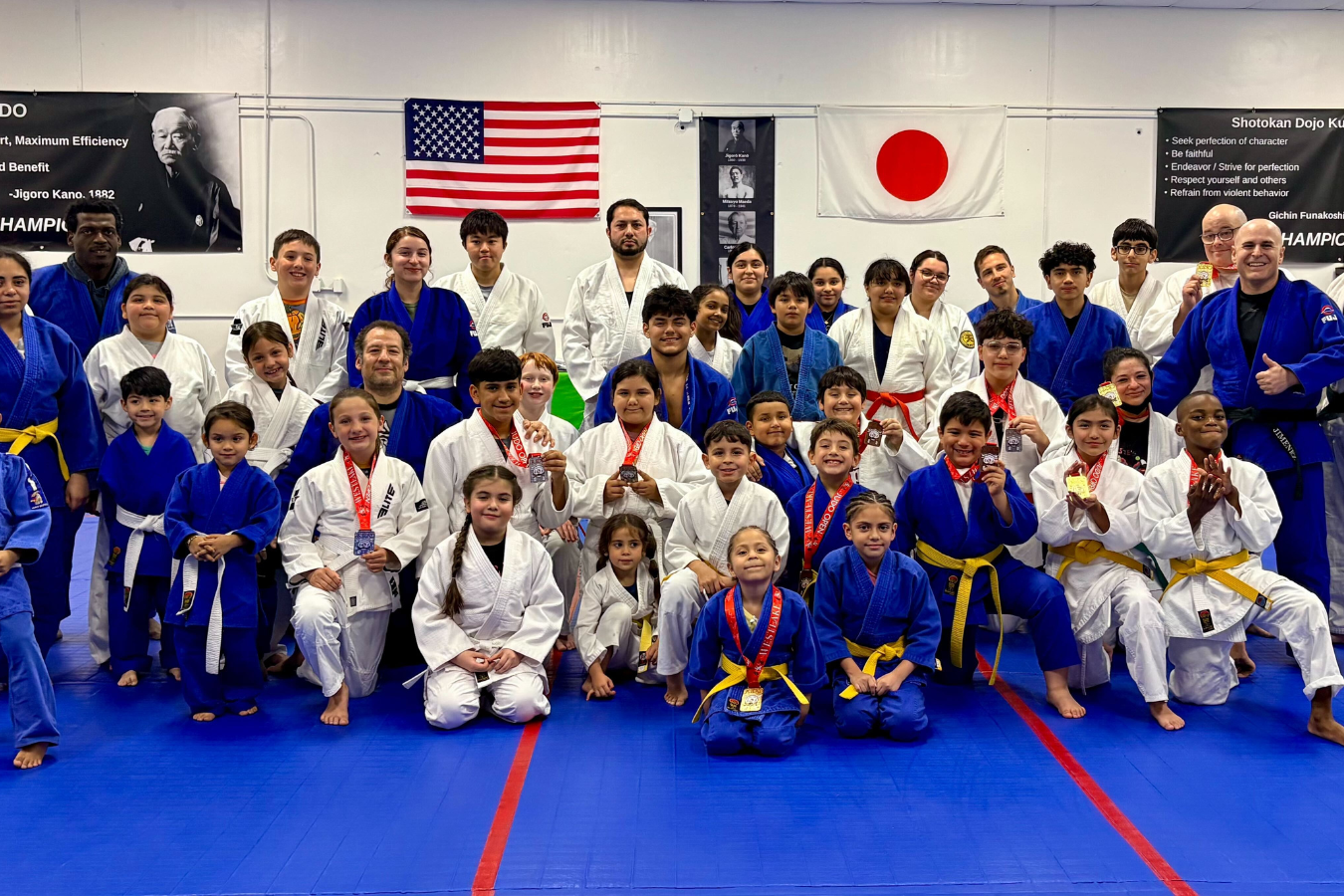
In Pasadena, we see families who want a program that builds fitness and character at the same time. Judo checks those boxes. It gives kids a system for focus and respect, gives teens a healthy outlet and a confidence anchor, and gives adults a skill-based workout that does not feel like mindless cardio.
Why Judo works so well for Pasadena families
A lot of fitness options promise energy and discipline, but Judo actually makes you practice those qualities. The art is rooted in using leverage, balance, and timing rather than brute strength, which means you can train hard while still keeping technique at the center. That is important for kids who are still growing and for adults who want a challenging workout that remains intelligent.
Judo is also a community activity in the best way. You cannot learn throws, grips, and movement alone. You learn with training partners, guided by instructors, in a room where safety and respect are part of the culture. That structure is one reason parents often tell us they like how the lessons carry over into school routines, chores, and even how kids speak to adults.
And for anyone thinking about personal safety, Judo gives you a clear, physical education: posture, distance, grips, off-balancing, and how to stay composed when someone is trying to move you. Even when the goal is sport training, the skills translate naturally to real-world body control.
The “positive change” Judo creates at different ages
Judo changes people in visible ways, but the best changes are often subtle at first. You might notice your child stands a little taller. You might notice you breathe differently when something stressful happens. You might catch yourself thinking, “I can handle this,” and not just in the gym.
Kids: coordination, confidence, and a better relationship with rules
For kids, Judo is a powerful blend of play and structure. The movement patterns build coordination, and the etiquette builds awareness. Learning how to bow, listen, take turns, and follow steps is not flashy, but it is exactly what many kids need more of.
Kids also benefit from learning how to fall and get back up, literally and figuratively. Breakfalls are foundational in Judo, and once a child realizes falling can be safe and controlled, a lot of fear melts away. That shows up on the mat and sometimes even on the playground.
If you are specifically looking for Youth Judo in Pasadena, it helps to know that the early stages are not about “fighting.” They are about movement skills, listening, and safe partner practice that builds confidence without creating chaos.
Teens: focus, stress relief, and real athletic development
Teen life is busy and noisy. Judo gives teens a place where the rules are clear, effort matters, and progress is measurable. It is also a sport where you can be strong, quick, or strategic and still succeed, so different body types and personalities can find their lane.
We also like what Judo does for decision-making. Teens learn quickly that muscling through techniques does not work for long. They have to think, adjust, and stay calm while tired. That is a life skill, not just a martial arts skill.
And for teen athletes, Judo supports balance, grip strength, core development, and the kind of footwork that helps in many sports. The training has a way of turning awkward energy into purposeful movement.
Adults: skill-based fitness that stays interesting
Adults often come in wanting a workout, but they stay because the learning never stops. Judo is physically demanding, yet it is not random. You learn a throw, you drill it, you refine it, you apply it with increasing realism. That sense of mastery is motivating in a way that treadmill miles rarely are.
Adults also appreciate that Judo can scale. You can train with intensity, or you can focus on technical reps and controlled practice depending on your goals and how your body feels that day. Over time, you build stronger hips, legs, back, and grip strength, plus a better understanding of posture and balance.
If you are wondering whether you can start Judo with no background, the answer is yes, and that is true even if you have not played sports in years. We coach you through the foundations step by step.
Veterans and older adults: proof that Judo can be lifelong
Judo has a strong veteran community globally, and the numbers back it up. The record 2,316 competitors at the 2025 World Veterans Championships is not a small detail, it is evidence that people keep training because it continues to give them something valuable: mobility, mental sharpness, social connection, and a reason to stay active.
Training later in life tends to emphasize smart movement, safe falling, clean technique, and choosing the right pace. That is how Judo stays sustainable. You are not trying to “win the room.” You are building a body and mindset that hold up.
Judo vs. jiu-jitsu vs. wrestling: what feels different in class
People in Pasadena often ask how Judo compares to other grappling styles, especially if you have watched MMA, followed college wrestling, or tried a few classes somewhere in the past. We keep the explanation simple and practical.
Judo is famous for stand-up grappling and throws, with a strong emphasis on grip fighting, off-balancing, and clean takedowns. Groundwork exists and matters, but the stand-up entries and the ability to put someone on the mat with control are a defining feature.
Wrestling typically emphasizes relentless takedown chains, pressure, and positional control, often with a different stance and no gi grips. Jiu-jitsu often spends more time on ground control, submissions, and guard work, especially in beginner phases. Judo sits in a sweet spot where you learn to manage the standing phase with skill and then continue into controlled groundwork.
If your goal is well-rounded grappling, Judo is a strong foundation because it teaches you how to take balance away, how to stay upright under contact, and how to land safely when you are the one getting thrown.
What to expect in your first Judo class in Pasadena
Walking into a new martial arts class can feel like the first day of school. You do not want to mess up, you do not want to be the only beginner, and you definitely do not want to get hurt. We get it, and we structure beginner training to remove those worries fast.
A typical first class includes a warm-up that prepares your joints and muscles for grappling movement, followed by basic footwork, grips, and breakfalls. Breakfalls come early because they are your safety foundation. From there, we teach simple techniques that work well for beginners and drill them in a controlled way with a partner.
Here is a quick new-student checklist that makes the first day smoother:
• Wear comfortable athletic clothing if you do not have a gi yet, and bring water so you can stay focused.
• Arrive a little early so we can point you to the right spot, answer questions, and help you settle in.
• Expect to learn breakfalls and basic movement before you do any live practice, because safety comes first.
• Keep nails trimmed and remove jewelry, since grips and contact are part of Judo training.
• Plan to feel challenged but not crushed, because we scale intensity to your level and build from there.
If you have searched for Judo classes in Pasadena, this is the kind of structure you should want: clear instruction, progressive training, and a room where beginners are normal, not a problem.
How we keep Judo safe for beginners
Safety is not an afterthought in Judo, it is part of the curriculum. We teach falling mechanics, we supervise partner pairings, and we emphasize controlled repetitions before any higher-intensity work.
Beginners learn how to tap, how to communicate, and how to train with respect. We also focus on posture and movement patterns that protect your back, neck, and knees. Judo has a reputation for powerful throws, and that is true, but the method of learning is progressive. You earn intensity through competence.
This is also where discipline matters. When you treat practice seriously and follow coaching, Judo becomes one of the most rewarding ways to train. You are working hard, but you are doing it with a plan.
Why Judo builds confidence that actually sticks
Confidence is not just hype. Real confidence comes from evidence, and Judo gives you that evidence every week. You learn a skill. You repeat it. You improve. You handle harder partners. You stay calm longer. The change is measurable.
For kids, that might look like speaking up more in class or handling frustration better. For teens, it might look like less anxiety before competition tryouts or exams. For adults, it often shows up as better posture, better boundaries, and a stronger sense of capability.
Judo also teaches humility in a healthy way. Everyone gets thrown sometimes. Everyone has days where timing feels off. That experience builds resilience because you learn to reset, listen, and keep going.
Training goals we support, from self-defense to competition to fitness
Not everyone walks in with the same goal, and that is fine. Some students want a practical skill set. Some want a sport. Some want a challenging workout they will not quit after three weeks.
Our approach to Judo supports multiple paths, including:
1. Fundamentals first, so your base is strong and your progress stays steady.
2. Conditioning through technique, because skill work should still make you fit.
3. Optional competition preparation for students who want to test themselves.
4. Cross-training value for grappling-focused athletes who want better takedowns and balance.
5. Long-term development so you can keep training as your life changes.
That flexibility is a big reason Judo fits so many ages. You can train seriously without needing the same intensity every season of life.
Take the Next Step
If you want training that changes more than your fitness level, Judo is a smart place to start. It builds coordination, discipline, and calm problem-solving, and it gives you a skill set that grows with you instead of topping out after a few months.
We run our Pasadena Judo Club for students of all ages, and our coaches focus on fundamentals, safety, and steady progress. When you are ready, you can find class times on the class schedule page and get a clear plan for starting at Champion Martial Arts & Fitness.
Build your skills and confidence by joining a Brazilian Jiu-Jitsu class at Champion Martial Arts & Fitness.