
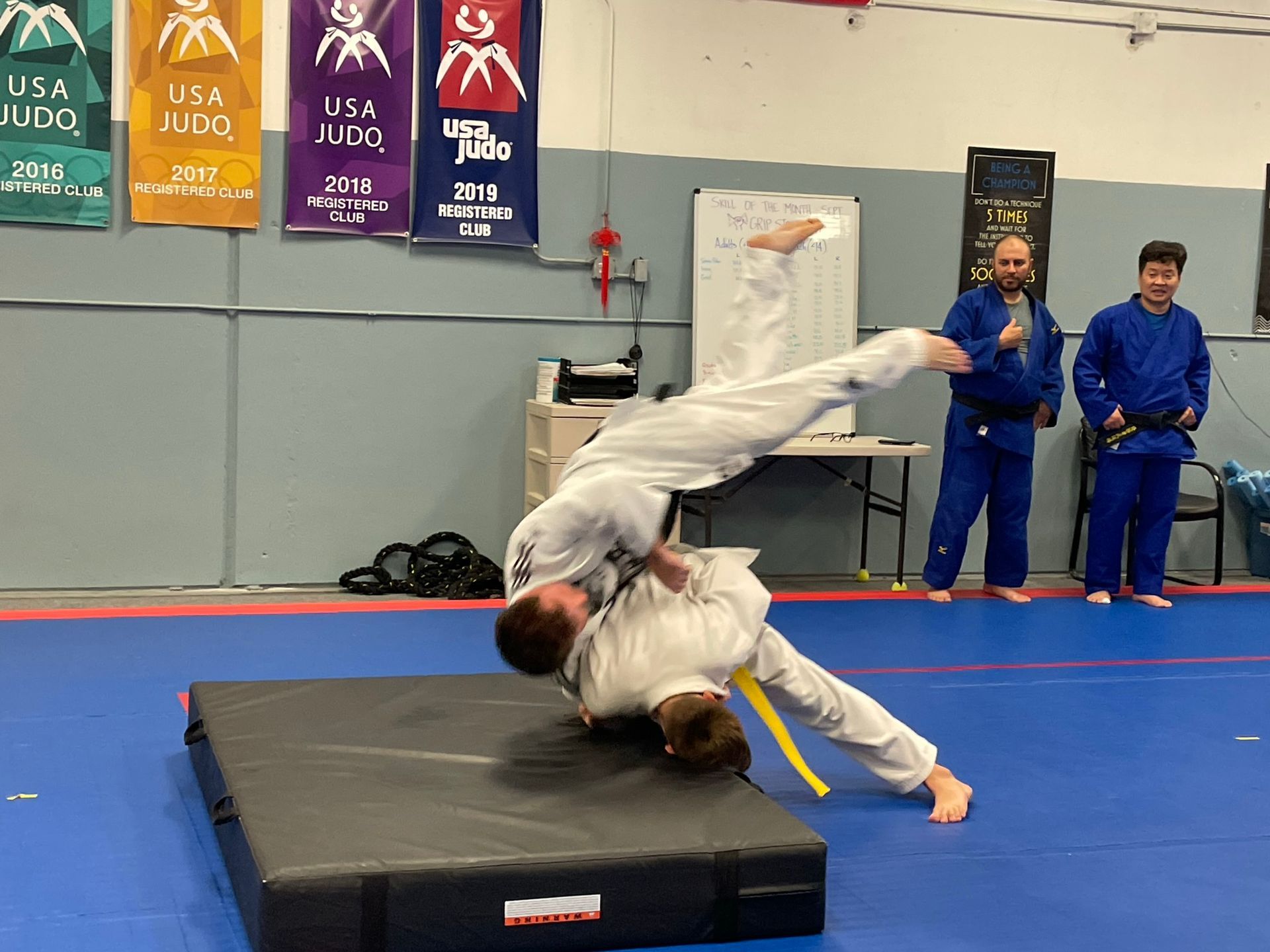
Judo is one of the quickest ways to learn real balance, real control, and real confidence without needing to be “tough” on day one.
Starting Judo as a beginner usually comes with the same questions we hear all the time: Will I get hurt, will I feel awkward, and how long until I can actually do something that works? The good news is that Judo is built for practical progress, because the first skills you learn are about safety, body control, and how to move with another person instead of just colliding with them.
We also train in Pasadena, TX, where busy schedules and Texas heat are very real factors. So our beginner approach keeps things simple and structured: learn how to fall safely, learn how to off-balance, and then start building a short list of throws that give you quick wins. Confidence follows faster than most people expect.
What Makes Judo Beginner-Friendly (Even If You Feel Uncoordinated)
Judo is a grappling art, but beginners are not thrown into chaos. Our training starts with fundamentals that make everything else safer and easier. You do not need prior martial arts experience, and you do not need to be in “fight shape” to begin. You just need to show up consistently and let the process stack up.
A big reason beginners learn quickly in Judo is that the techniques are built around leverage, timing, and balance. When you feel the difference between forcing a move and setting up a move, it clicks. That moment is a confidence booster because it proves your progress is skill-based, not size-based.
The First Big Skill: Ukemi (Falling Safely)
Ukemi is the quiet superpower of beginner Judo. It is not flashy, but it changes everything. Learning how to land safely reduces fear, and it also makes you more willing to commit to technique. When your body trusts the landing, your mind stops hesitating.
We teach ukemi progressively. You start low and controlled, then build toward more dynamic movement as your timing improves. For most beginners, this is the first place confidence shows up: you realize you can move fast and still stay safe.
Kuzushi, Tsukuri, Kake: The Blueprint Behind Every Throw
Every clean throw in Judo follows a pattern:
- Kuzushi is off-balancing your partner
- Tsukuri is fitting your body into position
- Kake is completing the throw
Beginners often want to skip to the “finish.” We slow it down so you learn the why behind the motion. Once you understand that off-balancing creates the opening, throws stop feeling like a strength contest. They start feeling like problem-solving with your whole body.
Mastering Throws Fast: The Beginner Throw Trio We Build Around
We like beginners to focus on a small set of high-value throws. Not because we limit you, but because repetition builds timing, and timing is where Judo starts to feel amazing. These throws show up across skill levels, so you are not wasting time learning something you will “outgrow.”
Osoto-gari: A Quick Confidence Builder
Osoto-gari is a classic for a reason. It teaches you how to break posture, steer movement, and finish with control. The big mistake is trying to “kick” the leg out. The real magic is in the upper body: you pull and guide your partner’s weight onto the leg you want to reap.
For beginners, osoto-gari is also a great lesson in commitment. When you step in confidently and keep your posture strong, the technique becomes smooth and surprisingly powerful.
O-goshi: Learning to Use Your Hips Without Straining Your Back
O-goshi (major hip throw) helps beginners understand how the hips can lift and rotate an opponent when your positioning is right. It is not about yanking with your arms. It is about getting your hips in front, loading weight onto your center, and turning as one unit.
We emphasize posture and spacing here, because doing hip throws “almost right” can feel awkward. Doing them right feels effortless, and that contrast teaches you what good technique should feel like.
Ippon Seoi-nage: Speed and Timing for Smaller Beginners
Ippon seoi-nage (one-arm shoulder throw) is a favorite for beginners who are smaller or simply prefer speed. It rewards clean entries and sharp off-balancing. When you hit the angle correctly, you can throw a larger partner safely and smoothly.
This throw also teaches you to trust the entry. If you half-step in, it falls apart. When you commit to kuzushi and get your body under the center of gravity, it starts to work quickly, and that is the kind of progress that keeps people training.
Your First 4 to 6 Weeks: A Realistic Beginner Timeline
Beginners tend to underestimate how much changes in a month of consistent training. You might not feel like a “black belt” (of course), but you can absolutely feel competent, safer, and more athletic. In Judo, small wins are very real wins.
Here is a simple progression we like because it keeps you focused on what actually matters early on:
1. Week 1: Ukemi fundamentals, basic stance, movement, and how to grip without squeezing yourself tired
2. Week 2: Off-balancing drills and one primary throw (often osoto-gari) with lots of repetitions
3. Week 3: Adding a second throw, plus simple combinations like attack-then-attack
4. Week 4: Controlled randori rounds with clear goals, like “get a grip, break posture, attempt one throw”
5. Weeks 5 to 6: Cleaner entries, better timing, and calmer breathing under pressure
If you train around three times per week, this timeline usually feels very doable. If you train less often, progress still happens, it just stacks a little slower.
Confidence Gains: Why Judo Changes How You Carry Yourself
Confidence in Judo is not just “feeling tough.” It is the calm that comes from competence. You learn what it feels like to be off-balance, how to recover, and how to stay composed while another person is actively trying to disrupt you.
We also build confidence by making the training measurable. You can track small improvements like:
- Falling without hesitation
- Holding posture during grip fighting
- Entering a throw without pausing
- Recovering quickly after a failed attempt
- Staying relaxed in light sparring
Sports science research has exploded in the last decade, with tens of thousands of studies on judo-related biomechanics, physiology, performance analysis, and psychology. We do not bury you in academic language, but the practical takeaway matters: smart training methods help beginners improve faster and safer when progress is structured and intentional.
Safety for Adults and Kids: How We Keep Beginners Training Long-Term
Judo has a reputation for throws, so it is fair to ask about safety. Our approach starts with breakfalls, controlled drilling, and clear rules about intensity. Beginners do not need to “prove” anything. We would rather you train for years than push too hard in week one and disappear.
Safety is also about learning to cooperate during practice. In drilling, your partner helps you learn. In randori, we keep it progressive, so you can apply skills without panic. That is a big difference between learning techniques and actually owning them.
What to Expect in a Typical Beginner Class
A beginner-friendly class should feel structured. Ours typically includes warmups, ukemi, a technical block, and then controlled practice that fits your level. You will sweat, but you will also get coaching that makes the work feel purposeful.
Common beginner sensations include tight grips, sore forearms, and that “my brain is tired” feeling after learning something new. That is normal. Judo is physical, but it is also a skill craft, and your nervous system is adapting.
Gear, Etiquette, and Practical Prep (So You Feel Comfortable on Day One)
You do not need much to start. A gi is helpful, and we can guide you on sizing and fit. You train barefoot on mats, and you will want basic hygiene habits that keep training pleasant for everyone.
Here are a few simple prep tips we recommend:
- Show up a little early so you are not rushing onto the mat
- Keep nails trimmed and remove jewelry for safety
- Bring water and plan to rehydrate after class
- Expect to repeat basics a lot, because basics are the shortcut
- Ask questions, because clarity beats guessing every time
If you are looking for Martial Arts in Pasadena, Judo is a strong option when you want both athletic development and real-world control skills. It is challenging, but it is also strangely addictive once throws start to feel smooth.
Judo in Pasadena: Training With Real Structure, Not Random Workouts
Beginners often worry that a martial arts class will feel chaotic or intimidating. We run a clear progression so you know what you are working on and why. That matters in any city, but especially in a busy area like Pasadena where you may be fitting training between work, family, and everything else.
When you search for Judo classes in Pasadena, you deserve more than a generic “all levels welcome” promise. You want an environment where you can learn safely, build a foundation, and see your progress week by week. That is exactly how we organize beginner training: foundational skills first, then pressure-testing, then refinement.
Ready to Begin
If your goal is to learn Judo without feeling overwhelmed, we built our beginner path around fast fundamentals: safe falling, strong posture, smart grips, and a handful of throws that create early confidence. The result is training that feels challenging but not chaotic, and progress that you can actually notice in daily life.
When you are ready, Champion Martial Arts & Fitness is here in Pasadena, TX with a clear starting point and coaching that respects beginners. If you have been on the fence, your next step is simple: get a first class on the calendar and let the basics do their job.
Train with experienced instructors and a supportive team by joining a Judo class at Champion Martial Arts & Fitness.