
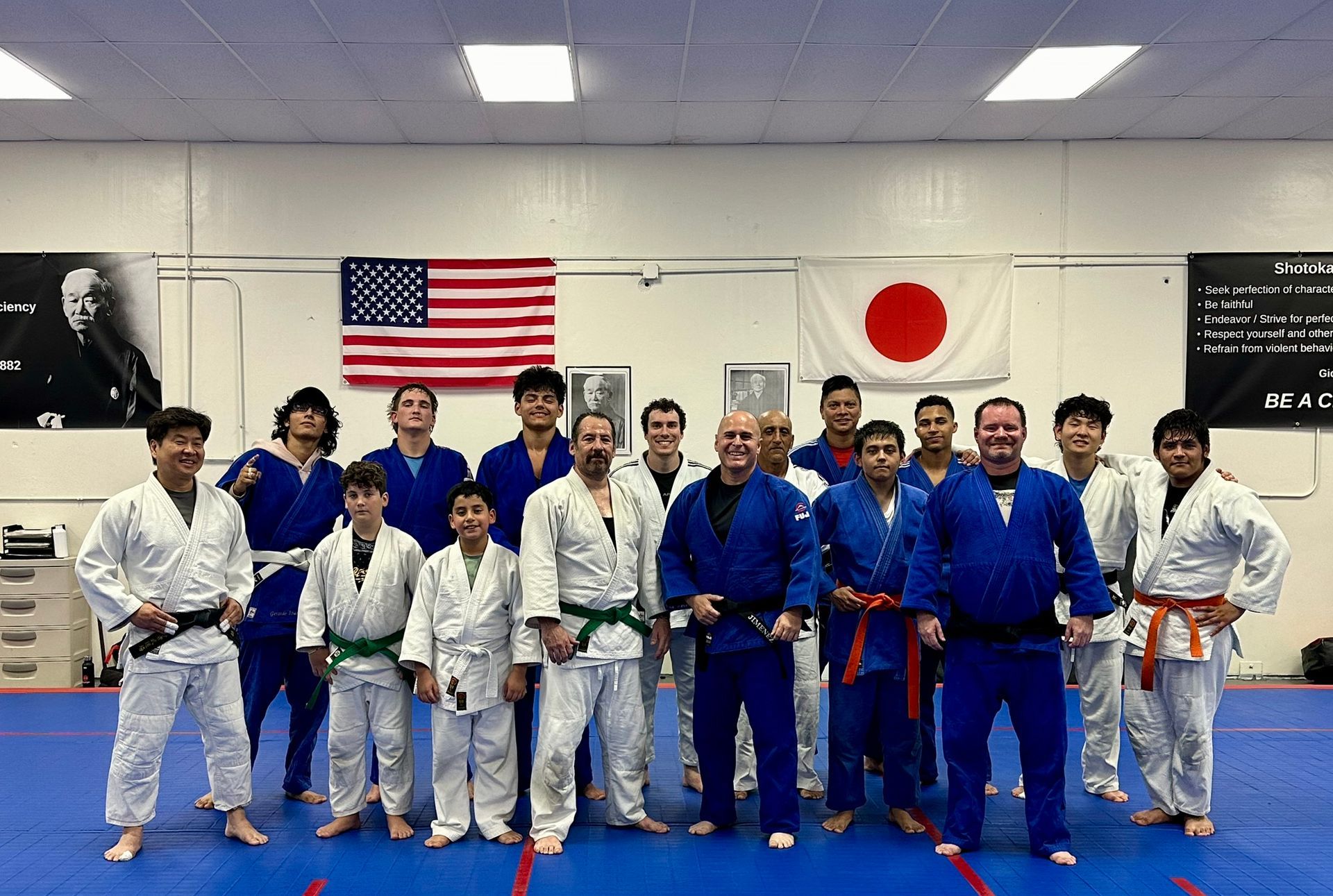
Judo is at its best when it meets you where you are and helps you move forward safely and confidently.
If you have ever wondered whether Judo can work for your body, your age, or your mobility, you are asking the right question. A lot of people picture one kind of athlete when they hear the word Judo, but real training is more practical than that. We build skill by adapting, not by forcing you into a mold.
Here in Pasadena, many students want a program that feels challenging without feeling risky. Our approach to adaptive training is built around safety, clear progressions, and respect for individual needs. Whether you are brand new, coming back after time off, or training around a disability, we can shape the work so you can actually stick with it.
Judo is also evolving. After Paris 2024, the sport has seen shifting participation and performance trends worldwide, and serious programs are leaning harder into evidence based coaching and long term development. We bring that same mindset into our day to day classes so your training is not random. It is structured, measurable, and still very human.
What Adaptive Judo Means in Our Pasadena Program
Adaptive Judo is not a separate martial art. It is a way of teaching Judo that accounts for different bodies, learning styles, and starting points. We adjust intensity, grips, movement patterns, and even goals, while keeping the integrity of the art.
In practical terms, adaptation can mean we spend more time on balance and safe falling before we ever add speed. It can mean we emphasize groundwork for a student who is not ready for repeated standing throws. It can also mean we reduce sensory overload, simplify choices, and create predictable routines for students who thrive with structure.
When you train with us, you are not signing up to be compared to anyone else. You are training to improve your own movement quality, confidence, and control in realistic situations, one layer at a time.
Why Judo Works So Well for Inclusive Martial Arts
Judo has a built in advantage for inclusivity because it is based on leverage, timing, and efficient movement. When we teach it correctly, you do not need to be the biggest or the youngest person in the room to make progress.
Another reason Judo fits adaptive training is that we can scale the same technique in many ways. A throw can start as a grip and posture drill. Then it becomes a step pattern. Then we add a controlled off balance. Later, if it is appropriate, we complete the throw with a safe landing. You get the same core skill, just in the version that matches your body today.
We also lean into the idea of long term development. Research on Paralympic judo shows athletes often peak later than Olympic judokas, with a median peak age around 31 versus 27, and some classifications peaking even later. That lines up with what we see in real life: adults and older beginners can build meaningful skill when training is thoughtful and consistent.
Safety First: How We Keep Training Smart and Sustainable
Safety is not a single rule. It is a system. For adaptive Judo, that system matters even more because students may arrive with joint limitations, sensory differences, vision impairment, prior injuries, or simply a lower tolerance for impact.
We start by identifying what safe effort looks like for you. Then we choose the right training lane: standing work, transitions, groundwork, conditioning, or technical drilling. Some days you may feel great and want more intensity. Other days you may need to keep things lighter. We plan for both.
Here are a few safety priorities we build into Judo classes in Pasadena:
• Progressive breakfall practice so you learn to land without panic, at a pace your body can handle
• Clear partner guidelines, including controlled speed and communication before each round
• Technique selection that matches your goals, such as more ne waza when standing impact is not ideal
• Mat awareness and spacing so you can focus without worrying about collisions
• Coaching cues that emphasize posture, breathing, and joint alignment, not just getting the move done
Over time, safety creates confidence. And confidence creates better movement. It is a loop you can feel in your body, not just something we say.
How a Typical Class Is Adapted Without Making It Awkward
A good adaptive environment should feel normal. You should not feel singled out, and you also should not feel ignored. We aim for a class culture where modifications are simply part of coaching.
Most sessions include a warm up, technical instruction, specific drilling, and some form of live practice. The adaptive piece is how we scale each block. For example, the warm up might include optional movement patterns so you can choose what your knees, hips, or shoulders tolerate that day.
During technique practice, we often teach a core version of the skill, then offer two or three variations. One student may work a classic sleeve and lapel grip. Another may work a different grip that protects the hands or accommodates limited reach. On the ground, you may focus on positional control and escapes rather than speed or pressure.
Live rounds are also adjustable. Some students do timed positional sparring from a set start. Others do lighter flow rounds with a focus on movement and breathing. The point is to keep training real, but not reckless.
Who Adaptive Judo Is For in Pasadena
We see a wide range of goals, and adaptive training supports more of them than people expect. Some students want a martial art they can train for years without burning out. Some want a safer way to build strength and coordination. Some want a competitive pathway, and some just want to feel capable.
Adaptive Judo can be a strong fit if you are:
• A beginner who wants a structured way to learn without feeling thrown into the deep end
• A teen who needs confidence, coaching, and a physical outlet that rewards discipline
• An adult starting later who wants skill and fitness without the wear and tear of constant impact
• A senior who wants balance training, fall confidence, and a community routine
• A student with a disability who wants coaching that respects autonomy and builds real capability
If you are looking for Judo in Pasadena and you have felt unsure whether you belong, this is your reminder that the art is bigger than one body type.
Evidence Based Coaching: What Modern Judo Trends Mean for You
Across the world, Judo is becoming more professional and more scientific. Over the last decade, tens of thousands of academic papers have explored biomechanics, physiology, performance analysis, and psychology in judo training. That matters for everyday students because the best lessons are often simple: manage fatigue, reduce unnecessary strain, and practice the highest value skills consistently.
We apply that by keeping our instruction tight and goal driven. We focus on gripping, posture, kuzushi timing, and efficient transitions because those are the parts that hold up under pressure. We also build conditioning that supports movement quality instead of just exhausting you.
We pay attention to participation trends too. Some major events have reported declining participant numbers since 2024, and that can point to retention challenges. Locally, we counter that by making training welcoming, sustainable, and connected to real progress you can track. When you know what you are improving, you keep showing up.
Your First Month: A Simple Roadmap to Getting Comfortable
Starting Judo can feel like learning a new language. The mat has its own rhythm, and the first few classes are about orientation as much as technique. We keep your early experience clear and manageable so you can settle in.
A realistic first month often looks like this:
1. Learn mat etiquette, safe movement, and basic breakfalls at a pace that fits your comfort level
2. Build a small set of core positions and escapes on the ground so you feel less stuck
3. Practice one or two standing entries as controlled drills, focusing on balance and posture
4. Add light, structured live rounds that start from set positions rather than chaotic scrambles
5. Review what feels good, what needs adjustment, and how the class schedule fits your life
This is where many people realize Judo is not about being tough in a dramatic way. It is about becoming more capable through repetition, and yes, sometimes you leave a little tired and pleasantly sore.
Adaptive Training Details People Ask About
What if I cannot take hard falls?
We can modify impact by using lower amplitude throws, controlled descents, and more groundwork. Breakfalls are trained progressively, and you never have to jump to the hardest version.
What if I have limited vision or sensory needs?
We can build predictable routines, clear verbal cues, and consistent partner protocols. Paralympic pathways show how effective structured development can be, especially when training starts later and emphasizes smart progression.
Can I still train seriously if I start older?
Yes. The data on later peaking in Paralympic judo supports the idea that strong performance and skill growth are not limited to youth. Your plan just needs to be intelligent and consistent.
Is this only for people with disabilities?
No. Adaptive coaching benefits everyone. Plenty of students want a training style that respects injuries, busy schedules, or the reality that energy changes week to week.
Why Community Matters for Staying Consistent in Judo
The best program is the one you can actually maintain. In Pasadena, consistency often comes down to practical things: a class schedule you can make, coaching that feels approachable, and training partners who understand that progress looks different for different people.
We work to create a culture where you can train hard without feeling like you must prove something every round. That tone matters. It keeps people engaged, especially when global trends show that participation can dip when programs feel too rigid or too intimidating.
When you stick with Judo, you start to notice the quieter wins. You stand up straighter. You recover your balance faster. You breathe more calmly under pressure. Those are life skills wearing a martial arts uniform.
Ready to Begin
Building an inclusive Judo experience takes more than good techniques. It takes patient coaching, smart progressions, and a training floor where you can show up as you are and still improve. That is the heart of our adaptive approach, and it is exactly what we focus on every week.
If you are looking for Judo classes in Pasadena that respect your body while still challenging you, we would love to help you start with a plan that makes sense. At Champion Martial Arts & Fitness, we keep the path clear: safer fundamentals first, confidence next, and long term progress always.
Continue your Judo journey beyond this article by joining a class at Champion Martial Arts & Fitness.