
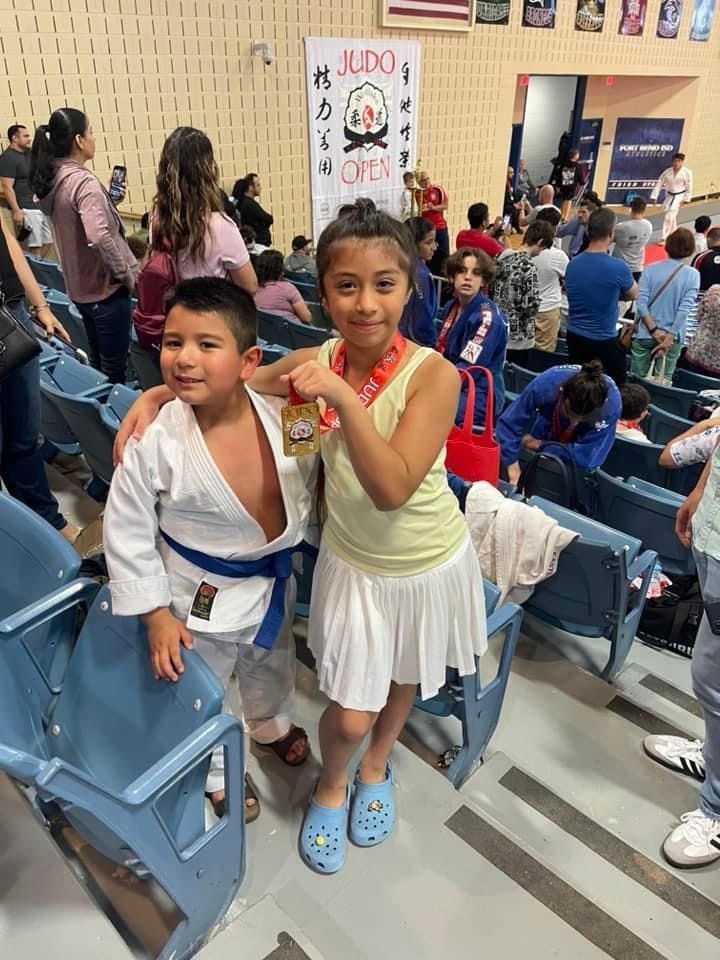
If you want a martial art that builds real-world balance, confidence, and fitness, Judo is one of the most practical places to start.
A lot of people in Pasadena tell us the same thing before their first class: “I’m not sure if I’m strong enough,” or “I don’t want to get thrown around.” Both concerns are normal, and both are usually based on a misunderstanding of what training actually looks like.
Judo is a grappling martial art built around leverage, timing, and control. Yes, you learn throws and pins, but you also learn how to fall safely, how to move with a partner, and how to stay calm when things get physical. For many beginners, that calm is the first big win.
Interest in the sport tends to spike after the Olympics, and Paris 2024 put Judo back in the spotlight across multiple countries and weight classes. That’s great, but your decision should not be about medals or highlight reels. It should be about whether this training fits your body, your schedule, and your goals right now.
Question 1: What do you want Judo to do for you?
Before you worry about belts, uniforms, or whether you “look like a judoka,” get clear on the outcome you want. Judo can support several goals at once, but your top priority shapes how you train week to week.
If your goal is fitness that stays interesting
Judo training is physical in a way that feels useful. You push, pull, balance, grip, and move in bursts, then reset and do it again. Over time, you build stronger legs and hips, better posture, and cardio that shows up in everyday life, like carrying groceries or keeping up with your kids without feeling smoked.
If your goal is self-defense confidence
We focus on skills that translate: balance, controlling distance, grip fighting, and how to off-balance someone without relying on punching. You learn how to stay grounded under pressure and how to make good decisions when your heart rate jumps. That’s a big part of why Judo has a reputation for practical effectiveness.
If your goal is competition or a long-term hobby
Judo offers a clear path: fundamentals first, then deeper technical layers. Olympic-level competition is intense, and the data suggests peak competitive age for Olympic judoka is around the late 20s, with variation by division. But you do not need to be an aspiring Olympian to train seriously. Plenty of adults build a rewarding competitive or recreational path starting later.
Question 2: Are you physically “ready” to start?
Most beginners overestimate how fit they must be. The truth is you do not need to “get in shape first.” Training is what gets you in shape, and we scale it so you can improve safely.
What matters more than strength
Being strong helps, but it is not the gatekeeper. For beginners, the biggest predictors of early success are consistency, willingness to learn, and basic mobility. If you can bend your knees, keep a neutral spine, and listen to coaching, you can start.
Common starting points we see
You might be:
- Athletic but new to grappling, so your cardio is fine but your coordination in close contact needs time
- Fit but stiff, so your flexibility and breakfalls become the first big focus
- Totally new to structured training, so you build confidence just by showing up and learning the routine
No version of “you” is disqualified. We just coach the starting point you bring in the door.
Question 3: Are you comfortable with close-contact training?
Judo is partner-based. That is a feature, not a flaw, but it does require a mindset shift if your past workouts were mostly solo. You will grip sleeves and lapels, fight for position, and learn to stay relaxed while someone tries to off-balance you.
We keep the environment respectful and structured. You are not getting tossed into chaos. You will learn etiquette, pacing, and how to communicate with training partners so both people improve.
If you are unsure about contact, the best way to evaluate is to watch or take a trial class. After a few rounds of controlled drills, most people realize it feels less intimidating than it sounds.
Question 4: Is Judo safe for beginners and kids?
Safety is a fair question, especially from parents looking for youth Judo in Pasadena. Judo includes throwing, so safety starts with learning how to fall. That is why breakfalls, called ukemi, are foundational and not optional.
How we reduce risk in training
We build safety into the structure of class:
- We teach ukemi early and revisit it often, so falling becomes a skill, not a surprise
- We control intensity and match partners thoughtfully, especially for new students
- We progress from cooperative drills to light resistance, then to more live training when you are ready
- We use clear rules for grips, throws, and mat behavior so everyone knows what is expected
- We emphasize technique over force, because force breaks things and technique builds skill
Judo also teaches body awareness. Kids learn how to land, how to move with control, and how to respect personal space and boundaries. Those lessons carry into sports, playgrounds, and everyday life.
Globally, the sport is still male-dominated, but women’s participation has grown notably in recent years. In our experience, a well-run room makes Judo welcoming to anyone willing to learn, regardless of age or background.
Question 5: How much time can you realistically commit?
Progress in Judo is less about heroic workouts and more about steady repetitions. If you want a sustainable plan, we recommend you start with a schedule you can keep even during busy weeks.
A simple commitment framework
Most beginners do well with:
1. Two classes per week for the first month to build familiarity and conditioning
2. Adding a third session once your body adapts and soreness drops
3. Occasional open mat or extra drilling time if your goals include competition
You will improve faster with more training, but only if recovery and attendance stay consistent. A plan you can keep beats a plan that looks impressive on paper.
Question 6: What does progress actually look like?
One reason people stick with Judo is that progress shows up in small, satisfying steps. You start noticing you are harder to push off balance. You stop panicking when someone grips you. Your footwork gets cleaner. Then one day a throw that felt impossible suddenly works, and it’s a little addictive.
A realistic beginner timeline
Every student is different, but many beginners experience:
- Weeks 1 to 4: learning how to fall, basic movement, grips, and simple throws
- Months 2 to 6: better timing, early combinations, and more comfort in controlled sparring
- Months 6 to 18: sharper setups, improved conditioning, and more strategic decision-making
Belt timelines vary, but many students reach intermediate ranks through steady training over a couple of years. We focus less on rushing promotions and more on making sure your fundamentals hold up under pressure.
Question 7: What gear do you need, and what will it cost?
Getting started in Judo is refreshingly simple. You do not need a pile of equipment. Most beginners start with comfortable workout clothes, then transition to a gi as soon as possible because grips and movement feel different in the uniform.
A starter gi often runs around 50 to 100 dollars depending on brand and quality. We help you choose a size that allows safe movement and durable sleeves for gripping. If you are buying for a kid who grows fast, we will talk you through how much room is reasonable without making the uniform sloppy.
Question 8: Do you want youth benefits, adult benefits, or both?
Judo works across age groups because the core skills are universal: balance, coordination, timing, resilience, and composure. But the benefits often look a little different depending on where you are in life.
For kids and teens
Families looking for youth Judo in Pasadena often want more than “a workout.” We see Judo help young students build:
- Better listening and focus in structured settings
- Confidence that does not depend on being the biggest or loudest
- Anti-bullying skills through posture, boundaries, and calm assertiveness
- Athletic coordination that supports school sports and reduces awkward falls
For adults
Adults usually notice:
- Grip and core strength that carries into daily tasks
- Stress relief from focused training with clear goals
- A strong community rhythm that makes consistency easier
- Practical self-defense awareness without needing to trade punches
If you are training as a family, Judo is one of the rare activities where everyone can share the same “language” of movement, even in different classes.
Question 9: Is Judo in Pasadena the right fit for your personality?
This question sounds abstract, but it matters. Judo rewards patience. You can muscle techniques early, but the art really opens up when you accept that timing beats force. If you enjoy problem-solving, learning details, and getting a little better each week, you will probably love it.
If you hate being a beginner, Judo will test you, because the learning curve is real. But it is also honest. The feedback is immediate. Something works or it does not, and we adjust. That cycle is one of the best parts of training.
Quick self-check: answer these before your first class
Use this short checklist to decide if you are ready to start now, not “someday”:
- Can you commit to at least two classes per week for the next month?
- Are you willing to practice breakfalls until they feel natural?
- Do you prefer learning skills through hands-on drilling, not just watching?
- Are you okay improving gradually, with occasional awkward moments?
- Do you want a sport that builds leverage, balance, and real control?
If you answered yes to most of these, Judo in Pasadena is probably a strong match for you.
Take the Next Step
If you want a structured way to test whether Judo fits your goals, we can help you do it without guessing. At Champion Martial Arts & Fitness, our classes are built to bring beginners along step by step, with clear coaching, safe progressions, and training partners who understand what it feels like to be new.
Whether you are exploring youth Judo in Pasadena for your child, or you want a challenging adult practice that keeps you improving, we will help you start smart and stay consistent. When you are ready, the website makes it easy to see what training looks like and how to jump in.
Put these techniques into action by joining a martial arts class at Champion Martial Arts & Fitness.