
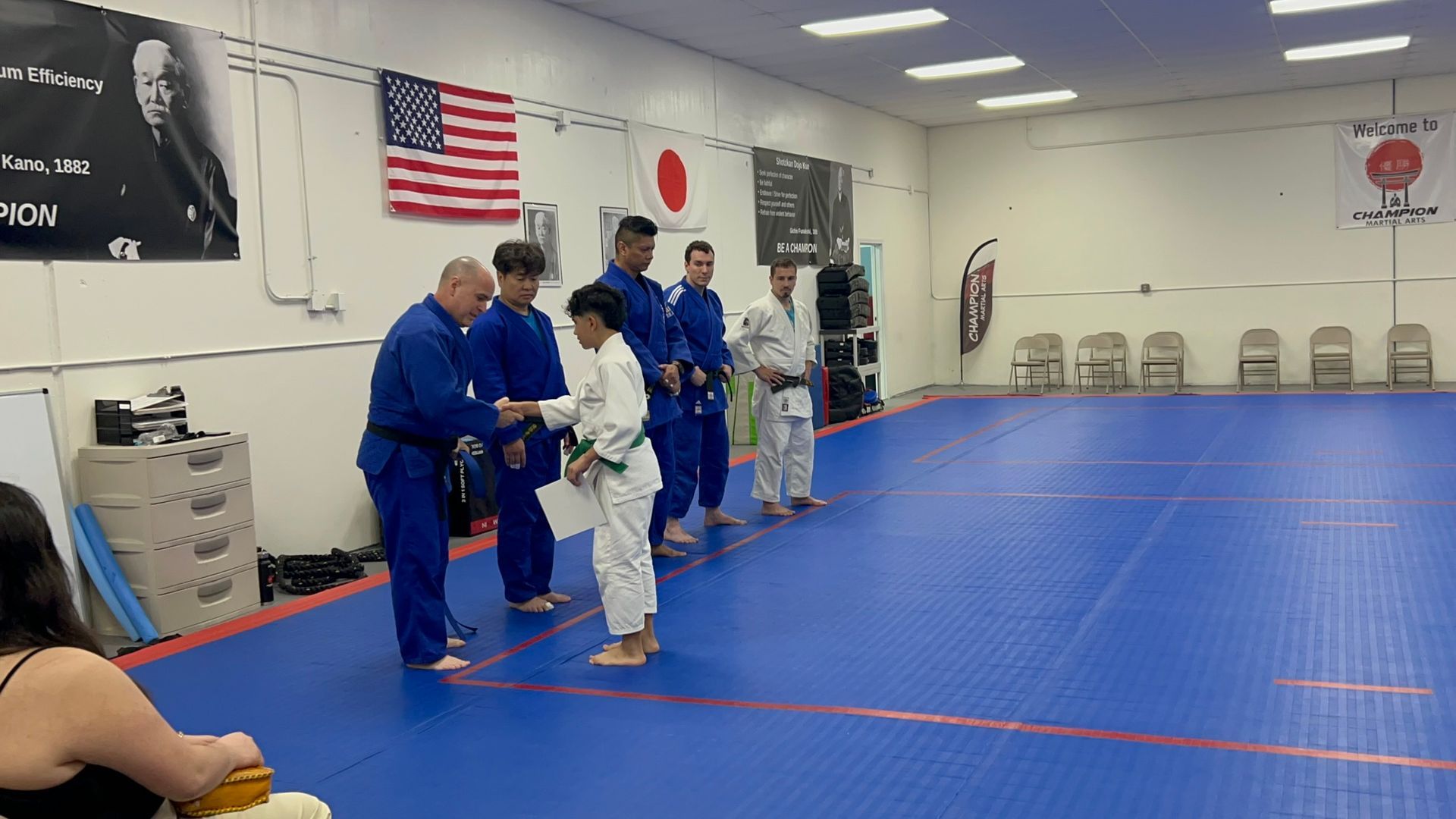
Judo is one of the few activities where your balance, timing, and quickness improve together, because you practice them together.
If you want better coordination and agility, you usually end up doing a mix of things: some strength work, some cardio, some balance drills, maybe a sport if you can fit it in. Judo brings all of that into one practice, and it does it in a way that keeps your brain switched on, not just your body moving.
In our classes, you are constantly learning how to place your feet, manage distance, react to a partner, and stay stable while moving fast. That combination is exactly why Judo is so effective for developing real-world athleticism, whether you are a kid still figuring out how to control your limbs, an adult trying to move better and feel sharper, or a senior focused on stability and fall prevention.
This matters in Pasadena because many of us spend long hours sitting, driving, or working repetitive shifts. Coordination and agility fade when you do not challenge them. The good news is you can rebuild both at any starting point, and you do not need to be naturally “sporty” to get there.
What coordination and agility really mean in Judo
Coordination is not just “being coordinated.” In practice, it is your ability to organize your body parts smoothly and efficiently: feet, hips, hands, posture, breathing, and timing. In Judo, you are rarely doing one thing at a time. You are pulling and stepping, turning and lowering your center of gravity, then changing direction again.
Agility is more than speed. It is the ability to start, stop, and redirect under control. Judo forces that in a safe, structured way because you are not running lines across a field. You are responding to a partner’s movement, which is more unpredictable and more realistic.
When we coach beginners, we look for small wins first: cleaner footwork, fewer stumbles, faster reactions to simple cues, and the ability to stay balanced when a partner applies pressure. Those are coordination and agility in action, and you can feel them improve faster than you might expect when training is consistent.
Why Judo trains your nervous system, not just your muscles
A big reason Judo works is that it is a skill sport. Your nervous system has to process information, choose a response, and execute it with precision. That is why you can leave class feeling physically tired and mentally awake at the same time.
Research in recent years keeps pointing to the same theme: Judo improves biomotor abilities like balance, speed, coordination, and agility because it blends strength and power with rapid decision-making. Even studies looking at short training blocks show measurable agility gains when athletes combine power-based resistance work and sprint interval training, especially when sequencing is planned well. We apply that same logic in a beginner-friendly way by building class flow so your body learns to produce force quickly and then stabilize immediately after.
In plain terms, you are teaching your body to move fast without getting sloppy. That is the secret sauce behind “athletic” movement, and it is exactly what most people want when they say they want to feel lighter on their feet.
The coordination engine: balance, posture, and proprioception
If you have ever watched a clean throw, it looks smooth and almost effortless. That is coordination plus posture plus balance working together. The cool part is that the process of learning throws builds those traits from the ground up.
We spend time on:
• How to stand and move without crossing your feet or losing alignment
• How to keep your hips under you, so your base is stable
• How to shift weight from foot to foot efficiently
• How to use your grip and upper body without over-tensing
• How to feel where your partner’s balance is, not just where you think it is
That “feeling” is proprioception: your body’s awareness of position and pressure. Judo improves it because you practice barefoot, you move through different angles, and you get constant feedback from a partner. You do not need fancy gadgets. Your training partner becomes the feedback tool, and that makes improvements stick.
Agility is built into every round: changing levels and direction
Judo includes explosive entries, pivots, turns, drops in level, and quick recoveries. Those movements look like athletic drills because they are athletic drills, just disguised as technique.
Agility shows up when you:
• Step off-line to create an angle
• Turn your hips in while keeping posture
• Recover your base after a failed attempt
• Transition from standing to groundwork smoothly
• Pop back to your feet with control when it is time
What makes Judo special is that you are not practicing agility in isolation. You are practicing it while solving a problem: how to unbalance a resisting partner, how to stay safe, how to keep moving without freezing. That is why the agility you build transfers so well to daily life, from catching yourself on a curb to moving quickly around a busy workspace.
What the science says about how fast you can improve
People often ask how long it takes to see results, and we like that question because it keeps expectations realistic. While everyone adapts at a different pace, research on trained Judo athletes shows that even six weeks of focused training can produce significant improvements in agility tests, vertical jump, and short sprint performance. The details vary, but the lesson is consistent: coordination and agility respond quickly when practice is regular and structured.
For most beginners, the first changes are not just physical measurements. You might notice you stop tripping over your own feet during warm-ups. You might feel your reactions sharpen when a partner moves. You might realize you can change direction without your knees feeling cranky. Those are meaningful improvements, and they tend to show up early.
The longer-term gains come from layering skills. At first, your brain is busy remembering steps. Later, movements become automatic, and that is when you start moving with real speed and confidence because you are no longer thinking through every piece.
Judo for kids: motor development that actually carries over
Kids are built for learning movement, but modern life does not always give enough opportunities to develop it. Judo helps because it requires full-body control, not just running in a straight line.
In youth training, we see coordination grow through simple, repeatable patterns: falling safely, stepping and turning, holding posture, and learning how to move with another person without panicking or stiffening up. Reviews of youth Judo consistently show improvements in strength, endurance, speed, coordination, flexibility, balance, and posture, often outperforming physical education alone.
We also like that Judo teaches “rules of movement.” Kids learn when to go, when to stop, when to reset, and how to be aware of space. That kind of body awareness helps in other sports, in playground movement, and honestly, in everyday clumsiness.
Judo for teens and adults: power, speed, and calm under pressure
Teen and adult bodies can develop power quickly, but only if training gives the right stimulus and the right technical constraints. Judo does both. You learn to generate force through the hips and legs, connect that force through the core, and direct it through grips and angles. That is coordination in a very real sense: linking body segments efficiently.
We also see a mental benefit: when you train with partners, you learn to stay calm while something unpredictable is happening. That calm improves performance. If your shoulders are tense and your breathing is shallow, your movement gets slow and clunky. When you learn to relax and move, your agility improves without you “trying harder.”
For adults who sit a lot, Judo can be a wake-up call in the best way. Your hips start opening up, your posture improves, and your feet get quicker because you are actually using them with intent. You are not just exercising. You are practicing movement.
Judo for older adults: stability, reaction time, and fall prevention
Agility is not only for athletes. For older adults, agility is the ability to correct a misstep, turn safely, and maintain balance when the ground is uneven or the environment is crowded. That is life.
Recent research trends highlight Judo’s value for seniors, including improvements in executive function and reaction time along with physical stability. For people managing neuropathy or balance challenges, dynamic exercises and proprioceptive training can support steadier movement and fall prevention. We take that seriously in how we scale training: controlled pace, clear progressions, and a lot of emphasis on safe falling mechanics and posture before intensity.
The goal is not to “go hard.” The goal is to move better, stay confident in your body, and keep your independence strong. Judo can support that when coached with the right priorities.
Adaptive training for attention and neurodevelopmental needs
Families sometimes ask if Judo can help with focus, self-regulation, or social comfort. Research on neurodevelopmental disorders such as autism and ADHD suggests structured martial arts training can improve motor skills, social interaction, and emotional well-being. We are careful not to overpromise outcomes, but we do see something consistent: clear routines, partner practice, and achievable goals can be a strong environment for building confidence.
Judo is also tactile and “real.” You are not shadowboxing the air. You are working with another human being, learning boundaries, timing, and respect. That helps many students stay engaged, because the feedback is immediate and practical.
What to expect in our Judo classes in Pasadena
Our approach keeps training progressive and organized. We start with foundations that protect your body, then build complexity as your coordination improves. You will spend time on standing technique, groundwork, and movement skills that link everything together.
A typical class includes:
• A warm-up that emphasizes balance, footwork, and joint preparation
• Technical instruction with step-by-step coaching
• Partner drills that build timing and control
• Positional groundwork to improve agility on the mat
• Conditioning that supports explosive movement and stability
You do not need to “get in shape first.” We build fitness through skill practice, and we scale intensity so you can train consistently. Consistency is what drives coordination and agility gains, not occasional heroic workouts.
A simple 6-week plan to track coordination and agility gains
If you like having a clear target, we recommend a short training block where you show up, stay consistent, and measure something simple before and after. You can do this without turning training into a lab experiment.
1. Train 2 to 3 times per week using the class schedule, and keep your attendance steady.
2. Pick two quick benchmarks: a basic agility drill (like a T-test pattern) and a standing broad jump or vertical jump.
3. Record baseline results on week 1, then retest at week 6 under the same conditions.
4. Focus your technique goal each week on one theme (posture, footwork, timing, transitions).
5. Notice your real-life changes too: fewer stumbles, quicker turns, better balance on one foot.
Even if numbers are not your thing, the six-week structure keeps you honest. It is long enough to adapt and short enough to stay motivating.
Ready to Begin
Building coordination and agility is not about doing more random exercise. It is about practicing the right movements, in the right order, with feedback you can actually use. Judo gives you that blend of balance, speed, posture, and timing, and it scales for kids, adults, and older students without losing what makes it effective.
When you are ready to train Judo in Pasadena with a clear plan and supportive coaching, we would love to help you start at Champion Martial Arts & Fitness and keep progressing in a way that feels steady, not overwhelming.
No experience is needed to begin. Join a martial arts class at Champion Martial Arts & Fitness today.