Judo is more than a sport here in Pasadena, it is a practice of learning how to learn, for life.
In our Pasadena community, people often start Judo for one reason, like confidence, fitness, or a better activity for their child, and then stay for a completely different reason: growth. The longer you train, the more you realize Judo rewards curiosity and patience as much as athleticism. That is why it fits so naturally into real life, where improvement is rarely instant.
We also like that Judo has a built-in structure that keeps you moving forward without rushing you. You can feel progress week to week, but you can also train for years and still discover details you missed before. That combination, steady wins and endless depth, is what makes Judo such a powerful tool for lifelong learning in Pasadena.
Why Judo naturally creates lifelong learners
Judo teaches a simple lesson early: technique beats force when technique is trained well. That mindset turns practice into a problem-solving habit. Instead of asking, “How do I try harder,” you start asking, “How do I do this better,” and that shift follows you into school, work, and relationships.
One reason Judo stays relevant as you age is that the art is designed around efficiency and adaptation. Trends at the elite level even reflect this long runway. Research comparing peak performance ages shows Olympic judokas have a median peak around 27, while Paralympic judokas peak later, around 31, with some categories higher. That matters for everyday training because it supports a truth we see on the mat all the time: you do not age out of learning. You adjust how you train and keep building.
In Pasadena, where schedules are busy and stress is real, that adaptability is not a small benefit. It is what makes training sustainable.
The “progress loop” we build into every Judo class
When you watch a good Judo class, it can look smooth and simple, but the learning design underneath is pretty intentional. We repeat fundamentals, then add complexity, then return to fundamentals again with better understanding. That loop keeps beginners from feeling overwhelmed and keeps experienced students from getting bored.
Skill before speed, always
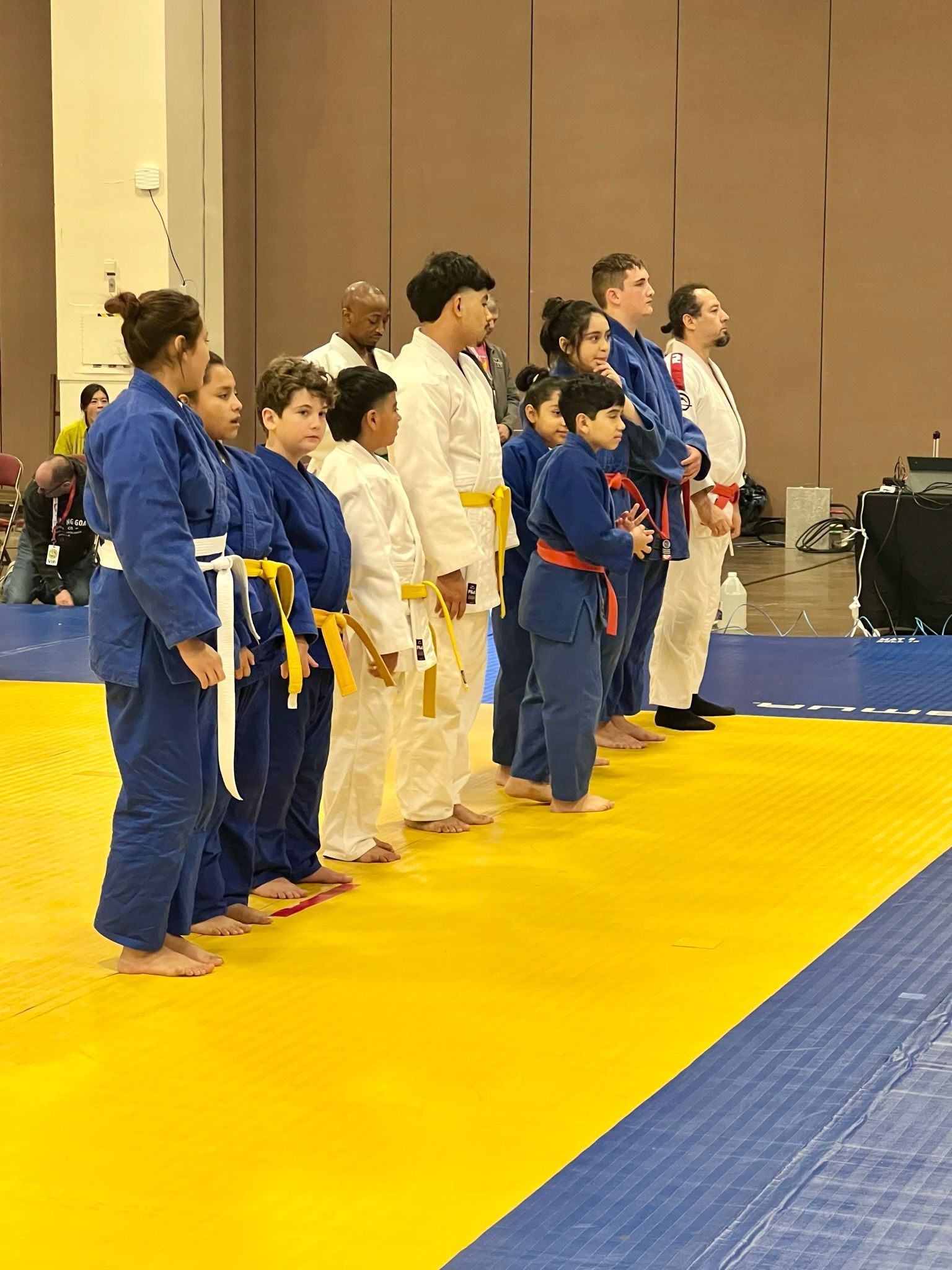
In our program, we treat technique like a language. You learn the alphabet first: posture, movement, grips, and safe falling. Then you start forming sentences: entries, timing, and combinations. Only after that do we turn up intensity. This approach is especially important for youth Judo in Pasadena because kids develop confidence fastest when they feel safe and capable.
A practical example: a new student may want to “win” randori (live practice) right away. We guide that energy into learning how to off-balance, how to move with purpose, and how to stay calm. The outcome is better Judo and a better attitude in general.
Belts are not just ranks, they are feedback
Belts in Judo give you clear checkpoints. That is motivating, but more importantly, belt progression teaches you how to handle long projects. You work on a skill, get coaching, try again, and keep refining until it clicks. For many students, that becomes a blueprint for how to improve at anything.
A realistic timeline for many consistent students is that reaching black belt can take about 3 to 5 years. Some move faster, some slower, and that is fine. The bigger point is that Judo makes the process visible, and that visibility builds perseverance.
Personal growth you can actually notice outside the dojo
People sometimes talk about “confidence” like it is a vibe you either have or do not have. We see it differently. Confidence is built from repeated evidence: you tried something difficult, stayed with it, and improved. Judo supplies that evidence constantly.
Mental resilience through controlled discomfort
There is a specific kind of stress in training that is useful. You feel pressure, you make decisions, you get feedback, and you reset. Over time, your nervous system learns that challenge is not danger. That carries into everyday moments like taking a test, speaking up, or handling conflict without escalating.
We also coach students to separate identity from outcome. You can have a rough round and still be making progress. That is a mature skill, and it is rare.
Respect and self-control that is practiced, not preached
In Judo, respect is part of the routine. You bow, you partner up, you take care of each other, you learn safely. That structure is not about being formal for the sake of it. It is about making a training room where people can work hard and still trust the process.
For kids, that becomes a habit of self-control. For adults, it becomes a reminder that intensity and kindness can exist in the same space.
Youth Judo in Pasadena: what parents should know
When parents ask us about youth Judo in Pasadena, the questions are usually practical: Is it safe, will my child get hurt, will this help with confidence, will this help with focus. Those are fair questions, and we take them seriously.
Judo has a strong safety culture because it includes learning how to fall correctly from the start. We build breakfalls early and revisit them often. We also structure training so that kids do not get thrown into chaos. They learn skills in pieces, then combine them.
Here is what families typically notice after a few months of consistent training:
• Better body awareness, including balance and coordination during everyday play
• Stronger listening skills because techniques require attention to detail
• More calm in social situations, since physical confidence reduces overreaction
• Improved follow-through, because progress comes from showing up repeatedly
• Healthier outlets for energy, which matters a lot after a long school day
If your child is shy, Judo can help without forcing them to be loud. If your child is high-energy, Judo can help without trying to “calm them down” in a negative way. It gives that energy a job.
Judo and the growth mindset for adults in Pasadena
Adult students often arrive with one quiet concern: “Am I too late to start.” We hear that question from people in their 20s, 30s, 40s, and beyond. The good news is that Judo is built for learning at any age, as long as training matches your body and your goals.
The same peak-age trends seen in elite settings, with later peaks in Paralympic contexts, support a broader idea: performance and progress do not have to be early-only. For adults, improvement often looks like moving better, staying consistent, and learning to manage intensity. That is real growth.
How adult training stays realistic
We help you train in a way that fits your life in Pasadena. Some weeks you feel sharp. Some weeks you are tired from work. Judo still works, because the goal is not perfection, it is practice.
We focus on:
1. Building a reliable base: posture, movement, and safe falling
2. Learning high-percentage throws and takedown entries that match your body
3. Developing grip fighting fundamentals without turning every round into a battle
4. Adding groundwork skills for control and escapes
5. Improving conditioning gradually so you feel better, not wrecked
That sequence keeps learning steady. It also helps prevent the common pattern of going too hard too soon, then disappearing for months.
Community and belonging: why training sticks
People stay in Judo because it becomes part of their identity in a healthy way. You are not just “working out.” You are learning something with other people who are also trying, failing, improving, and laughing about it afterward.
Globally, Judo participation remains stable in many places, even with normal ups and downs. Japan still reports over 123,000 federation members in 2024. Internationally, data from 2022 to 2024 shows athlete numbers growing fastest compared to other roles, and women represent about a third of active athletes. That gender split is not perfectly balanced yet, but it is moving in a better direction.
Locally, we take that inclusivity seriously. Martial Arts in Pasadena should feel welcoming, not intimidating. Whether you are brand new, returning after time off, or signing up your child, our goal is to make the first month clear and manageable.
What makes Judo such a strong “life skills” curriculum
Judo is often called “the gentle way,” but gentle does not mean easy. It means efficient, controlled, and thoughtful. Those qualities map directly to personal development.
The hidden lessons inside the techniques
Every throw and pin has a lesson inside it:
• Timing teaches patience and observation
• Off-balancing teaches you to create opportunity instead of forcing outcomes
• Grip fighting teaches boundaries and strategy
• Groundwork teaches persistence when you feel stuck
• Randori teaches calm decision-making under pressure
Over time, these are not just martial skills. They become personal skills.
Take the Next Step
Building a lifelong learning habit does not require perfection, it requires a place to practice, good coaching, and a community that keeps you coming back. That is exactly what we aim to provide every day on the mat, using Judo as the vehicle for personal growth that you can actually measure.
When you are ready, we would love to help you start in a way that feels comfortable and sustainable. At Champion Martial Arts & Fitness, our classes are designed so you can begin with the fundamentals, build real confidence, and keep progressing, whether your goal is youth Judo in Pasadena or a fresh start for yourself.
Train with purpose and see real improvement by joining a martial arts class at Champion Martial Arts & Fitness.