
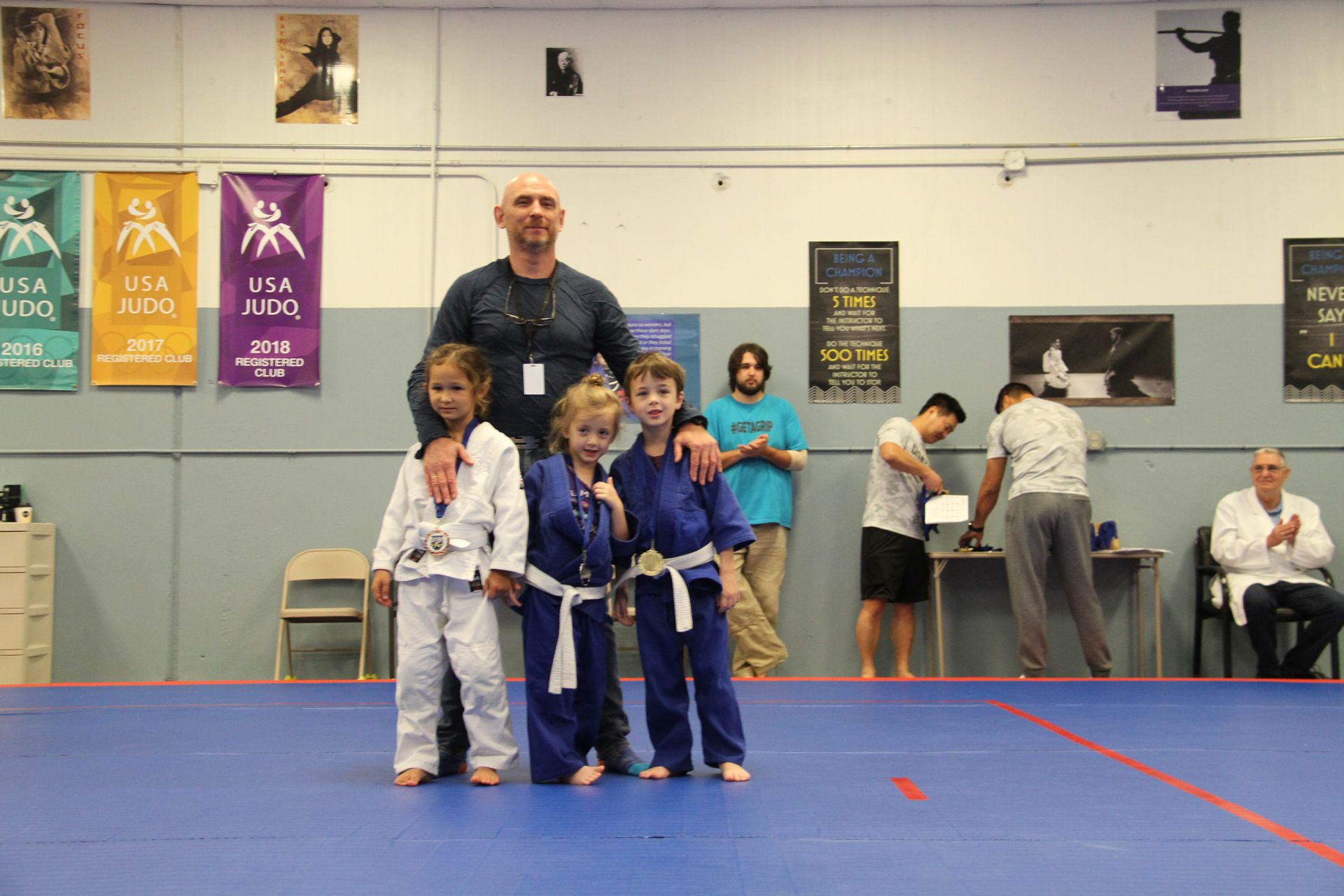
Judo gives kids a rare mix of real athletic skill and calm, everyday confidence.
Parents around Pasadena tell us the same thing in different ways: you want an activity that burns energy, builds character, and still feels safe and structured. Judo checks those boxes in a way that surprises families, especially when they see how quickly kids start moving with more balance and self-control.
In our kids classes, we treat Judo as more than a sport. It is a skill set built on timing, posture, and cooperation, with clear rules and a respectful culture that helps kids thrive in school, at home, and with friends.
Judo also has staying power. It is actively practiced worldwide at a serious level, and that matters to parents because it signals structure, standards, and a proven training pathway. When your child learns Judo, your child is stepping into a system that has helped millions of students grow in disciplined, measurable ways.
Why Judo Works So Well for Kids
Judo is built around a simple idea: use leverage and positioning instead of raw strength. For kids, that is huge. It means smaller students can succeed without feeling overpowered, and bigger students learn control instead of relying on size.
A good kids program also needs repetition without boredom. Judo delivers that through skill progressions that feel like games at first, then gradually become more technical. Kids practice movement patterns, safe falling, and partner drills, and before long you can see improvements in coordination and focus.
The best part is that the lessons are immediate. When a child loses balance, forgets a grip, or rushes a technique, the outcome is obvious. That feedback loop teaches patience and problem-solving in a very real, very memorable way.
Balance, Coordination, and the Athletic Base Kids Need
Most youth sports demand coordination, but not all of them teach it directly. In Judo, we intentionally build it. Footwork, posture, turning mechanics, and controlled contact all train the body to move as one connected unit.
This shows up outside the dojo, too. Kids who struggle with clumsiness often start to look more comfortable in their own skin. You may notice fewer trips and stumbles, better body awareness on playgrounds, and more confidence joining physical activities at school.
We also focus on agility and core strength without making it feel like a boot camp. Kids are working hard, yes, but it feels like skill-building, not punishment.
Learning to Fall Safely (A Skill You’ll Appreciate Later)
One of the most practical parts of Judo is ukemi, or breakfalls. Kids learn how to hit the ground in a way that reduces risk, spreads impact, and keeps the head protected.
That matters in real life. Falls happen in PE class, on concrete at the park, and during neighborhood games. When your child practices breakfalls consistently, your child learns a safety habit, not just a technique.
We introduce falling skills progressively. We do not toss kids into scary situations. We build confidence step by step until falling feels normal and controlled, which is exactly what you want.
Youth Judo in Pasadena: A Strong Choice for After-School Structure
Pasadena families are busy. Between school, homework, and schedules that change week to week, you need an activity that is consistent and worth the drive. Youth Judo in Pasadena gives kids a dependable routine, with clear expectations and a culture that rewards effort.
We see kids come in after long school days with that restless energy that can go either direction. In class, that energy gets a place to go. The structure is calming, and the physical work helps kids reset.
It also helps that Judo is partner-based. Kids learn how to work with others respectfully, even when they are competitive. That combination of teamwork and accountability is a big reason parents keep bringing kids back.
On the Mat and in Life: Skills That Carry Into School and Home
Judo lessons stick because they are felt, not just heard. When we ask kids to listen, try again, and show respect, we reinforce it through action, not lectures. Over time, those habits become natural.
Here are a few ways we see Judo training show up beyond class:
• Improved focus under pressure, like taking a quiz or speaking in front of a group
• Better frustration tolerance, because not every technique works on the first try
• More respectful communication, including learning when to be assertive and when to pause
• Healthier confidence, based on competence instead of attention or popularity
• Stronger resilience after setbacks, because losing a round is part of learning
It is not magic, and we do not promise instant personality changes. But consistent training tends to bring out a calmer, more capable version of the same kid you already know.
Confidence That Is Earned, Not Hyped Up
In Judo, confidence comes from doing difficult things safely, repeatedly. A child learns to grip properly, to move with balance, to escape a pin, to fall and get back up. That is real achievement.
We also teach kids to stay respectful while they improve. The goal is never to create an aggressive attitude. The goal is self-control. When kids feel capable, they usually become less reactive, not more.
That matters for social situations, too. A confident child often handles teasing and peer pressure more calmly, because confidence changes posture, voice, and decision-making.
Bullying Concerns: What Judo Can and Cannot Do
Parents ask about bullying all the time, and we take it seriously. Judo can help in two important ways: it builds self-confidence and it teaches practical control in close contact.
But we also teach boundaries and smart choices. The best “win” is avoiding unnecessary conflict and getting help from trusted adults. When kids understand how to move, how to keep balance, and how to stay composed, they are less likely to panic, and that can defuse situations early.
If you want your child to learn how to handle pressure without becoming confrontational, Judo is a strong fit.
How We Teach Judo to Beginners (Even If Your Child Has Never Trained)
A beginner should not feel lost. We keep class organized, predictable, and easy to follow. Kids learn by doing, with short explanations and lots of guided reps.
Most classes include a warm-up, fundamental movement skills, technical instruction, and controlled partner practice. We keep partners appropriate by size, age, and experience as much as possible, and we coach closely during live training.
Kids also learn dojo behavior: lining up, listening during instruction, showing respect to partners, and taking responsibility for their own gear. Those little routines build maturity fast, sometimes faster than parents expect.
What Kids Typically Learn First
We start with fundamentals that keep kids safe and set the stage for long-term progress:
1. How to stand, move, and keep balance under light pressure
2. Basic grips and how to use hands respectfully and safely
3. Breakfalls and controlled landings, introduced progressively
4. Simple throws with clear safety rules and close coaching
5. Pins and escapes that teach pressure, breathing, and calm problem-solving
This foundation helps kids feel successful early, which matters. When kids feel capable, they stay engaged.
Is Judo Safe for Children?
No sport is risk-free, but Judo is designed around control, rules, and partner safety. We teach kids how to fall before we ask them to throw. We coach distance, posture, and safe movement, and we keep the training environment structured.
We also emphasize tapping and stopping when needed, especially during groundwork. Kids learn that safety is a shared responsibility, not just a rule adults enforce.
If your child is nervous about contact, that is normal. We build comfort gradually. Many kids start shy, then settle in once they realize the class culture is respectful and supportive.
Judo in Pasadena: What to Expect at the First Class
Walking into a martial arts class for the first time can feel like a lot, especially for kids. We keep the first day simple. Your child will learn basic movement, get introduced to safe falling concepts, and practice with clear guidance.
You do not need fancy gear to start. A t-shirt and athletic pants are usually fine for a trial, and we will let you know what is needed as you continue. Bring a water bottle, arrive a bit early, and plan to watch how your child responds to the environment. You will probably notice the tone right away: structured, busy, and surprisingly positive.
We also recommend checking the class schedule on the website before you come, so you can pick a time that matches your child’s energy level. Some kids do best earlier in the evening, and some do better after they have had time to decompress after school.
How Often Should Kids Train to See Benefits?
Consistency beats intensity. Most kids do well with two classes per week to build momentum. Once a child is comfortable, adding a third day can accelerate skill development and conditioning.
The big milestone is usually the first month. That is when you start seeing smoother movement, better listening habits in class, and more confidence in partner drills. Progress continues after that, but the first month is where many parents go, “Okay, this is working.”
How Judo Differs From Other Martial Arts (In Ways Kids Can Feel)
Judo is a grappling art focused on throws, pins, and control. Kids learn to off-balance a partner, move with timing, and apply technique with restraint. The training includes live practice, but it is guided and rules-based, which helps kids learn realism without chaos.
Because grips and balance matter so much, Judo tends to sharpen posture and footwork quickly. Kids also learn patience. Rushing usually backfires, and that lesson is oddly useful when your child is learning to slow down and think at school.
If your goal is a youth program that blends athletic development with discipline and respect, Judo is one of the most direct paths to that outcome.
Take the Next Step
When kids train Judo consistently, the change is usually quiet at first: better posture, calmer reactions, improved focus, a little more confidence in how they move through the world. Over time, those small shifts add up to real growth on and off the mat.
At Champion Martial Arts & Fitness, we keep our Youth Judo in Pasadena structured, beginner-friendly, and focused on strength, confidence, and discipline, so you can feel good about the training environment while your child builds skills that last.
Turn what you’ve learned here into real-world skills by training at Champion Martial Arts & Fitness.