Judo turns training partners into a team by making progress impossible without trust, respect, and shared effort.
Judo is often called the gentle way, but there is nothing passive about it. In a good class, you learn how to move with purpose, stay calm under pressure, and work with another person without trying to overpower anybody. That mix is exactly why Judo is such a powerful social sport in Pasadena: you cannot really improve alone.
In our Judo classes, friendship is not an add-on or something that happens only after months of training. It shows up in the small, everyday moments, like a partner reminding you to tuck your chin before a breakfall, or two students quietly nodding because a throw finally clicked. Over time, those moments turn into real connection and a true sense of team spirit.
If you are looking for youth Judo in Pasadena, or you are an adult who wants a fresh challenge, the social benefits matter just as much as the physical ones. When you know the people around you have your back, you show up more consistently, you try harder, and you enjoy the process more.
Why Judo Naturally Creates Community
Judo began in Japan in 1882 and was built around a simple idea: use leverage, timing, and balance rather than brute force. That philosophy changes the social atmosphere immediately. Instead of proving toughness, you are learning how to cooperate while still training intensely.
Every class requires partnership. You take turns throwing and being thrown, drilling and receiving, leading and following. That structure does something subtle but important: it teaches you to value your training partners as part of your progress, not as obstacles in your way.
Because the techniques are so dependent on timing, it also levels the playing field. Beginners can have meaningful training rounds with more experienced students when the goal is to learn and refine, not to dominate. That kind of environment makes it easier to talk to people, ask questions, and feel like you belong.
The Role of Trust: Safety First, Confidence Follows
Friendship in Judo often starts with safety. Before big throws, we emphasize fundamentals like posture, grips, movement, and especially how to fall safely. Breakfalls are not just a technical skill. They are a signal that we are taking care of each other.
When you practice with partners who respect control, you relax. When you relax, you learn faster. And when you learn faster, you start to feel confident enough to help someone else. That loop is where team spirit really grows.
Trust also gets built through consistency. Seeing the same people each week, noticing who is improving, and sharing the same little wins creates a kind of quiet bond. It is not loud. It is just real.
Partner Drills That Turn Strangers Into Teammates
A big part of Judo is cooperative repetition. Even when training feels challenging, the drill format keeps it social. You are communicating with your body, but you are also communicating in the normal ways: quick feedback, encouragement, and the occasional laugh when footwork goes the wrong direction.
Here are a few ways our Judo classes in Pasadena build connection through training structure:
• Rotating partners helps you meet more people, adapt to different body types, and feel included even if you are brand new
• Technique drilling gives you time to talk, ask questions, and learn at a steady pace without the stress of constant sparring
• Situational practice teaches problem-solving together, because your partner’s role is to create the right challenge, not to shut you down
• Controlled sparring develops mutual respect, since progress depends on intensity that is honest but safe
• Bowing, etiquette, and mat manners create a shared culture that makes the room feel like a team, not a random group
Those details might sound small on paper, but they are the daily habits that build a strong gym community.
Youth Judo in Pasadena: Friendship With Structure and Purpose
Kids want friends, but kids also need boundaries. Youth Judo in Pasadena works because it gives both. The class has clear expectations, but it is still fun and physical, which matters when a child has energy to burn after school.
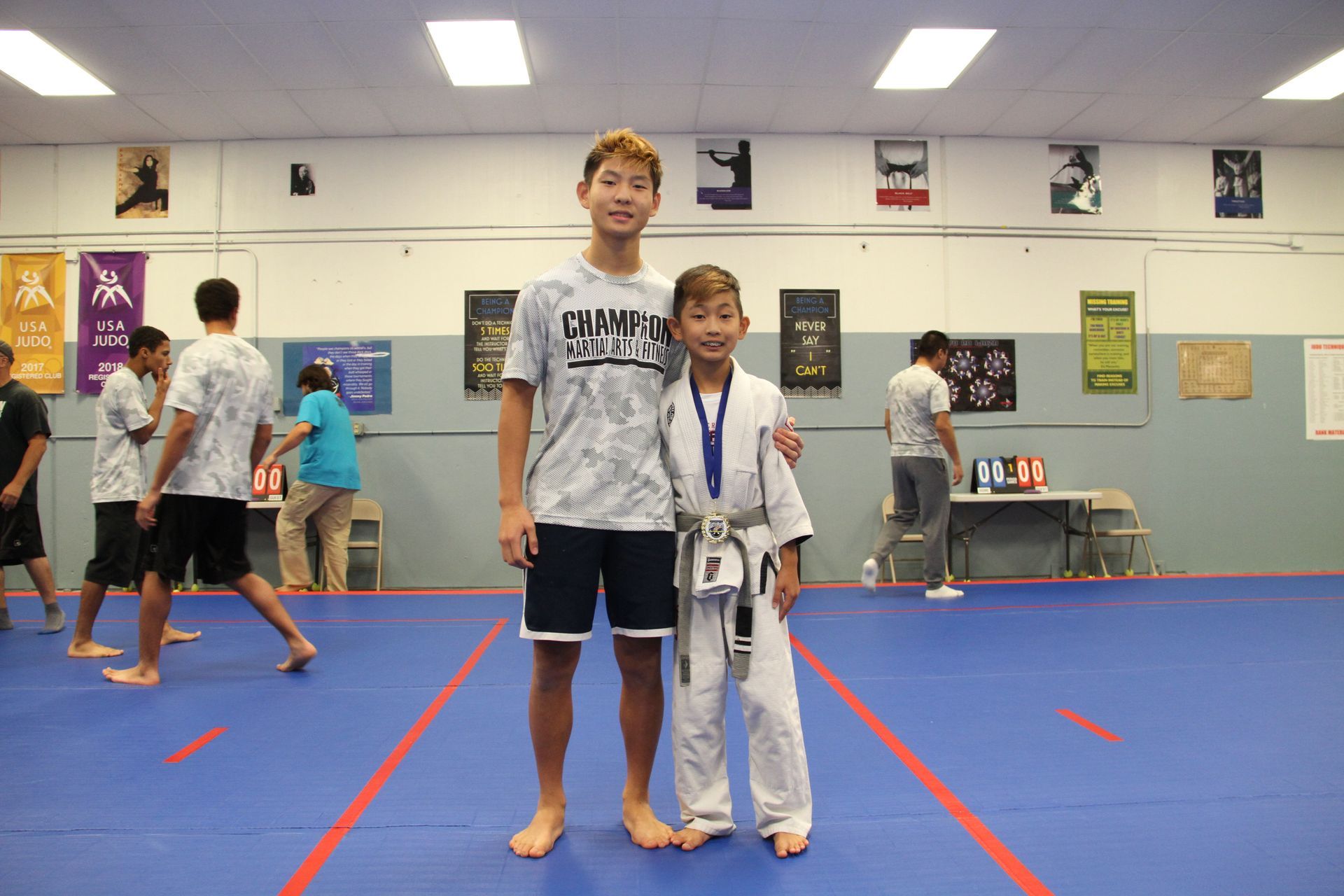
In youth training, we see friendships form around shared goals. One student wants to earn a stripe, another wants to finally hit a clean throw, and suddenly they are rooting for each other. That support is powerful because it is earned. Nobody is handing out praise just to be nice; it is tied to effort, respect, and improvement.
Parents also tend to notice how social skills improve outside the gym. When a child practices taking turns, listening, staying composed, and showing respect on the mat, those habits bleed into school and home life in a surprisingly practical way.
Adult Judo: Belonging Without the Awkwardness
Adults often worry that joining a martial arts class will feel like walking into a private club. In Judo, the structure helps remove that awkwardness. You partner up, you follow the drill, you switch roles, and you learn. Conversation happens naturally because the training requires cooperation.
For many adults, the team spirit is the reason they stay. Fitness goals are great, but the routine becomes easier when you know people will notice if you miss a week. It is not pressure in a negative sense. It feels more like accountability from people who want you to succeed.
Judo is also mentally engaging, which creates a different kind of bond. You are not only sweating next to someone; you are solving problems with someone. That creates respect quickly.
How Team Spirit Shows Up in Real Training Moments
Team spirit is not a slogan. You feel it in the room when:
• A more experienced student slows down to help you understand kuzushi, the off-balancing that makes throws work
• A beginner shows up again after a tough first week, and everyone quietly recognizes the grit that takes
• Training partners remind each other to breathe, reset, and keep posture when fatigue hits
• Someone taps during groundwork, and the other person releases immediately without ego
• The group celebrates progress like cleaner footwork or better breakfalls, not only big dramatic throws
These moments add up. They create a culture where people can train hard without being harsh.
Shared Goals: Belts, Skills, and the Pride of Progress
Judo has a clear progression system, which gives the whole group a shared language of improvement. You are not just exercising; you are building skill. That matters socially because it gives people reasons to encourage each other.
We also like that goals in Judo are not purely physical. Coordination, timing, focus, and composure are all part of the journey. Someone might not be the strongest person in class, but everyone can see their balance improve or their confidence rise. That makes encouragement feel genuine.
In a community like Pasadena, where families are busy and schedules are packed, having a place where progress is visible and measurable is a huge benefit. It keeps motivation steady and keeps people connected.
Competition and Events: The Team Feeling in an Individual Sport
Judo is an individual sport on paper, but the training culture is deeply collective. Even at national levels, participation is growing, and events can draw well over a thousand athletes across divisions. That growth reflects something important: people like the challenge, and they like being part of something organized and meaningful.
Whether you compete or not, the preparation for competition brings people together. Training gets more focused, teammates help each other sharpen techniques, and the group energy changes in a good way. You start to feel like you are representing your room and your training partners, not just yourself.
We also pay attention to inclusivity in martial arts overall. Adaptive Judo programs supported at the national level reflect a broader trend: more people want access to grappling and community, regardless of ability level. That mindset fits naturally with Judo’s core values of respect and mutual welfare.
What to Expect in Our Judo Classes in Pasadena
If you are considering Judo, it helps to know what a typical class feels like. While every session has its own focus, we generally build training in a way that keeps it safe, social, and skill-driven.
1. Warm-up and movement prep focused on balance, coordination, and safe falling
2. Technique instruction with clear details, then partner drilling to build repetition
3. Situational practice that isolates common problems so you learn solutions faster
4. Controlled sparring depending on level, with coaches guiding intensity and safety
5. A brief reset at the end so you leave feeling accomplished, not wrecked
That structure is one reason friendships form quickly. You are constantly interacting, but always with a purpose.
Practical Questions We Hear Often
Is Judo beginner-friendly?
Yes. Judo is designed around efficiency, not raw strength, so beginners can learn the basics without feeling like the room is only for athletes. We teach fundamentals like breakfalls early so you can train with confidence.
Is it good for kids?
It is one of the most practical options for kids because it channels energy into coordination, respect, and focus. Youth Judo in Pasadena is especially helpful for building social skills in a structured setting.
What about cost and scheduling?
Martial arts pricing in the area often averages around $145 per month, with a fairly wide range depending on program details. The best next step is checking the class schedule page and trying a class so you can see what fits your routine.
Take the Next Step
If you want a sport where you can build real skills and real relationships at the same time, Judo is hard to beat. The throws and groundwork are exciting, but the deeper value is the community: training partners who keep you safe, push you to improve, and make the work feel worth it.
We built our culture at Champion Martial Arts & Fitness around exactly that idea, because strong technique grows faster in a room that feels supportive and focused. If you are ready to explore Judo classes in Pasadena, we would love to help you get started with a plan that fits your age, experience level, and goals.
Become part of a community committed to growth, respect, and skill by joining a Brazilian Judo class at Champion Martial Arts & Fitness.