
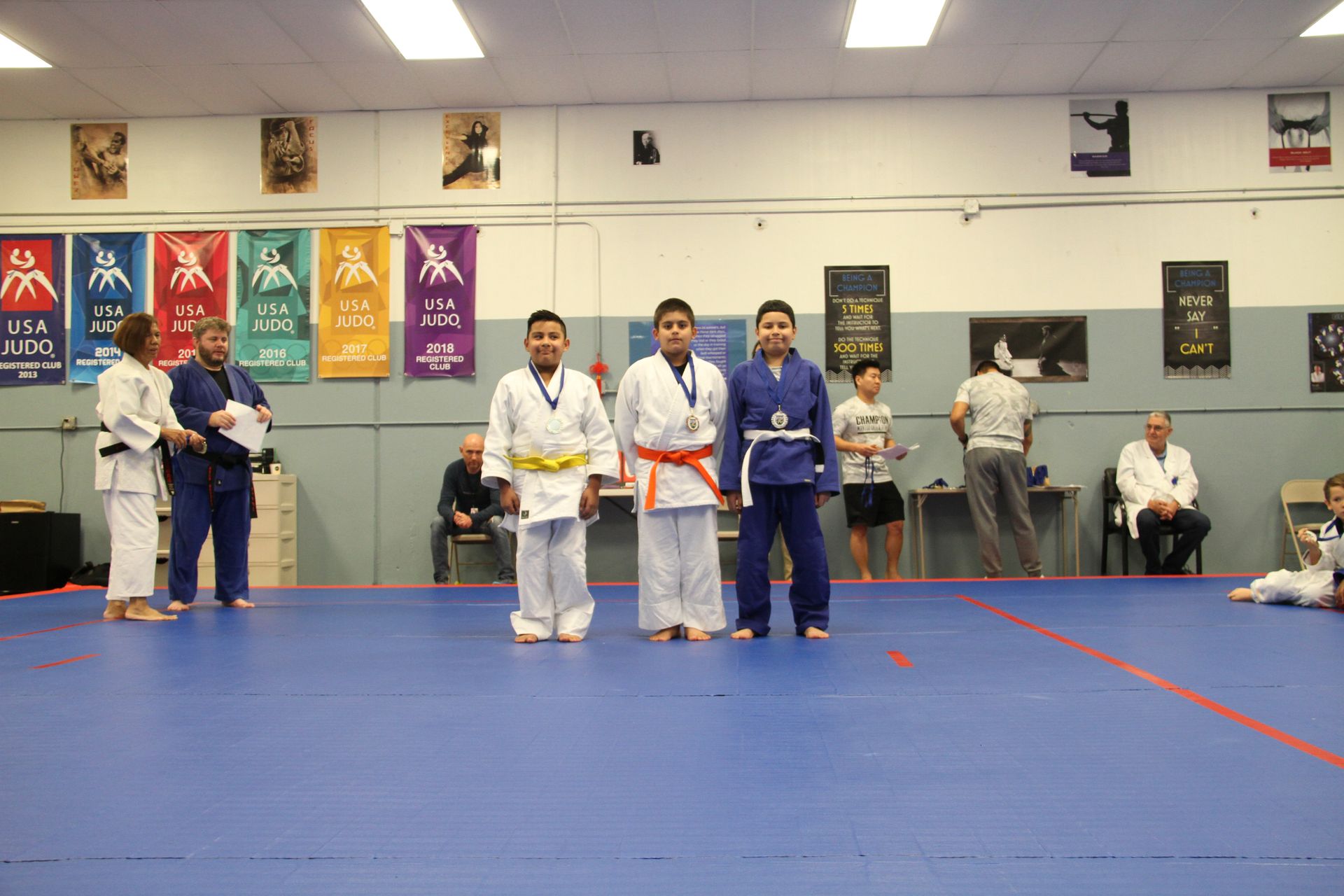
Judo gives teens a safe place to practice confidence, self-control, and how to treat people well, even under pressure.
In Pasadena, teen life moves fast: school expectations, sports, social stress, and the constant feeling of needing to prove yourself. We see it every week. That is why we like Judo for teens, not just for the throws and grappling, but for the way training quietly reshapes how you carry yourself.
Judo is a structured environment where effort matters, attitude matters, and respect is not optional. In our classes, teens learn to listen, respond, and stay calm enough to make good decisions. The cool part is that those habits do not stay on the mat.
If you are looking for youth Judo in Pasadena that builds real leadership traits, we focus on the day-to-day skills that parents appreciate and teens can actually use: accountability, composure, teamwork, and respect that looks like action, not just words.
Why Judo works for teen leadership development
Leadership is not a speech. For teens, leadership usually looks like smaller choices: showing up when you said you would, encouraging a teammate, taking feedback without getting defensive, and doing the right thing when no one is clapping for you.
Judo makes those moments unavoidable. You train with partners, you rotate, you learn from different body types and personalities, and you do not get to “win” by ignoring the rules. The structure of class gives teens a simple message: your behavior affects everyone else’s learning.
A big leadership lesson in Judo is that you cannot control everything, but you can control your response. When a technique fails, we help students reset, breathe, and try again with better timing instead of frustration. That is a life skill dressed up as martial arts training.
Respect in Judo is not a slogan, it is a practice
Respect is often talked about like it is a feeling. In training, we treat it like a behavior you choose. Teens learn respect through repetition: how to line up, how to partner up safely, how to follow instructions quickly, and how to take responsibility for mistakes without excuses.
Because Judo involves close contact, respect also means boundaries and safety. We coach teens to protect training partners, not “dominate” them. If you cannot keep your partner safe, you cannot train. That expectation tends to click with teens who want independence but still need clear guardrails.
Over time, that respectful mindset becomes automatic. You will notice it in how your teen speaks to adults, how your teen handles a tough conversation, and how your teen responds to correction at school or at work.
The leadership lessons built into every class
Our teen training is not a lecture series. Leadership is built into how we run class, how we correct technique, and how we expect students to treat each other. Judo is practical that way.
Accountability: showing up and following through
A teen who trains consistently learns a simple truth: progress does not come from motivation, it comes from attendance. We set expectations, we track improvement, and we help students connect effort with results. That is accountability in real time.
When teens miss a detail, we do not shame them. We correct, we demonstrate again, and we ask them to try it immediately. That process teaches responsibility without drama, which is honestly refreshing.
Coachability: learning without ego
In Judo, even a small tip can make a technique work. We teach teens to stay teachable because ego slows learning down. That includes listening fully, asking questions at the right time, and taking feedback without trying to “win the conversation.”
Coachability is also a leadership trait. Teens who can accept correction calmly tend to do better in team settings, group projects, and first jobs where communication matters.
Composure: staying steady under pressure
Judo training introduces pressure in a safe, controlled way. Your heart rate climbs, your body tenses up, and you have to think anyway. We coach teens to slow down, keep posture, and solve the problem in front of them.
That composure is what parents often tell us they want most. Not more aggression, not more attitude, just steadiness. Judo delivers that when training is consistent.
How partner training teaches teamwork and empathy
Teens do not train alone in Judo. That matters. Partner training forces communication, patience, and awareness. You learn quickly that you cannot improve if your partner does not feel safe working with you.
We teach students to adjust intensity to match the drill, to check in, and to help each other. Sometimes that means being the stronger partner who slows down for learning. Sometimes that means being the newer student who asks for clarification instead of faking it.
Here is what we want teens to learn from partner work:
• How to lead without bossing people around, using clear cues and calm energy
• How to follow directions without losing confidence, because learning is not weakness
• How to handle disagreements respectfully, especially when timing or technique feels confusing
• How to keep training safe, protecting partners and making the room better for everyone
• How to encourage others honestly, celebrating progress without sarcasm or put downs
Those are teamwork skills that translate directly into school, sports, and family life. It is hard to be disrespectful when you rely on someone to help you learn.
Conflict management: what Judo teaches without saying it out loud
A lot of teen conflict comes from escalation: a comment, a reaction, a bigger reaction, and suddenly it is a mess. In Judo, escalation usually backfires. When you tense up and rush, your balance breaks down. When you get emotional, you stop seeing opportunities.
We teach teens to recognize that moment, then choose a better response. You stay grounded, you control grips, you move with purpose. This does not make teens passive. It makes them thoughtful. There is a difference.
That is one reason Judo is such a strong fit for leadership. Leaders do not escalate chaos. Leaders reduce it.
Structure, rank, and responsibility: why belts matter for teens
Rank is not the goal, but it is a useful tool for teens. Belts create a visible path: learn the basics, practice consistently, demonstrate control, earn the next step. That kind of clarity is rare in teen life, where so much feels subjective.
We use rank to teach responsibility. As students improve, we expect more maturity: better posture, better listening, better partner care, and a willingness to help newer students. In other words, the higher the skill, the higher the standard.
Teens also learn that leadership is service. If you know more, you share more. If you have experience, you use it to make the room safer and more focused, not to show off.
What to expect in our Judo classes in Pasadena
We keep classes fun and high energy, but we do not run a free for all. Teens usually like the balance. They get to work hard, laugh a little, and still feel proud when they leave.
Our coaching focuses on coordination, teamwork, and the technical details that make Judo effective. We also build strength and focus through drills that keep teens moving, not standing around.
If you want a clear starting point, our weekly schedule includes youth Judo training on Tuesday and Thursday evenings at 6:30 PM. The class schedule page on the website is the best place to confirm times and see updates.
A realistic teen journey: how leadership shows up over time
In the first few weeks, most teens are thinking about survival: learning how to fall safely, remembering names, figuring out grips, and trying not to feel awkward. That is normal. Judo is a new language at first.
By the next phase, you start seeing small changes. Teens stand straighter. They make eye contact more easily. They take correction with less defensiveness. They begin to understand that calm beats chaos, especially in close contact situations.
Later, leadership becomes visible. A teen helps a newer student with a basic movement. A teen stays composed after a tough round instead of sulking. A teen says “good work” to a partner without being prompted. Those moments are not flashy, but they are real.
How we keep training safe while building confidence
Safety is not a side note in Judo. It is the foundation. We teach breakfalls early and revisit them often. We emphasize control, proper pace, and partner awareness so teens can train hard without getting reckless.
Our instructors are experienced, and our teaching team includes more than ten black belts and USA Judo registered instructors. That depth matters because teens learn differently. Some need more structure, some need a quieter correction, and some need to be challenged. We adjust while keeping standards consistent.
Confidence grows best when teens feel safe enough to try, fail, and try again. That is what we aim for in every session.
Ready to Begin
If your teen needs a place to build discipline without being crushed by pressure, Judo is a strong answer. It teaches leadership through repetition, respect through habit, and confidence through measurable progress, all while giving teens a physical outlet that feels productive.
At Champion Martial Arts & Fitness, we keep our youth Judo in Pasadena focused on what matters: real skill, real structure, and a room culture where teens learn to lead by how they train. Check the class schedule, pick a day that works, and let your teen experience what consistent training can do.
Train with purpose and see real progress by joining a Brazilian Judo class at Champion Martial Arts & Fitness.