
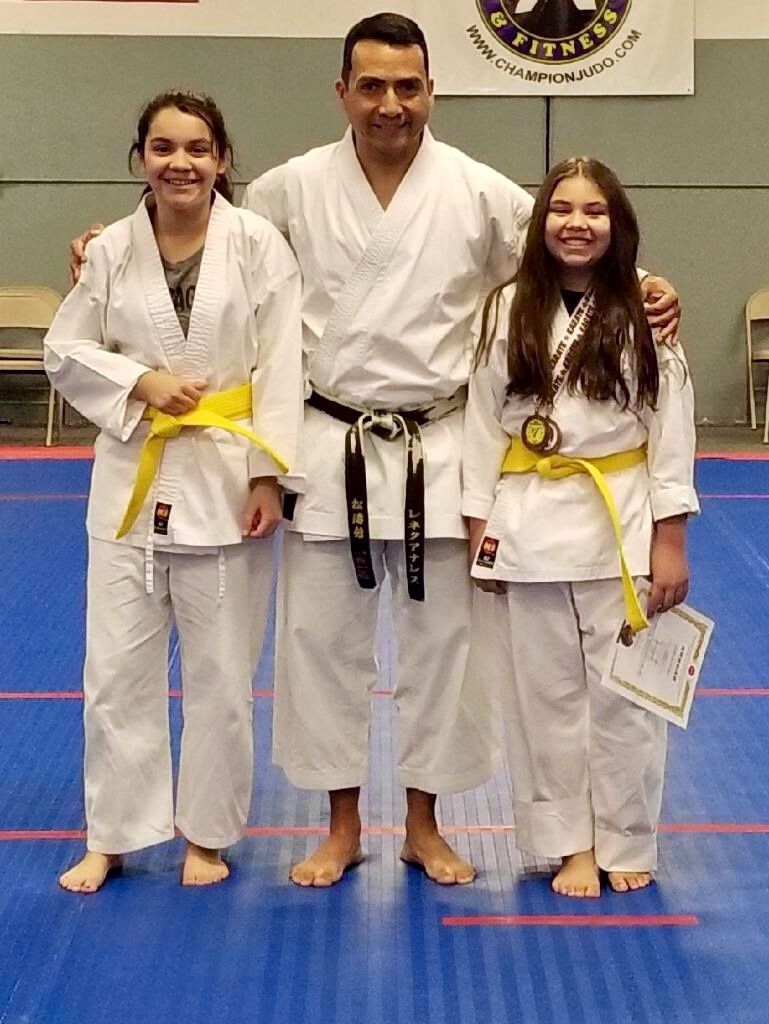
Judo is one of the rare sports where kids, teens, and parents can train the same skills, at the same time, with the same rules.
In Pasadena, life gets busy fast, and family schedules can feel like a puzzle you rebuild every week. When you are looking for an activity that is genuinely useful, safe to practice, and fun enough that everyone actually wants to come back, Judo tends to rise to the top. We see it again and again: families start with one student, then a sibling joins, and pretty soon a parent is asking about adult classes too.
Judo is also practical in a way that is easy to appreciate once you try it. You are learning how to move your body with balance and control, how to fall safely, and how to handle physical contact calmly. Those are big life skills, and you do not need a “fighter personality” to benefit from them. You just need a willingness to learn and show up.
In this breakdown, we will explain what Judo is, why it works so well for families here in Pasadena, and what you can expect when you step onto the mat with us, whether you are enrolling your child or looking for adult Judo in Pasadena for yourself.
What Judo really is, in plain language
If you have only seen highlights online, Judo can look like “throwing” and not much else. The real picture is broader. Judo is a grappling martial art built around balance, leverage, timing, and control. Instead of relying on strikes, we focus on how to manage distance, connect safely, and off balance an opponent so technique matters more than size.
A big piece of our teaching starts with ukemi, or breakfalls. That is the skill of landing safely. It sounds simple until you realize how often people get hurt in everyday life from slips, trips, or awkward falls. Learning how to fall with awareness is one of the most underrated benefits of training, especially for kids who are growing fast and adults who sit at desks all day and feel a little stiff.
Judo also has a clear rule set and a culture of respect that makes training feel structured. Bowing in, partnering up, taking turns, and learning to win and lose with composure are not “extras.” We treat those habits as part of the training, because they shape how you handle pressure outside the gym, too.
Why Judo fits family life in Pasadena
Family training works when the environment is predictable and the activity is scalable. Judo is both. The fundamentals do not change, but the intensity can. That matters for families because a beginner kid, a teen athlete, and a parent starting fresh all need different pacing, yet can still practice the same themes: posture, grips, movement, and balance.
We also like Judo for families because progress is measurable. You can feel the difference when your footwork improves or when a technique that felt impossible last month starts clicking. That feedback loop is motivating for kids, and it is honestly refreshing for adults who want a challenge that is not just “go harder.”
Another practical point: training is screen free without being forced. Once class starts, you are busy. You are working with partners, listening for coaching cues, and figuring things out in real time. Families tell us that even one or two classes a week can reset the mood of the week, because everyone gets to move and focus on something real.
The confidence that comes from learning control, not chaos
A lot of parents ask about confidence, and we get why. Confidence is not just being loud or fearless. Real confidence is calmer: you know what to do, you know what you can handle, and you do not panic when something gets physical or uncomfortable.
Judo teaches that kind of confidence because the goal is control. You learn how to hold posture when someone is pulling on you. You learn how to keep breathing when you get pinned. You learn how to escape using technique instead of thrashing. For kids, that turns into better self regulation. For adults, it often turns into better stress management, because you practice staying composed while your heart rate is up.
We also coach students to respect the tap and to prioritize safety. That culture reduces the “tough guy” energy that can make beginners uneasy. You can train hard and still be responsible. In a family setting, that balance matters.
Safety first: why falling and partner work are taught progressively
If you are new, it is normal to wonder whether throws are safe. The answer depends on coaching, progression, and the training environment. We treat safety as a system, not a slogan. We start with movement skills and breakfalls, then layer in grips, entries, and controlled throwing mechanics.
Partner training is introduced in a way that matches your level. Early on, students do a lot of drilling with cooperation. That is not “easy mode,” it is how you build the pattern correctly before you add resistance. As students improve, we add more realistic timing and live practice, but we still keep structure. You do not get tossed into chaos.
Here are a few safety habits we build into our Judo in Pasadena classes from day one:
• We teach ukemi early and revisit it often, because safe falling is the foundation for everything else.
• We match partners thoughtfully by size, experience, and temperament so practice stays productive.
• We emphasize posture, grips, and movement before high amplitude throws, so students earn intensity gradually.
• We coach students to communicate clearly with partners, especially when something feels off or confusing.
• We keep a clean mat space and clear boundaries, because simple logistics prevent a lot of accidents.
What kids get from Judo that goes beyond “discipline”
Kids develop coordination quickly in Judo because the training is full body and multi directional. They are not just running forward. They are stepping, pivoting, turning, balancing, and reacting to a partner. That translates well to other sports, but it also helps kids who are not “sports kids” feel capable in their own body.
We also see a social benefit that is hard to fake. Judo requires cooperation. You cannot learn throws alone. Students learn to be a good partner, to give and receive feedback, and to handle small setbacks without melting down. If your child tends to quit when something is hard, Judo is a steady way to build grit, because difficulty is normal here and we teach students how to work through it.
And yes, the structure helps with discipline, but we prefer to think of it as habits. Kids learn to listen, line up, take turns, and follow steps. Over time, those habits show up at school and at home, usually without you having to nag as much.
Teen training: athleticism, resilience, and a healthier kind of toughness
Teens often love Judo because it feels real. There is contact, there is challenge, and there is a clear sense of progress. But it is not reckless. Technique still matters more than bravado, and that is a healthier version of toughness for teenagers.
We focus on helping teens build strong movement, conditioning that supports grappling, and the ability to stay calm under pressure. We also pay attention to mindset. A teen who learns how to reset after getting thrown or pinned is learning a life skill: you can lose a moment and still win the next one.
For athletic teens, Judo can become a serious pathway. Research on elite competition suggests many Olympic level Judo athletes peak competitively around their late 20s, which is a reminder that this sport rewards long term development. That is good news for families because it means you are not “too late” if your teen starts now, and there is room to grow for years.
Adult Judo in Pasadena: fitness that has a purpose
A lot of adults want fitness, but they do not want another routine that feels like punishment. Adult Judo in Pasadena works because every workout has a point. You are not just sweating to sweat. You are getting stronger for grips, learning to move efficiently, and improving your ability to control your body in awkward positions.
You will feel the physical benefits quickly: stronger legs and hips, better posture, improved conditioning, and more mobility. But the mental benefit is what surprises many adults. In class, you have to focus. You cannot half pay attention and do Judo well. That makes training feel like a reset button after a long workday.
We also keep adult training beginner friendly. You do not need a background in sports. You do not need to be “in shape” first. You start where you are, and we build from there. If you can show up consistently, you can improve, and that is the honest truth.
What a typical class looks like on the mat
If you have never taken a martial arts class, walking in can feel like you are missing the secret instructions. We keep it straightforward, and we explain the “why” behind what we are doing so you are not just copying shapes.
A typical session often includes:
1. Warmups that prepare your joints and reinforce fundamental movements used in throws and groundwork.
2. Breakfall practice, because safety and confidence come from repetition, not luck.
3. Technique instruction with clear steps, followed by drilling with a partner at an appropriate pace.
4. Situational practice that adds timing and decision making without turning the room into chaos.
5. Live rounds when you are ready, plus a short cool down and reminders on what to practice next.
Over time, students start noticing patterns. Grips matter. Footwork matters. Staying relaxed matters. Those lessons compound, and that is when Judo starts to feel less like memorizing techniques and more like learning a language.
Gear, etiquette, and common beginner questions
Most beginners worry about two things: what to wear and whether they will feel out of place. We make onboarding simple. You can start with comfortable training clothes, and we will guide you on uniforms, fit, and what is worth buying once you know you are sticking with it.
Etiquette is not about being strict for no reason. It is about making the room safe and respectful. You will bow, you will listen, you will train with different partners, and you will learn how to take care of the mat space. Those routines make training smoother, especially when families are sharing the same schedule.
We also get questions about seasons. Globally, interest in Judo gear like judo gi tends to spike around late summer and early fall, and we see a similar rhythm locally as families settle into school year routines. If you are thinking about starting, that timing can be a natural moment to build a consistent training habit.
Take the Next Step
If you want an activity that strengthens your family, not just your calendar, Judo is hard to beat. You get practical movement skills, real confidence under pressure, and a structure that helps kids and adults grow without turning training into a stressful competition every day.
When you are ready to try Judo in Pasadena with a team that takes coaching, safety, and steady progress seriously, we would love to help you get started at Champion Martial Arts & Fitness with a plan that fits your household and your goals.
Put these techniques into practice by joining a Judo class at Champion Martial Arts & Fitness.