
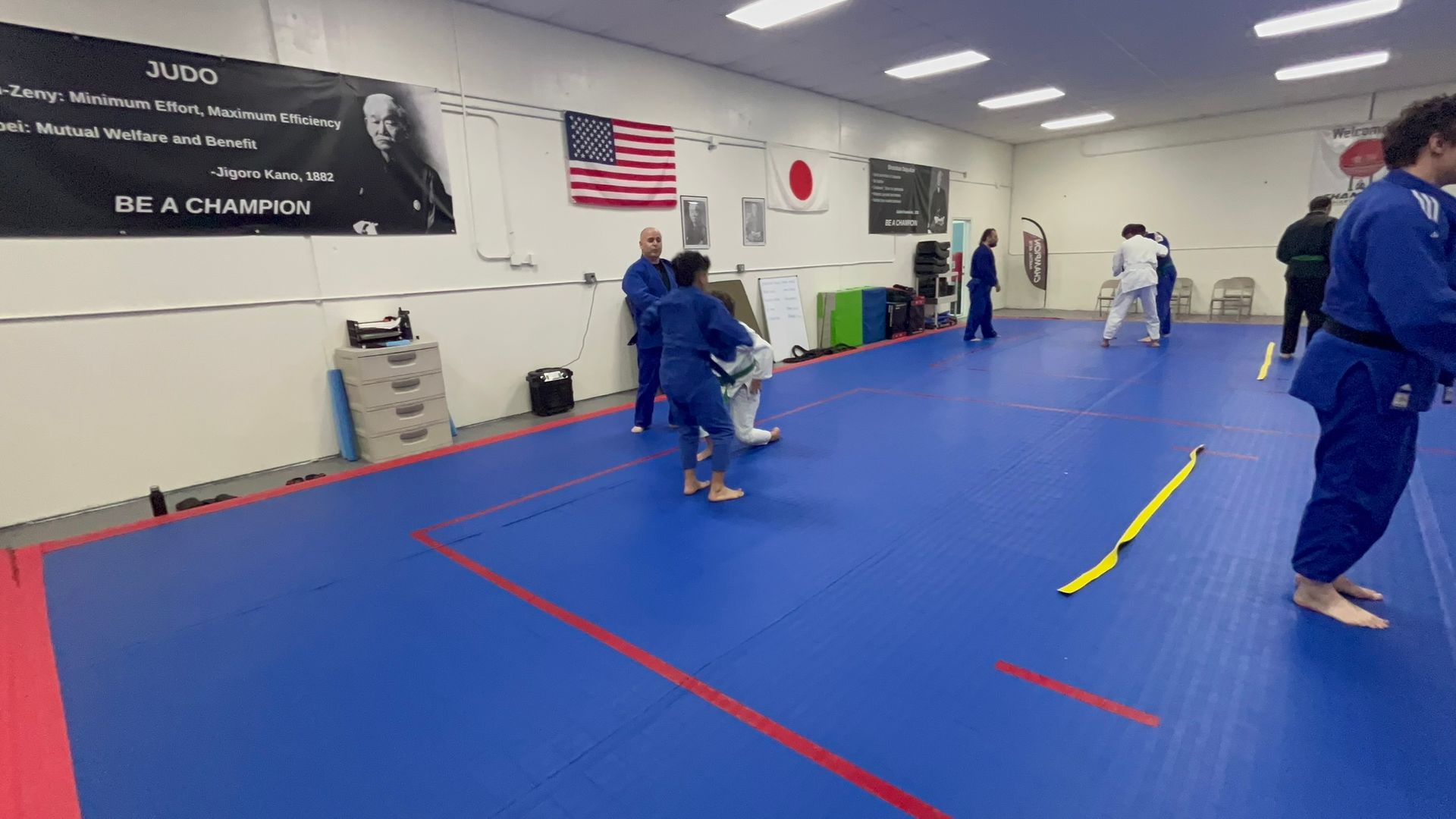
Judo is a full-body practice that can quietly reshape how you handle stress, frustration, and everyday pressure.
If you have been looking for a practical way to feel steadier mentally, Judo is an option that surprises a lot of people once they stick with it. Most folks first notice the physical side: better balance, stronger grip, improved conditioning. But what often lasts longer is the mental shift: calmer reactions, more confidence under pressure, and a clearer way of thinking when life feels loud.
Here in Pasadena, TX, daily stress can come from long shifts, family responsibilities, commuting, or just the constant sense that you need to keep up. Our Judo training gives you a structured place to practice staying composed, solving problems in real time, and resetting your nervous system without needing to sit still and “try to relax.” You learn by doing, and that tends to work well for real people with real schedules.
This article breaks down the mental health benefits of Judo in Pasadena in a way you can actually use. We will connect the science to what happens on the mats, explain why the culture of Judo matters, and show you what to expect in your first weeks of training.
Why Judo Supports Mental Health in a Way That Feels Practical
Mental health is not just about what you think, it is about how your body responds to stress. Judo trains both at the same time. When you practice throws, breakfalls, and groundwork, you are learning to stay present in moments that would normally make you tense up or panic. Over time, your brain and body start to recognize that pressure does not automatically mean danger.
Research backs this up. In one six-week program, participants showed a large improvement in psychological resilience compared to a control group, with a very strong effect size and clear statistical significance. That matters because resilience is not a vague feel-good word. It is your ability to take a hit emotionally, regroup, and keep moving without spiraling.
In our classes, resilience shows up in small moments that add up. You get taken down, you breathe, you reset, you try again. You do not “win” every round, and that is the point. You practice staying steady while learning, and that steadiness carries into work, relationships, and the way you handle setbacks.
The Brain Benefits: Focus, Executive Control, and Emotional Regulation
One of the most underrated mental health benefits of Judo is cognitive training. Every exchange asks you to read movement, manage distance, anticipate timing, and choose a response quickly. That process strengthens executive control, which is the set of skills that helps you plan, focus, and resist impulsive reactions.
We see this most clearly in how students start describing their week after a month or two. Decisions feel less frantic. People report fewer emotional “spikes” when something goes wrong. That lines up with research showing Judo can improve concentration, impulse control, and stress coping while reducing symptoms of anxiety and depression in many practitioners.
Judo also gives you a safe way to express intensity. There is a big difference between bottling emotions and learning how to channel them. On the mats, effort is allowed. Frustration is normal. The lesson is that you can feel those emotions, stay respectful, and still make smart choices.
A simple way to recognize progress
If you are wondering whether Judo is improving your mental health, look for these changes over time:
- You recover faster after stressful moments instead of replaying them for hours
- You notice your breathing sooner when you start to feel anxious or angry
- You can stay focused on one task at a time more consistently
- You feel more comfortable with challenge, not just comfort
- You start handling conflict with calmer, clearer communication
None of this requires you to become “tough” in a fake way. It is more like you become more durable, and more patient with yourself.
The Role of Respect and Structure in Judo Classes
Judo is not just a workout. It has built-in structure: clear rules, clear expectations, and a culture of mutual respect. For mental health, that structure is powerful. It creates psychological safety, which is what allows you to take risks and learn.
In our Judo classes in Pasadena, we keep training organized and progressive. You will know what you are working on, why it matters, and how to improve it. That predictability can be a relief if your day-to-day life feels unpredictable.
Respect also changes how pressure feels. You are not trying to hurt anyone. You are learning with partners. That cooperative challenge is one reason Judo tends to build empathy alongside confidence. You start paying attention to other people’s balance and movement, and that awareness can spill into everyday interactions in a good way.
Why Judo Can Help With Anxiety and Low Mood
Anxiety is often future-focused: what if, what if, what if. Depression can feel like a heavy disconnection from action and momentum. Judo brings you into the present moment in a very direct way. If you are thinking about tomorrow while someone is working for a grip, you will notice quickly.
Physically, consistent training supports mood through improved sleep, energy regulation, and the natural “reset” that follows intense activity. Mentally, the practice gives you a routine that has clear wins: a cleaner breakfall, better posture, more composure during sparring, a technique that finally clicks. Those wins are small, but they stack up, and that matters when motivation is low.
Studies also show lower anxiety levels and stronger emotion regulation in experienced Judo practitioners, including elite athletes. While most of us are not training for international competition, the underlying mechanism still applies: repeated exposure to controlled stress improves your ability to regulate stress.
Judo for Kids and Teens: Focus, Confidence, and Social Skills
Families often ask us if Judo is helpful for kids who struggle with attention, emotional outbursts, or social confidence. The answer, in many cases, is yes, and the evidence is getting stronger. A 2024 systematic review covering multiple studies on neurodevelopmental disorders found Judo can increase physical activity, support social interaction, and improve emotional well-being and cognition for kids with autism, ADHD, and intellectual disabilities.
On the mats, kids practice waiting their turn, following a sequence, and responding to a partner respectfully. They get immediate feedback, but it is not the kind that shames them. It is just information: try again, adjust your stance, breathe.
Judo in Pasadena can be especially valuable for kids who spend a lot of time sitting. When movement becomes part of their routine, mood and behavior often improve because their body is finally getting the input it needs.
What parents usually notice first
Parents often tell us the first noticeable changes are:
- Better ability to follow directions without constant reminders
- More appropriate physical boundaries with peers
- Increased confidence in new environments
- Improved frustration tolerance when something feels difficult
- A healthier outlet for energy after school
Progress does not have to be perfect to be real. Consistency is what makes the difference.
A Timeline: How Long Until You Feel Mental Health Benefits?
People want a clear answer here, and while everyone is different, research gives us a useful range. Studies show noticeable mental health improvements in about six to eight weeks with consistent training. That does not mean you need to train every day. It means showing up regularly and letting the practice do its work.
Here is a simple mental-benefit timeline we often see in real training:
1. Weeks 1 to 2: You feel physically challenged, but you start sleeping deeper and feeling proud that you showed up
2. Weeks 3 to 4: You get more comfortable with contact and controlled intensity, and anxiety around “not knowing” drops
3. Weeks 5 to 6: Resilience jumps, focus improves, and you recover from bad days faster
4. Weeks 7 to 8: Mood and motivation lift, and you begin to trust your ability to handle pressure
5. Long term: Emotional regulation, confidence, and stress coping become part of your default settings
A useful goal is two to three sessions per week. That pace is enough for your nervous system to adapt without burning you out.
Pasadena Stress and Why Group Training Matters
Pasadena has a lot of hardworking people, and that often means long hours and high responsibility. Industrial work, shipping, plant schedules, and physically demanding jobs can create a specific type of stress: you feel worn down, but you still have to perform. Judo helps because it trains your body to stay functional under pressure while keeping you mentally engaged.
Group training adds another layer. Social connection is a real protective factor for mental health, and it is easy to lose as adults. On the mats, you start recognizing familiar faces, sharing small wins, and learning together. It is not therapy, and we do not pretend it is. But it is a structured community that makes it easier to keep going when your motivation dips.
What Makes Judo Different for Mental Health
Judo is not based on striking, and that changes the emotional tone. You are learning throws, takedowns, pins, and control, and you are learning how to fall safely. The emphasis on safety and mutual development creates a training space where people can challenge themselves without feeling reckless.
Judo also rewards patience. If you try to force everything, you get off-balanced. If you rush, you get countered. That teaches a lesson that is almost unfairly useful in daily life: timing beats tension.
And then there is the practice of getting up. You will fall. You will make mistakes. You will feel awkward sometimes. But you learn to stand up again without making it dramatic. That simple repetition can reshape how you deal with embarrassment, setbacks, and fear of failure.
Start Your Journey
Building better mental health is rarely about one big breakthrough. It is about steady habits that train your mind and body to respond differently, especially when life feels heavy. Judo gives you a practical, physical way to practice resilience, focus, emotional control, and confidence while still being part of a respectful team environment.
At Champion Martial Arts & Fitness, we teach Judo in Pasadena with a progressive approach that meets you where you are, whether you want stress relief, better focus, a healthier routine, or a challenge that makes you feel more like yourself again. If you are ready to try it, the next step is simple: show up once, and let the mats do what they do.
Ready to train? Join a Judo class at Champion Martial Arts & Fitness today.