
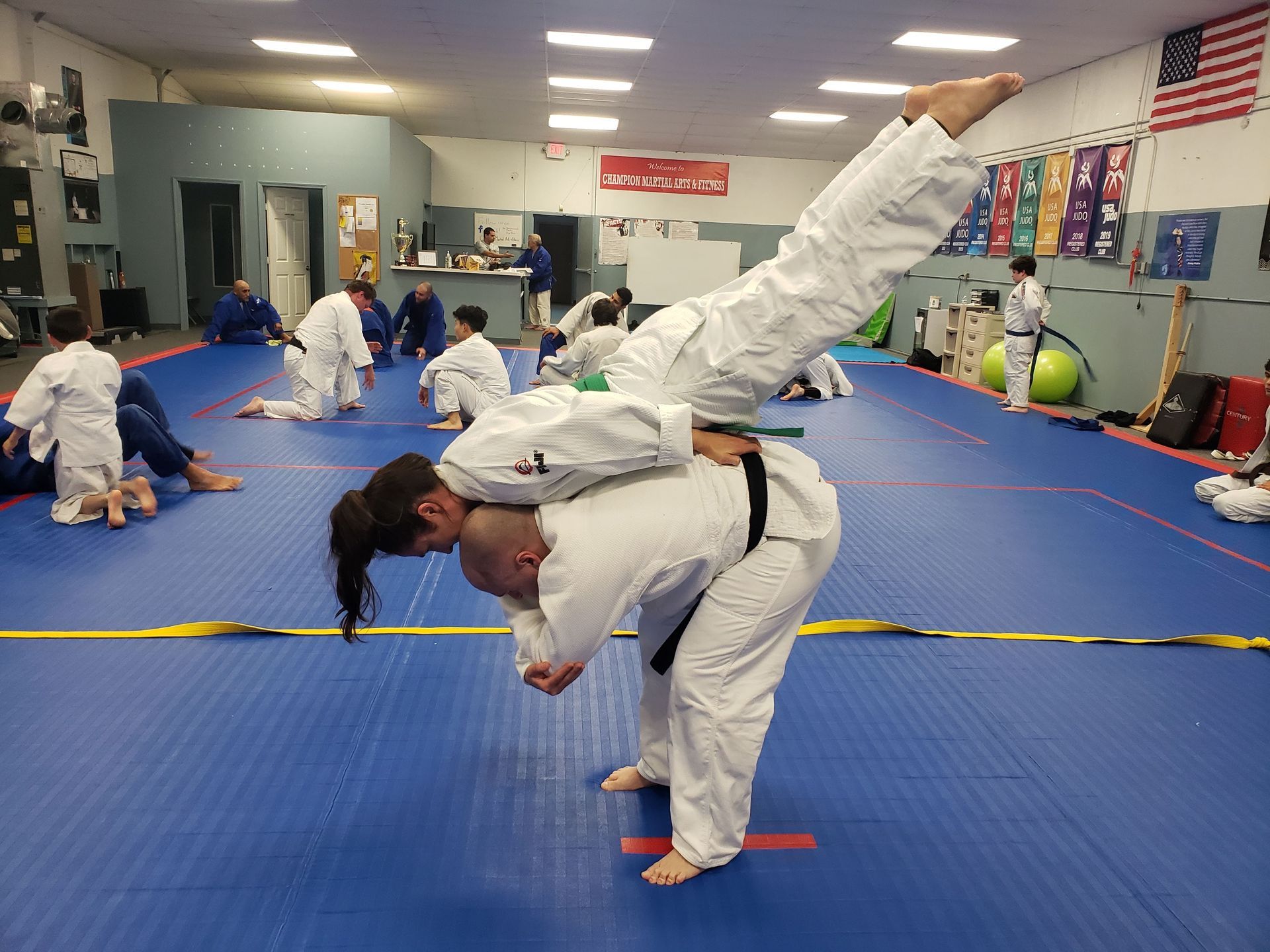
Judo is one of the few activities where getting more flexible and learning to fall safely happen in the very same class.
If your goal is to move better, feel looser, and stay active with fewer aches, Judo checks a lot of boxes at once. In our Pasadena training space, we see it every week: students come in tight through the hips and shoulders, a little unsure about being grabbed or pulled off balance, and then gradually start moving with more freedom and control.
What surprises many people is that flexibility in Judo is not a separate “stretching session” you do before real training. We build mobility into the warm-up, into the drills, and into the technique itself, so your range of motion improves because you use it. And when your body learns how to bend, rotate, and absorb force safely, injury prevention becomes part of the process, too.
Why flexibility in Judo is different from “just stretching”
A lot of people think flexibility means sitting in a split and holding it until it hurts. That is one kind of flexibility, but it is not the kind that helps you move safely when life happens fast. In Judo, we focus on usable range of motion, the kind you can control under tension, while breathing, while moving, and while someone is trying to off-balance you.
Our warm-ups lean heavily on dynamic movement instead of long static holds. We use joint rotations, leg swings, hip circles, shoulder mobility, and movement patterns that match what you will actually do in training. Over time, that tends to “unlock” areas that feel stuck, especially the hips, ankles, thoracic spine, and shoulders.
Dynamic mobility builds range of motion you can control
Controlled mobility is the bridge between being flexible and being durable. When we move you through positions gradually, your nervous system learns that the range is safe, and you start to access more of it without forcing anything. That matters for all ages, because the goal is not extreme positions, it is safe movement that you can repeat.
In practical terms, we treat flexibility like a skill. We practice it. You do not have to be naturally bendy to improve, and you do not have to “push through” uncomfortable stretches to see progress.
The mat gives you feedback that a gym floor cannot
Judo happens on mats for a reason. The surface lets you train movement and falls with less impact, and it also gives you constant feedback about your balance and posture. When your feet slide, when your hips are stiff, or when your shoulders tense up, the technique tells on you a little bit.
That feedback is useful. It helps us coach you toward better alignment and smoother movement, which is exactly what most people mean when they say they want to “move like I used to.”
How Judo training supports injury prevention
“Injury prevention” can sound like a medical topic, but in day-to-day training it is simpler: we want you to train consistently. That means reducing the risk of strains, sprains, and those nagging overuse issues that show up when technique is sloppy or the body is not prepared.
Judo helps by improving mobility, teaching joint-friendly movement patterns, and building stronger stabilizers around the knees, hips, shoulders, and core. Just as importantly, it teaches you how to land.
Ukemi: learning to fall safely is a real life skill
Ukemi (breakfalls) is one of the most practical things you can learn in Judo, even if you never compete and never plan to “fight.” We teach you how to distribute impact, protect your head, and avoid the instinct to post an arm straight out (a common way people get hurt when they fall).
As you practice, falling becomes less scary. You learn what a safe landing feels like, and that confidence changes how you move. People who are afraid of falling often get stiff, and stiffness is where injuries like to hide.
Stronger joints through better movement and stabilizers
When your joints move well, your muscles do not have to “panic tighten” to protect you. That is a big deal for injury prevention. In Judo, many techniques involve turning, stepping, and rotating as a connected unit. We coach you to use hips and legs instead of yanking with the arms, which helps protect shoulders and elbows over the long run.
Judo is also weight-bearing and full-body. The pushing, pulling, lifting, and controlled impact can support bone health and overall resilience. We keep the intensity appropriate to your level, but the training stimulus is real.
A note about injury risk and smart training
No physical activity is zero-risk, and we will not pretend it is. But Judo has a built-in safety culture: progressive drilling, learning ukemi early, and practicing technique with control before adding speed and resistance. Research also suggests Judo injury incidence is lower than some other combat sports, though reporting varies between studies, so we focus on what we can control: coaching, pacing, and good habits.
What to expect in our Judo classes in Pasadena
When you show up for Judo classes in Pasadena, we keep things structured and clear, even if you have never stepped on a mat. You will warm up, learn or refine a technical focus, drill with a partner, and build skill through repetition.
We also pay attention to how your body moves that day. Some days you feel springy, other days you feel stiff, and both are normal. The goal is steady progress, not perfection.
Here is a simple snapshot of what many classes include:
• Dynamic warm-up that targets shoulders, hips, ankles, and spine, so your body is prepared to rotate and change levels
• Ukemi practice to reinforce safe falling mechanics and reduce panic reactions under pressure
• Technical instruction on throws, grips, footwork, and movement patterns, taught in progressive steps
• Controlled partner drilling to build timing and confidence without unnecessary impact
• Conditioning that supports real movement: core stability, grip strength, and leg drive, adjusted to the room
We keep coaching cues practical. If your knees cave in, we fix it. If your shoulders ride up and tense, we work on breathing and posture. Those small adjustments add up, and they are often where flexibility and injury prevention show up first.
Judo for kids: mobility, balance, and safer falls
Kids move differently than adults, usually with more natural mobility but less body awareness under stress. Judo gives kids a structured way to learn balance, coordination, and safe movement while having fun and burning energy in a focused environment.
We emphasize fundamentals that support growth and safety: rolling, breakfalls, posture, and respectful partnering. The benefits are not just physical. When kids learn how to be off-balance and recover, they build confidence in their bodies.
Judo also teaches patience. Techniques take time, and that is a good lesson for kids who are used to instant results. Over months of training, you will often see better coordination, fewer clumsy falls, and improved ability to follow instructions in a group setting.
Judo for teens and adults: flexible strength and everyday durability
For teens and adults, flexibility often means “I want my back and hips to stop feeling tight” or “I do not want to get hurt when I work out.” Judo addresses both by building flexible strength, the ability to move through ranges while staying stable.
You will use your legs and hips to generate power, your core to transfer force, and your grip and posture to maintain control. That combination is excellent for functional fitness. It is not just exercise, it is a skill practice that leaves you sweating.
We also scale training so it fits your starting point. If you are returning to activity after time off, we keep the pace realistic. If you are athletic and want more challenge, we progress the complexity and resistance appropriately.
Judo for active aging: staying mobile and learning fall skills
As we age, the stakes of a fall get higher. That is not fear-mongering, it is just reality. The good news is that Judo-based fall training has been used in programs that help older adults develop safer backward and lateral falling competence.
In our classes, we apply the same principle with a smart progression. We start low, slow, and controlled. We use mats, we teach positioning, and we build confidence step by step. Even if you never want to be thrown hard (and you do not have to), learning how to protect your head, turn your body, and absorb impact can be incredibly empowering.
Flexibility also matters more with age. Stiff ankles and hips can make balance harder. When those joints regain some motion, walking, getting up from the floor, and even simple turns can feel smoother.
The flexibility and injury prevention habits you build outside class
Judo works best when you treat it like a practice, not a once-in-a-while event. You do not need a complicated routine at home, but a few habits help your body recover and adapt.
1. Show up consistently, even if it is just once or twice a week at first, because your mobility improves through repeated exposure
2. Hydrate and sleep, since tightness often gets worse when recovery is poor
3. Spend five minutes on gentle joint circles and breathing on non-training days, especially hips, shoulders, and ankles
4. Communicate during partner work, so drills stay controlled and productive
5. Respect soreness versus sharp pain, and tell us what you are feeling so we can adjust
These are small things, but they keep you training. And consistency is where the real flexibility gains happen.
Take the Next Step
If you want a training method that improves how your body moves while also teaching real injury-prevention skills like safe falling, our Judo program is built for that. We coach flexibility as a moving, usable skill, and we keep progression realistic so you can build confidence without feeling wrecked after every session.
When you are ready, we will help you choose an approach that fits your age, your current fitness level, and your goals, whether you are looking for better mobility, safer movement, or a long-term practice you can stick with. That is exactly what we focus on every day at Champion Martial Arts & Fitness here in Pasadena.
Improve your fitness, confidence, and grappling ability by joining a Judo class at Champion Martial Arts & Fitness.