
Your first Judo class should feel structured, safe, and surprisingly doable, even if you have never grappled before.
Walking into your first Judo class can feel like stepping into a new language: the uniform, the bows, the grips, the quick movements. That is normal. Our job is to make the experience clear, welcoming, and paced so you can learn without feeling rushed.
Judo is famous for throws, but what surprises most beginners is how much time we spend on safety and fundamentals first. Before you ever try to “launch” anyone, you learn how to land, how to move with balance, and how to work with a partner without muscling through it.
If you are looking for adult Judo in Pasadena because you want real skills, a better workout, or just a new challenge that actually holds your attention, your first class is where it starts. And it starts simpler than most people expect.
What Judo is really about (and why beginners usually like it)
Judo means “the gentle way,” and that word gentle can be misleading. It does not mean easy. It means smart. Judo is built around leverage, timing, and balance, using technique instead of brute strength whenever possible.
We teach Judo as both a martial art and a sport. That means you will learn throws, pins, and submissions, but you will also learn how to control distance, break posture, and stay calm under pressure. The mental part matters more than people think. When you start training, you feel the difference between “trying hard” and “moving well” pretty quickly.
Judo was founded in 1882 by Jigoro Kano, and it became an Olympic sport for a reason: the training is systematic. We do not just collect random techniques. We build a foundation that makes sense. Beginners tend to enjoy that because progress is measurable. You can feel it in your footing, your grips, and your confidence during partner drills.
Who fits in well during a first class
We welcome beginners, teens, adults, and kids, and we adjust the on-ramp based on the room. Some people show up athletic but brand new to grappling. Others have not worked out in a while and want a program that builds them back up without beating them up.
If you are nervous about fitness level, that is honestly common. The first class is not a test. We can scale intensity and partner pairing so you can focus on learning. The goal is to leave feeling like you trained, learned, and stayed safe.
For adult Judo in Pasadena, we see a lot of practical motivations:
- You want self-defense skills that rely on body mechanics instead of size
- You want conditioning that is more engaging than a treadmill
- You want a new long-term hobby with real depth
- You want a sport that rewards consistency and problem solving
If any of that sounds like you, you will fit in just fine.
What to wear and what to bring (simple is best)
For your first Judo class, you do not need to overthink gear. If you already have a gi, bring it. If you do not, we can help you get started and guide you on what to use.
Aim for clean, comfortable training clothes you can move in. Avoid anything with zippers or hard parts that could scratch a partner. Please remove jewelry, and keep nails trimmed. That is not about being picky, it is about safety and comfort when people are gripping sleeves and collars.
A few practical items make the first day smoother:
- A water bottle you can keep off the mat
- Flip flops or slides so you can step off the mat without bare feet
- A small towel if you sweat a lot (many people do)
- A good attitude about learning a new skill, because the first day is a lot of “oh, that is different”
How the room feels when you walk in
Most first-timers notice the atmosphere before anything else. You will see people of different ages and experience levels training together, and you will hear a mix of instruction, movement, and the occasional thump of a clean fall on the mats. It is not chaotic, though. It is organized, and there is a rhythm to it.
We take etiquette seriously, but not in a stiff way. You will bow on and off the mat. You will line up. You will hear Japanese terms, but you will not be expected to memorize everything immediately. We explain what matters, when it matters, so you can stay present instead of overwhelmed.
If you arrive 10 to 15 minutes early, we can get you oriented, show you where to put your things, and answer questions before class starts. That little buffer helps. It is like walking into a new gym and knowing where the water fountain is, it just lowers stress.
A realistic first class timeline
Every session has its own focus, but beginners tend to experience a consistent structure. Here is a typical 60-minute flow so you can picture it:
That structure is deliberate. In Judo, you earn speed through repetition. Beginners usually want to rush to the “cool stuff,” but the fundamentals are what make the cool stuff work.
Ukemi: why we teach falling first (and why it matters beyond class)
Ukemi is the art of falling safely, and it is a major reason Judo has such a strong reputation for practical body control. We teach you how to disperse impact, protect your head, and move with confidence when your balance gets taken.
In your first class, ukemi might feel awkward. That is okay. Your body is learning a new reflex. Over time, falling stops feeling like failure and starts feeling like information: you learn where your balance broke and how to recover.
This is also one of the most useful life skills you can gain from Judo. Slips happen. Trips happen. If you can fall better, you reduce risk. It is not dramatic, it is just real.
The first throws you will learn (and what we look for)
Once you have a basic sense of ukemi, we introduce beginner-friendly throws. We pick techniques that teach core ideas: off-balancing, hip positioning, foot placement, and clean direction.
When you are new, we are not looking for power. We are looking for good habits:
- Keeping posture instead of bending at the waist
- Moving your feet rather than reaching and tugging
- Using your hips and legs, not your arms, to create motion
- Controlling your partner’s fall so practice stays safe
If you have never grappled before, the grips can feel strange at first. Sleeves and lapels give you handles, and that changes how you think about control. You will also learn that a small angle change can matter more than a big shove.
Groundwork basics: pins, position, and early submissions
Judo includes throws, but groundwork is part of the package. In a first class, you may practice positional control, how to hold a pin, and how to escape when someone is stabilizing you.
We also teach submissions progressively and responsibly. Tapping is normal. Tapping is smart. If you feel pressure building, you tap early and reset. There is no prize for being stubborn.
We teach both Gi and No-Gi training in our overall approach, so you may see differences in grip choices and control depending on what the class is emphasizing. Either way, the goal stays the same: learn how to control position safely and effectively.
Randori: what “sparring” looks like for a beginner
Randori is live practice, and it is one of the most misunderstood parts of Judo. New students often imagine full-speed combat right away. That is not how we introduce it.
If beginners do randori in a first class, it is usually light, structured, and supervised. You might start from grips and practice off-balancing. You might start on the ground and work on maintaining a pin for a few seconds. You might do short rounds with clear goals.
We keep it controlled because randori is where technique becomes real, but it has to happen at the right intensity. Our instructors monitor the room, pair partners thoughtfully, and give you immediate feedback so you are not guessing.
What makes training here different for first-timers
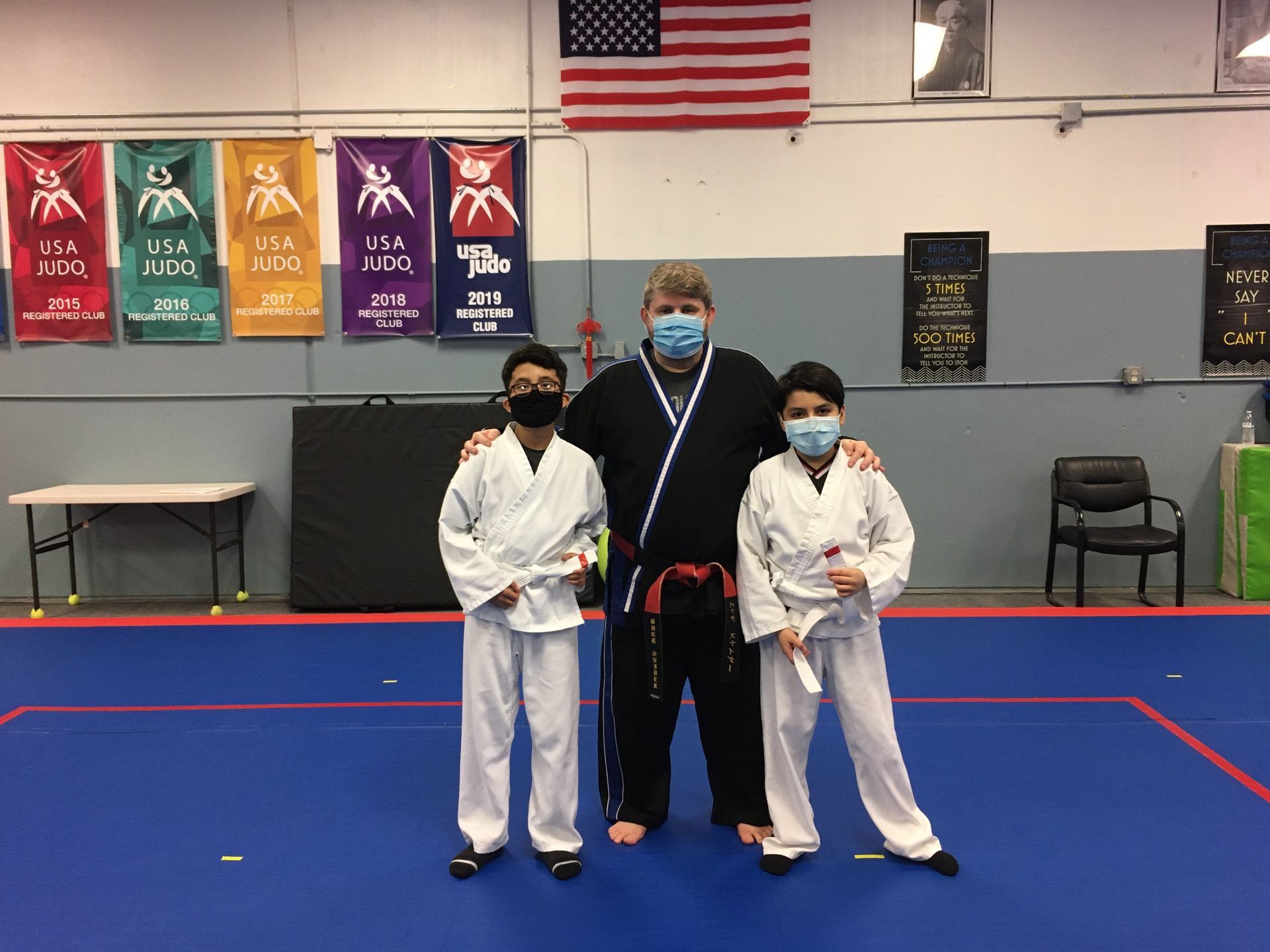
Beginners do best when instruction is consistent and attention is available. We have USA Judo-registered instruction and a deep bench of experienced black belts, which means you are not left alone to “figure it out.” You get corrections in the moment, and that accelerates learning.
We also have decades of experience serving Pasadena, and that shows up in the little details: how we warm up, how we teach safety, and how we coach people through nerves. You are not expected to perform. You are expected to learn.
If you are browsing Judo classes in Pasadena because you want a place that takes fundamentals seriously, your first class should feel like a guided introduction, not a trial by fire.
Common first-class questions we hear (and honest answers)
Will I be the only beginner?
Usually, no. Even if you are the newest person in the room, our culture is to help beginners. Everyone remembers day one.
Do I need to be strong?
Strength helps in any sport, but Judo rewards technique and timing. We will coach you to move efficiently first.
What if I get tired?
Take breaks when needed. We would rather you recover and keep learning than push past your limit and miss details.
Can I compete eventually?
Yes. We can guide you from fundamentals to competition preparation, including rules, strategy, and higher-intensity randori when you are ready.
Ready to Begin
If you want a first class that is organized, beginner-friendly, and rooted in real Judo fundamentals, we have built our training around exactly that. You will learn how to fall safely, how to move with balance, and how to practice with partners in a way that feels challenging but manageable.
When you are ready to experience Judo in a supportive environment with experienced instruction, Champion Martial Arts & Fitness in Pasadena is here to help you take that first step and keep building from there.
New to Judo? Start your journey by joining a Judo class at Champion Martial Arts & Fitness.