
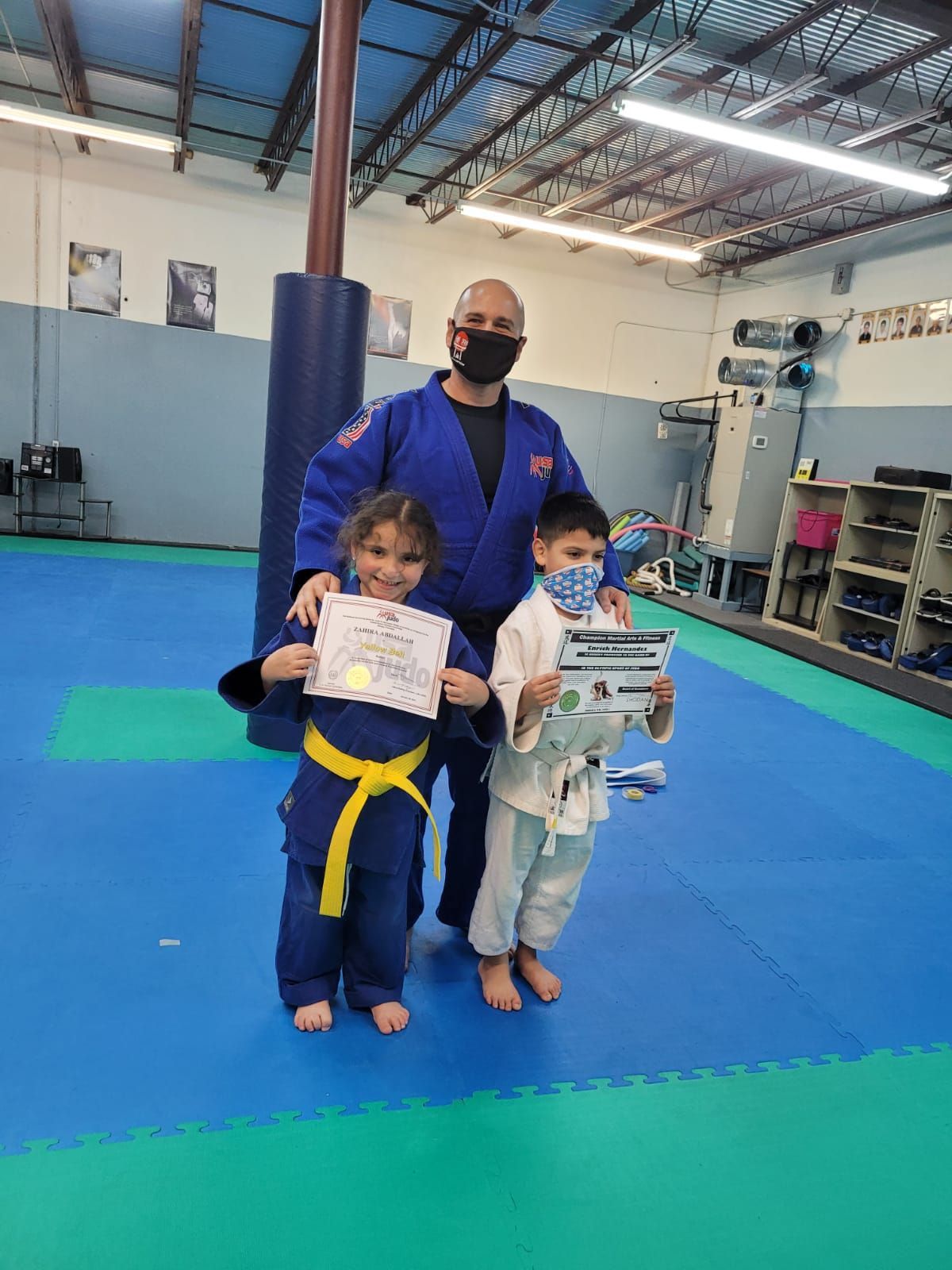
Judo turns after school energy into focus, confidence, and habits that show up in the classroom.
Parents in Pasadena are juggling a lot: school expectations, busy schedules, and the very real challenge of helping kids stay focused in a world full of distractions. We hear the same question all the time: how do you find an activity that builds discipline without burning your child out? That is where Judo stands out, because it teaches structure and self control in a way kids actually enjoy.
In our kids program, we see the same pattern again and again. When a student learns how to listen, follow steps, and keep trying through mistakes on the mat, those skills do not stay in the gym. Your child starts bringing that calmer mindset into homework, tests, group projects, and even friendships.
This article breaks down exactly how Judo supports academic performance and life skills, what you can expect from our approach, and how families in Pasadena can use training as a steady, positive anchor all year long.
Why Judo works so well for school age kids
Judo is a grappling based martial art built around balance, timing, leverage, and control. For kids, that means learning how to think while moving, and how to stay composed when something feels difficult. On the surface it looks like throws and pins, but underneath it is a system for practicing decision making under pressure.
School is pressure too, just in a different form. A tough math concept, a timed quiz, an unexpected change in routine, a social conflict at lunch. When kids train consistently, we can coach the same mental process across all of those situations: pause, breathe, pay attention, and take the next best step.
We also like Judo for kids because progress is measurable. You can feel a technique improve over time. You can see posture get stronger. You can watch a student move from frustration to problem solving. That steady progress helps a child believe, sometimes for the first time, that effort leads somewhere.
Focus and attention: the hidden academic advantage of training
In class, kids are asked to sit still, listen, and switch between tasks quickly. That is hard even for motivated students. In our Judo classes, your child practices attention in short, repeatable bursts: watch the demonstration, remember the steps, try it, adjust, try again. That loop is basically a focus workout.
Over time, many kids get better at filtering distractions. We cue simple habits like eyes on the instructor, hands still when listening, and immediate response to a start and stop signal. Those are small things, but they add up, especially for kids who struggle with impulse control.
Another piece that helps school performance is learning to be present. When a student is thinking about losing, looking silly, or getting it wrong, performance drops. We teach kids to bring attention back to what matters right now: stance, grip, balance, movement. That skill transfers well to reading comprehension, test taking, and public speaking.
Confidence that is earned, not inflated
Some activities try to build confidence by cheering no matter what. We take a different approach. In Judo, confidence grows because your child can do something today that felt impossible a month ago. That is real confidence, and it tends to stick.
We also build comfort with healthy struggle. A student will get pinned. A throw will not work. A partner will move differently than expected. Instead of spiraling, we coach students to reset quickly and keep learning. That emotional recovery is a big deal for school, where one bad grade can sometimes derail motivation for weeks.
As kids progress, we give responsibility in age appropriate ways. They learn to line up correctly, help with partner safety, and treat teammates with respect. When your child feels trusted, behavior improves, and that can show up in teacher feedback too.
Social skills and respect that carry into the hallway and the home
Judo is a partner based art, so your child cannot hide in the back of the room. Students train with different personalities, different sizes, and different skill levels. That creates built in practice for communication, boundaries, and cooperation.
We emphasize controlled contact, consent, and sportsmanship. Kids learn how to ask a partner if they are ready, how to match intensity, and how to win and lose without drama. It is not always perfect, because kids are kids, but the mat is a great place to practice those skills in a supervised environment.
At home, families often notice simple improvements: better listening, less arguing over instructions, and more willingness to try. It is not magic. It is repetition. When a child practices respect and self control several times a week, it starts to feel normal.
Fitness and brain health: why movement supports learning
Kids learn better when their bodies are cared for. Judo training develops full body coordination, strength, grip endurance, and mobility, but it also builds body awareness. When kids move well, they tend to feel more capable, and that can change how they show up at school.
We also see the benefits in sleep and stress. A good practice session can help kids settle, especially when they carry anxious energy. The goal is not to exhaust your child. The goal is to give them a productive outlet, then guide them toward calm focus.
Here are a few physical benefits we commonly see that connect to school readiness:
• Better posture and core control, which supports sitting comfortably and staying attentive
• Improved coordination and balance, which can boost confidence in PE and playground activities
• Stronger breathing habits during effort, which helps with test anxiety and frustration
• Healthier routines around hydration, stretching, and recovery when training becomes consistent
• Increased stamina for long school days, especially for kids who tire out mentally by mid afternoon
Discipline and routines: the part parents quietly love
A big reason parents look for Judo classes in Pasadena is the need for structure. Training days create a rhythm: pack your bag, show up on time, participate, bow in, follow the lesson, bow out, clean up, go home. For many kids, that predictable sequence is grounding.
We keep our expectations clear and consistent. Kids learn that we take safety seriously, we listen when someone is speaking, and we treat the mat like a place for focused work. That structure tends to build accountability without constant nagging.
When kids begin to understand that their choices affect their progress, their mindset shifts. Instead of asking, do I have to do this, they start thinking, what happens if I practice and improve. That is a school mindset too.
Handling pressure: how Judo teaches calm problem solving
One of the most practical lessons in Judo is staying calm when you feel stuck. If a partner controls your movement, panicking makes it worse. We teach kids to breathe, frame, move step by step, and look for a smart solution.
That exact mental skill helps with school pressure. If your child freezes during a test, the answer is not trying harder with panic. It is slowing down, taking a breath, and breaking the task into smaller pieces. We coach that process directly on the mat, then encourage families to use the same language at home during homework.
We also teach kids to separate identity from outcome. Losing a round does not mean you are bad. It means you learned something. Missing a question does not mean you are dumb. It means you need a better strategy. Those small mental reframes are powerful.
What your child learns in our kids program
Our classes are structured so beginners can jump in without feeling lost, but we still keep the training real and skill based. We focus on fundamentals first because they create long term success in Judo and in life.
In a typical progression, your child works on:
• Safe falling skills so confidence increases and fear decreases during movement
• Basic grips and posture, which teach body control and patience under pressure
• Simple throws and takedown entries that reward timing and balance over strength
• Pins and escapes that build persistence and calm decision making
• Partner drills that teach cooperation, respect, and controlled intensity
• Light, supervised live practice as students are ready, so skills become usable
We keep coaching positive, but we do not let kids drift. When a student is unfocused, we guide attention back. When effort is low, we encourage a reset. Over time, kids learn to self correct, and that is one of the best outcomes for school.
How we support different learning styles and personalities
Not every child learns the same way. Some kids are quiet and observant. Some need movement right away. Some want to lead. Some need reassurance. Our job is to coach the student in front of us, not an imaginary perfect student.
We use clear demonstrations, short coaching cues, and repetition. If your child struggles with coordination, we break techniques into smaller pieces and celebrate correct effort, not just perfect results. If your child is advanced and needs a challenge, we add layers: better timing, smarter setups, cleaner control.
We also keep an eye on confidence and emotional regulation. A child who is nervous might need a slower introduction to partner work. A child who gets overly competitive might need extra reminders about teamwork and safety. That is part of building skills that last beyond the mat.
A note for parents: when you will start seeing changes
Some benefits show up quickly, like improved mood after practice or better bedtime routine. Others take time, like stronger attention span or more resilience when school gets stressful. Consistency matters more than intensity.
If you want a simple timeline to keep expectations realistic, this is what we often see:
1. First few classes: your child learns the class flow, safety rules, and basic movements
2. First month: posture and listening improve, and confidence starts to build through repetition
3. Two to three months: techniques become smoother, frustration tolerance improves, and habits carry into homework
4. Ongoing training: resilience and self discipline become part of your child’s identity, not just something we coach
The biggest predictor of success is not talent. It is showing up, staying coachable, and giving steady effort. That is a great lesson for school and beyond.
Judo for the whole family, including adult training
Even though this article is focused on kids, many parents end up curious about training too. We offer options for adult Judo in Pasadena, and it can be a great way to understand what your child is learning while building your own fitness and stress management.
When families train in the same place, it also simplifies scheduling and creates shared language at home. You can talk about goals, consistency, and mindset without it feeling like a lecture. It becomes something you live together, even if you train on different days.
If your child is already training, you may be surprised how natural it feels to step onto the mat yourself. Adults do not need to be athletic to start. You just need a willingness to learn and a little patience.
Take the Next Step
Building school success is not only about grades. It is also about focus, resilience, confidence, and the ability to handle pressure without shutting down. Judo gives kids a practical way to practice those skills every week, with coaching that keeps standards high and the environment supportive.
If you want a program that helps your child grow on and off the mat, we would love to help you get started at Champion Martial Arts & Fitness. Our Judo classes are designed to meet kids where they are and steadily guide them toward stronger habits that show up in school, sports, and everyday life.
No experience is needed to begin. Join a Judo class at Champion Martial Arts & Fitness today.