
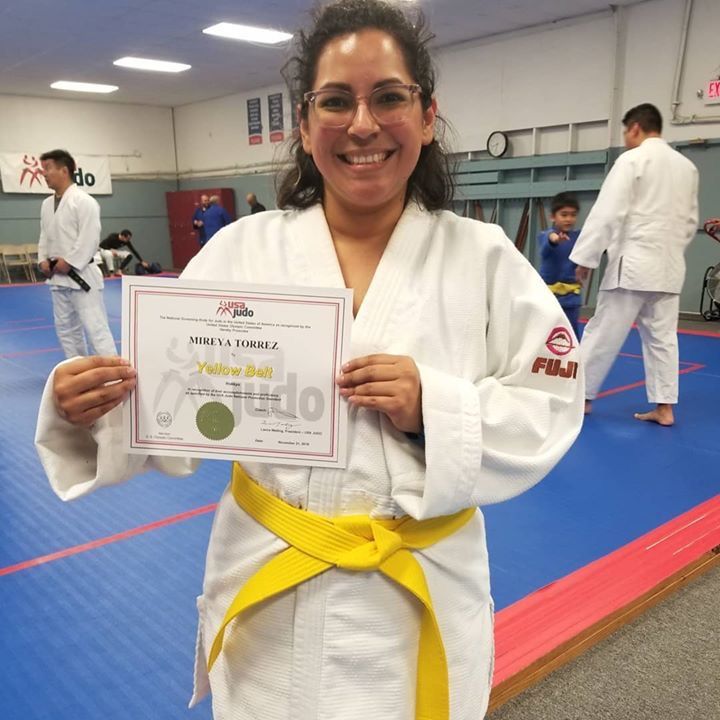
Judo turns fitness into a skill you can feel, measure, and actually look forward to practicing.
If you have ever tried to get “in shape” as an adult, you already know the trap: the workout starts strong, the calendar gets busy, and the routine fades. What changes the game is training that gives you a clear reason to show up, even on days when motivation is low. That is one of the biggest reasons we love Judo for adults in Pasadena.
Judo is fitness, yes, but it is also problem-solving with your body. You are learning balance, timing, and safe movement under pressure, and you feel progress in a way that is hard to miss. Our adult classes are built to meet you where you are, whether your “starting line” is former athlete, desk job stiffness, or simply wanting a healthier routine that sticks.
We also see a practical need in Pasadena: adults juggle work, commuting, and family obligations, and too much of daily life is seated and rushed. Judo fits that reality because it trains strength, posture, coordination, and confidence at the same time, in a structured hour that feels purposeful instead of repetitive.
Why Judo feels different from a typical workout
Most fitness plans focus on burning calories or lifting numbers. That can work, but it can also get stale. Judo stays engaging because every class has a skill focus, a partner-learning element, and a “why” behind the movement. You are not just moving to move; you are moving to improve a technique.
In practical terms, adult training blends conditioning with skill development. When you practice throws, movement patterns, grips, and transitions, you are training your legs, hips, core, upper back, and hands in a coordinated way. That full-body demand is why research often finds judo comparable to other sports for improving overall physical fitness, including strength, endurance, flexibility, balance, and coordination.
We also like that Judo naturally encourages efficiency. You learn how to use posture, timing, and leverage rather than relying on brute force. For adult beginners, that matters. It reduces the pressure to “keep up,” and it makes training more sustainable over months and years.
The full-body fitness benefits Pasadena adults actually notice
Strength that shows up in real life
Judo builds functional strength, not just isolated muscle. Even when we keep things beginner-friendly, you still use your legs to stabilize, your core to rotate and resist, and your upper body to control grips and posture. Many adults notice daily-life improvements first: carrying groceries feels easier, stairs feel less taxing, and the lower back feels more supported because the core is working the way it is supposed to.
Endurance without mindless cardio
A good class naturally reaches moderate-to-vigorous intensity, which aligns with the kind of activity level public health guidelines recommend. The difference is that the effort is broken into rounds of learning and practice, so it rarely feels like you are just grinding through time on a machine.
Balance, coordination, and agility
Adults often underestimate how trainable balance is. Judo repeatedly puts you in controlled situations where your feet, hips, and posture have to work together. That is coordination training in a practical form. Over time, you move with more control, and your body reacts faster to small slips, bumps, or uneven surfaces.
Mobility and flexibility that makes movement easier
We do not chase extreme flexibility for its own sake. Instead, we build usable range of motion in the hips, ankles, shoulders, and spine. That matters if you sit for work or if you feel stiff getting out of the car after a long day. You may be surprised how much better you move when you practice consistent, technique-based mobility.
Safety first: how we make Judo approachable for adult beginners
A fair question we hear is whether Judo is safe for adults, especially adults who have not trained before or who are coming back after years of little activity. Our answer is simple: Judo can be very safe when the program is taught progressively and when falling skills are treated as a primary foundation, not an afterthought.
In our beginner training, we spend serious time on ukemi, which is the art of falling safely. Learning how to fall changes everything. It reduces fear, improves confidence, and makes later techniques far safer because you understand how to protect your head, shoulders, and hips during controlled practice.
We also scale intensity. Adult training is not one speed. Some days are more technical, some days are more conditioning, and we adjust partner drills so you can learn without feeling thrown into the deep end. That is especially important for adults over 40 who want fitness gains without unnecessary impact.
Fall competence: a hidden superpower for adults and older adults
One of the most exciting trends in recent research is how adapted judo programs can improve what researchers call fall competence. That includes safe falling mechanics, confidence, and self-efficacy, and it can lower the risk of injury by making you better prepared for unexpected loss of balance.
Even if you do not think of yourself as “older,” this is relevant. Pasadena adults often spend time on slick parking lots, wet sidewalks after storms, and busy household environments. Knowing how to react when your balance gets compromised is a real-world skill. Judo gives you repetitions, and repetitions build calm under pressure.
We keep this training practical. You are not trying to be a stunt performer. You are learning how to tuck the chin, distribute impact, and recover to a stable position. Over time, you stand and move with a different kind of confidence, and it is quiet but powerful.
Mental benefits: why Judo helps your brain as much as your body
Fitness is not only physical. We see many adults show up for strength or weight loss goals and then stay because training improves stress management, focus, and mood. That is not an accident. Judo demands attention, self-control, and emotional regulation in a way that typical workouts often do not.
Studies have linked judo training with improvements in psychological resilience, self-control, emotional expression, and cognitive functions like executive control and memory. There is also evidence of positive brain-health markers such as increased BDNF associated with training, which helps explain why consistent practice can feel mentally “clearing.”
In class, you have to make decisions quickly, but without panic. You learn to stay relaxed while solving a physical puzzle. For many Pasadena adults with demanding schedules, that combination of intensity and structure becomes a healthy reset button.
What a typical adult class looks like (and why it works)
We keep classes organized and progressive so you always know what you are building toward. The exact content changes by week, but the structure stays familiar, which helps adults feel comfortable while still learning something new.
Here is what you can usually expect:
- Warm-up with mobility and movement patterns that prepare hips, shoulders, and spine for safe training
- Ukemi practice so falling stays sharp, calm, and automatic instead of stressful
- Technique instruction with clear “why” explanations, not just copying steps
- Partner drilling at a controlled pace, with safety cues and coaching built in
- Optional live training rounds when appropriate, scaled to experience level
- Cooldown and brief guidance on what to practice next time
That routine is one reason Judo is so effective for fitness. You get strength and cardio, but you also get skill repetition and measurable improvement. You do not leave wondering what the point was.
Results timeline: how quickly you can feel progress
Adults like honest timelines. You do not need months to notice change, but you do need consistency. Many people feel better within the first few weeks just from moving more, practicing posture, and training mobility with intention.
A practical expectation looks like this:
1. Weeks 1-2: better coordination, improved comfort on the mat, and early gains in mobility and confidence with falling basics
2. Weeks 3-6: noticeable improvements in conditioning, grip strength, core stability, and mental focus during training
3. After 6 weeks: stronger resilience and emotional regulation, plus technique familiarity that makes training feel smoother and more fun
4. Months 2-3: clearer changes in body composition, balance under fatigue, and “everyday strength” that carries into work and home
Training two times per week can be enough for meaningful progress and can help you meet recommended activity levels, especially when class intensity is moderate to vigorous. If you can do three, great, but we would rather you train twice consistently than chase an unrealistic schedule.
The community side: why adults stick with it
A surprising part of Judo is how social it is in a healthy way. You work with partners, you help each other learn, and the environment tends to reward respect and collaboration. That fits judo’s philosophy of mutual welfare and benefit, and it is not just tradition; it is how people improve safely.
For adults in Pasadena, this can be a big deal. Many people want connection without the awkwardness of forced social events. Training gives you natural interaction, shared goals, and accountability. You start recognizing familiar faces, and suddenly showing up is just what you do.
This also ties into our family-friendly environment. When kids train, adults often become curious, and vice versa. Our youth Judo in Pasadena creates a path for intergenerational fitness where families share discipline, movement skills, and a common language around effort and respect.
How we help you start without feeling overwhelmed
Starting something new as an adult can feel like a lot, even when you are excited. We keep the entry process simple and supportive, and we encourage you to focus on learning basics rather than trying to “win” anything.
A few starter tips that make the first month smoother:
- Wear comfortable training clothes at first, then transition to a gi when you are ready for gripping practice
- Prioritize ukemi, even if it feels repetitive, because it is the foundation for long-term safety
- Ask questions during drilling, because small details in posture and foot placement matter
- Keep your first goal simple, like attending two classes per week for six weeks
- Track a few easy markers at home, such as balance on one leg, push-ups, or how your posture feels after a long day
Judo rewards patience. When you learn the fundamentals correctly, your body adapts in a way that feels durable, not fragile.
Take the Next Step
If you want fitness that stays interesting, builds real athletic ability, and supports long-term confidence, our Judo program is a strong choice for Pasadena adults. We structure training to improve strength, endurance, balance, and safe movement without turning every class into a high-risk grind.
When you are ready, Champion Martial Arts & Fitness is here to guide you step by step, from beginner ukemi to the kind of skill-based conditioning that keeps you consistent. You can explore the class schedule on the website, choose a pace that fits your life, and start building a healthier routine that actually feels worth protecting.
Experience how Judo builds resilience and discipline by joining a class at Champion Martial Arts & Fitness.