Judo is a skill you build one class at a time, and the right roadmap makes every step feel clearer.
Starting Judo can feel simple on paper: show up, learn a throw, get in shape, repeat. In real life, your first weeks are a mix of excitement and questions. Where do your feet go, why does balance matter so much, and how do you fall without feeling like you got hit by a truck the next day?
In our Judo program here in Pasadena, we keep the path straightforward: clear fundamentals, safe practice, and steady progression. You do not need an athletic background to begin. You need consistency, a good learning environment, and the patience to let your skills stack up.
This guide walks you from white belt basics to black belt-level thinking, so you can understand what you are training, why it works, and how to make the most of your time on the mat.
What Judo really is and why it works
Judo is often described as the gentle way, but anyone who trains knows it is not soft. It is efficient. The art is built around kuzushi, or breaking balance, so you can redirect force instead of meeting it head-on. That is why Judo feels like a puzzle you solve with timing and position rather than raw strength.
A good class blends skill development and conditioning without turning into chaos. You practice foundational movements, partner drills, and controlled sparring so techniques become usable under pressure. Over time, your body learns how to stay stable, move with intent, and recover quickly when things do not go perfectly, because sometimes they do not.
If your goal is fitness, Judo delivers. If your goal is confidence, Judo delivers too, because you learn what it feels like to handle contact, stay calm, and keep working through discomfort in a safe setting.
Your first phase: White belt fundamentals that set everything up
White belt is where habits form. This is when we focus on safety, movement, and the basic mechanics that keep your progress smooth later. It is also when most people realize Judo is not about muscling a partner around. It is about posture, grips, and the small moments that create big openings.
Learning ukemi, the skill that makes training possible
Ukemi, or breakfalls, is one of the most important things you learn early. It protects you, it protects your training partners, and it lets you practice throws with confidence instead of fear. We coach breakfalls step by step, and we revisit them regularly, because good ukemi is not a one-week skill.
You will learn how to fall backward, sideways, and forward in a way that spreads impact and reduces risk. When ukemi clicks, training suddenly feels lighter. You stop bracing, you move more naturally, and you can actually focus on technique.
Grips, posture, and movement
New students often want to rush straight to big throws. We slow things down on purpose. Grip fighting, posture control, and footwork are the invisible foundations of Judo. When your grips are thoughtful and your stance stays strong, your throws become easier and safer for everyone involved.
We also work on movement patterns that help you keep balance while trying to take balance away from someone else. That sounds contradictory until you feel it. Then it makes sense in your bones.
The middle phase: Yellow to green belt, where skill becomes reliable
Once you have a base, training becomes more detailed. This is the phase where you start connecting techniques together and learning what to do when a plan stalls. You also start to feel the difference between knowing a throw and being able to apply it against real resistance.
Building a practical toolkit, not a random collection
We coach you to develop a small set of reliable techniques first, then expand. That approach keeps you from feeling scattered. In this phase, you will work on entries, off-balancing, and how to adjust when your partner stiff-arms, circles out, or changes level.
Expect more drilling with intention. Not mindless reps, but reps with feedback, where you learn what a good position feels like and what a weak position feels like.
Groundwork that matches your throws
Judo is not only standing techniques. Solid groundwork helps you control the moments after a takedown, whether you are holding position or working toward a submission in a way that matches the rules and training goals of the class. We build transitions so you are not just throwing and stopping. You learn to continue.
A simple example: if a throw does not land cleanly, you still need a plan. You learn to recover posture, establish control, and keep working instead of freezing.
How we structure a typical class in Pasadena
Most people want to know what actually happens when they walk in. A good Judo class has rhythm: preparation, learning, practice, and live rounds that match your level. We keep training challenging, but we also keep it organized so you can track your progress.
Here is what you can usually expect when you come in for Judo classes in Pasadena:
• Warm-ups that build Judo movement, including hip mobility, core stability, and controlled falling practice
• Technical instruction with a clear theme, like a specific throw entry or a grip sequence
• Partner drills that start cooperative and gradually add resistance as you improve
• Situational training, such as starting from a grip position or continuing after a throw attempt
• Randori, or controlled sparring, scaled to experience so you learn without feeling thrown into the deep end
That balance matters. If a class is only drilling, you may not learn timing. If a class is only sparring, you may not develop clean technique. We aim for both.
The advanced phase: Blue to brown belt, where you develop your game
As you move into advanced ranks, your training becomes less about collecting techniques and more about building a personal style. You start choosing what you want to be known for. Maybe you like foot sweeps and movement. Maybe you prefer strong grips and powerful hip throws. Either way, we help you sharpen what works for your body type and mindset.
Strategy, timing, and pressure
At higher levels, the details matter more than the technique names. You spend time on timing, setups, and pressure. You learn how to create reactions, not just chase opportunities. For example, you might threaten one direction to open another, or you might use grip changes to force a step that sets up a throw.
This is also when conditioning becomes more specific. You train so you can maintain posture, keep your grips, and stay mentally present when you are tired.
Training smarter as intensity increases
Higher intensity should not mean constant soreness or constant injury risk. We emphasize training smart: listening to your body, managing volume, and using technical rounds to keep progress steady. You can push hard without being reckless, and that mindset is what keeps people training long enough to reach black belt.
Black belt is not an ending, it is a responsibility
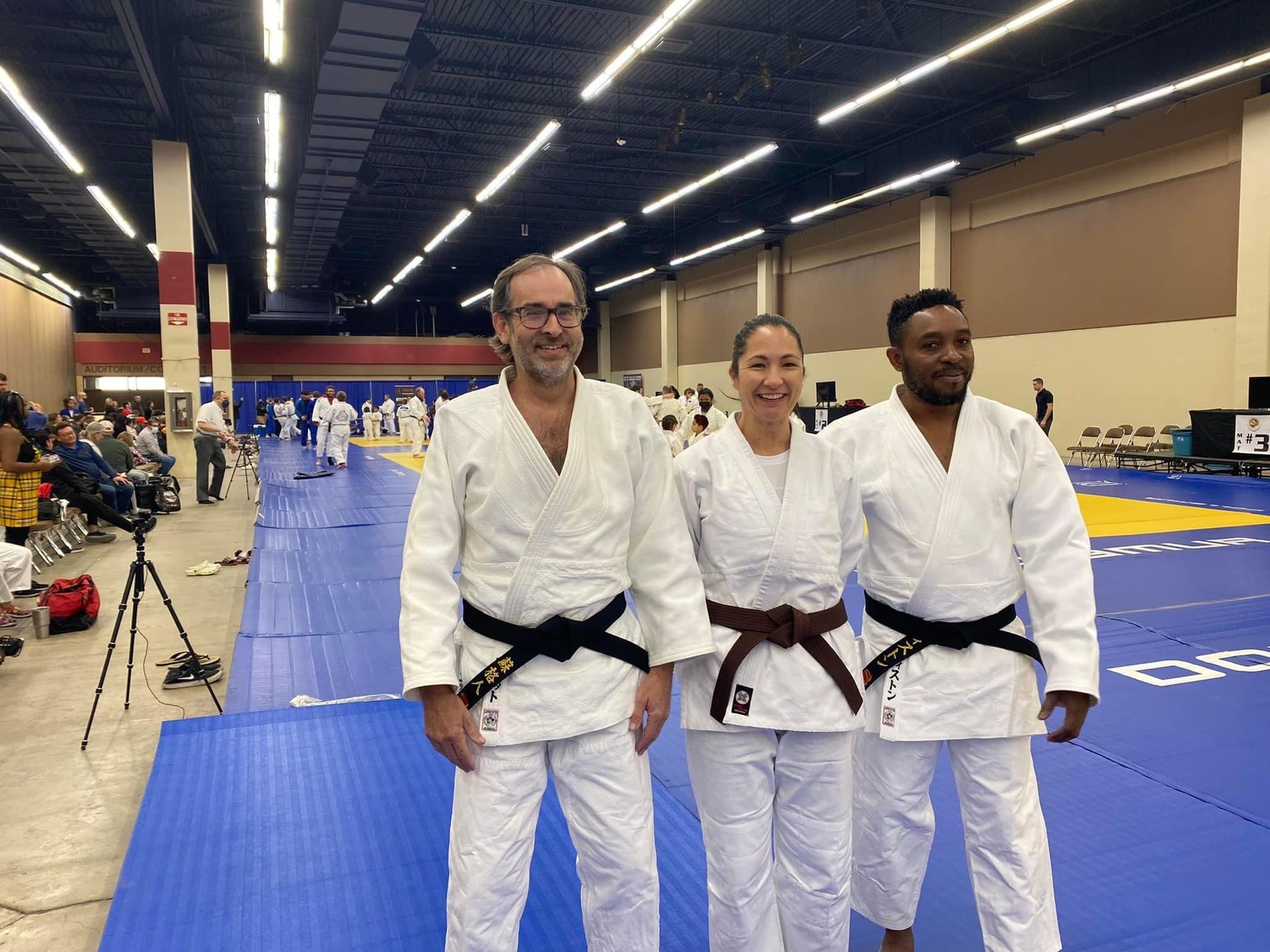
People picture black belt as the finish line. In reality, black belt means you can demonstrate fundamentals under pressure, adapt to different partners, and train with maturity. It is not just about winning rounds. It is about control, safety, and leadership.
Modern Judo at the elite level is more evidence-based than ever, grounded in biomechanics, physiology, performance analysis, and psychology. That research mindset filters down into how we think about training too. You do not need to be a competitor to benefit from structured progression and smart coaching.
When you aim for black belt, you are committing to years of practice, not months. That may sound intense, but it is also the appeal. You become the kind of person who follows through.
Common concerns we hear from new students
If you are interested in Judo in Pasadena but still hesitating, you are not alone. These are the questions we hear all the time, and they are worth answering directly.
Am I too old to start?
You can start at many ages. The key is training appropriately for your current fitness, mobility, and recovery. We adjust intensity and pace so you can learn safely and build momentum instead of burning out.
Do I have to be strong?
Strength helps, but technique matters more. Judo teaches you to use structure, leverage, and timing. Many students are surprised by how quickly they can move someone bigger once they learn proper off-balancing.
What if I feel awkward at first?
You probably will. Everyone does. The mat is a weird place at the beginning, and that is normal. The awkward phase passes faster when you train consistently, ask questions, and focus on small wins like better breakfalls and cleaner footwork.
A simple roadmap you can follow week by week
Progress gets easier when you know what to focus on right now instead of worrying about everything at once. Here is a practical roadmap we like for beginners who want steady improvement:
1. Train consistently for the first eight weeks, even if you feel clumsy, and prioritize learning ukemi
2. Choose one or two throws to study deeply, including grips, entry, and common counters
3. Add one reliable pin or control on the ground so you can stabilize after a takedown
4. Start randori with a learning goal, like maintaining posture or winning grips, not just trying to score
5. Track progress in small metrics, like fewer sloppy falls, better balance, and calmer breathing during rounds
If you do these five things, your Judo will feel more organized and more rewarding, and you will build the kind of foundation that supports long-term progress.
Take the Next Step
Progress in Judo is not mysterious, but it is earned, and the right training environment matters. At Champion Martial Arts & Fitness, we keep the path clear: fundamentals first, safety always, and coaching that helps you build real skill at a pace you can sustain.
If you are looking for Judo classes in Pasadena that balance technical depth with a welcoming training culture, we would love to help you get started and stay consistent. Your white belt is just the beginning, and the roadmap gets more interesting every month you stick with it.
See firsthand what makes training at Champion Martial Arts & Fitness special by joining a Brazilian Judo class today.