The fastest way to enjoy Judo as a beginner is to learn a handful of fundamentals that make every class safer, smoother, and more fun.
Starting Judo can feel like stepping into a new language: grips, balance, timing, and a lot of moving parts that happen quickly. We keep it simple at first, because progress comes faster when you build skills in the right order. Before you chase fancy throws, you need reliable basics that work even when you are tired, a little nervous, or still figuring out where your feet should go.
In our Judo classes in Pasadena, we focus on techniques that create confidence early: how to fall safely, how to off-balance someone without muscling it, and how to control position on the ground. When you can do those things, your training changes. You stop bracing for impact and start learning with intention.
Below are five essential techniques we teach early because they give you the most return for your time. You will use them constantly in class, and they carry over into nearly every other throw, pin, and transition you will learn next.
Why beginners should master fundamentals before anything flashy
Most beginners think Judo is mainly about throwing, and yes, throws are a big part of it. But throws only work consistently when the foundation is there: posture, movement, kuzushi (off-balancing), and safe landings. Without that, training turns into guessing, and guessing usually means tense shoulders and awkward falls.
We teach fundamentals first for a practical reason: you get better faster while staying safer. The first few weeks are when your body learns how to relax under pressure. Once that clicks, you can practice more repetitions with less fear, and repetition is where Judo starts to feel natural.
Another benefit is that basics translate across partners. In a real class, you train with different heights, builds, and experience levels. Solid fundamentals let you adapt. Instead of relying on strength, you learn leverage and timing, which is exactly what makes Judo such a smart art for long-term growth.
Technique 1: Ukemi (breakfalls) - the skill that protects your body
If you remember one thing from your first month, let it be this: falling well is a technique. Ukemi is how we train your body to land safely, reduce impact, and get comfortable being thrown. It sounds simple until you try it, and then you realize it is a real skill with real details.
What we want your ukemi to look like
We coach ukemi so you can land with control rather than panic. You learn to keep your chin tucked, avoid posting with an outstretched hand, and spread impact across the body instead of taking it on one joint. Over time, your nervous system calms down and you stop fighting the fall.
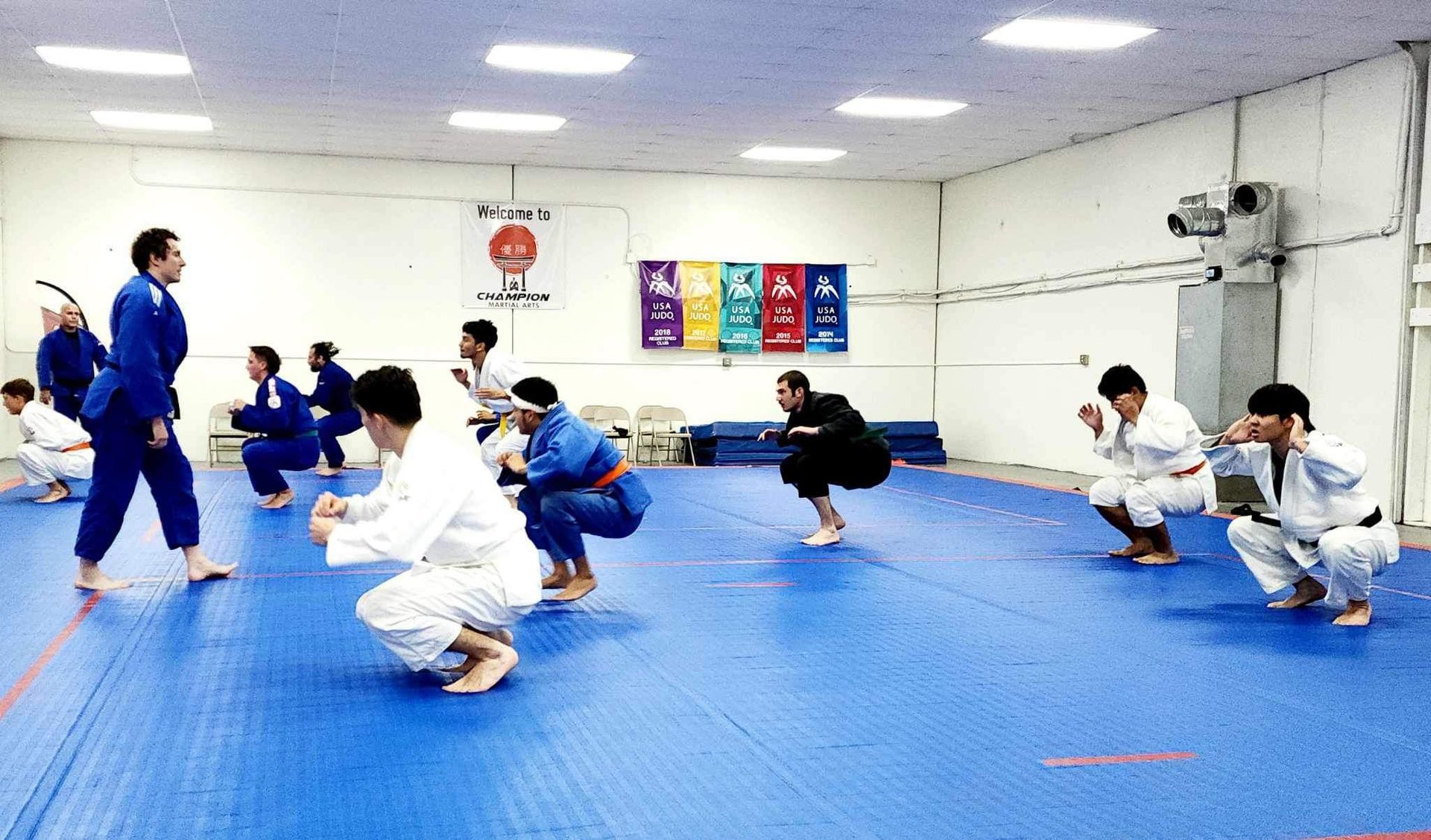
In beginner sessions, we typically build ukemi progressively: seated, crouched, then standing, and eventually with a partner guiding you. That steady ramp matters. When you trust your breakfalls, you can commit to throws and learn faster.
How ukemi supports everything else
Ukemi does not just prevent injuries. It also improves your throws because you are no longer trying to freeze midair. When both partners can fall correctly, we can train with better intensity and better technique, which is where real improvement happens.
Technique 2: O-soto-gari (major outer reap) - simple, powerful, and everywhere
O-soto-gari is one of the first throws many beginners learn because it is direct and built on big, understandable movements. You are taking your partner backward by breaking posture, stepping in, and reaping the leg. It shows up in countless combinations later, which is why we spend time making it clean.
The core idea: posture plus direction
A common beginner mistake is trying to kick the leg out without controlling the upper body. In Judo, the reap works because the upper body is already compromised. We teach you to connect your grips to your footwork so your partner is moving where you want before the reap happens.
Beginner cues we emphasize in class
We focus on balance and alignment first: stable stance, controlled step, and hips facing the right direction. Then we add timing. When you learn to feel the moment your partner is heavy on one leg, O-soto-gari becomes much easier and uses less effort.
Technique 3: O-goshi (major hip throw) - learning to load with your hips, not your back
Hip throws are a rite of passage in Judo. O-goshi is one of the most beginner-friendly ways to learn how to turn in, place your hips correctly, and lift with structure. It also teaches you what “close distance” really means, because the throw only works when your entry is tight and confident.
Why hip position matters more than strength
If your hips are too far away, you end up yanking with your arms or bending forward. That is exhausting and it does not scale well against a resisting partner. We want your hips to be the engine of the throw, with your grips guiding and your legs driving.
What you practice to make O-goshi dependable
We break the throw into pieces: entry, hip placement, and finish. You will drill turning in smoothly without twisting your knees, and you will learn how to keep your posture tall. Over time, O-goshi becomes a reliable throw and a gateway to other hip-based techniques.
Technique 4: O-uchi-gari (major inner reap) - an inside attack that pairs perfectly with forward pressure
O-uchi-gari is a classic beginner technique because it teaches you how to attack the inside line while controlling balance. It is also a great answer when someone is stepping back to avoid your other attacks. Instead of chasing, you learn to pull them into the space where they are weak.
The feeling you are looking for
O-uchi-gari is not about swinging your leg wildly. It is a controlled reap that happens when your partner’s weight shifts. We teach you to connect your hands, your step, and your reap so it feels like one continuous action.
How it combines with other beginner throws
One reason we like teaching O-uchi-gari early is that it plays well with O-soto-gari. When a partner resists one direction, the other direction opens. That is the beginning of combination thinking in Judo, and it is a big step for beginners.
Technique 5: Kesa-gatame (scarf hold) - groundwork control that builds calm under pressure
Judo is not only about throws. On the ground, pins teach control, patience, and body awareness. Kesa-gatame is one of the first pins we teach because it is practical and easy to understand: you secure the head and arm, settle your weight, and hold position with smart pressure.
What makes a pin effective
Beginners often try to squeeze harder instead of placing weight better. We teach you how to use your hips and ribs to create pressure while staying stable. That stability matters because if you are off-balance, you get rolled, and then you are working uphill.
How Kesa-gatame helps your overall Judo
Groundwork teaches you to stay composed when things get messy. You learn to breathe, adjust, and keep control without rushing. That calm carries into standing work too, especially in live practice where things rarely go exactly as planned.
How we teach these techniques safely and progressively
We are careful about the order and intensity of training because beginners need repetition, not chaos. You will drill techniques step by step, then add resistance gradually as your control improves. This approach helps you understand the “why” behind each movement instead of memorizing choreography.
Here is what a beginner-friendly progression typically looks like in our adult Judo in Pasadena training:
1. Learn movement and posture basics, then add ukemi so you can train confidently.
2. Drill the throw entry and finish separately, focusing on balance and alignment.
3. Put the technique together with a cooperative partner to build timing.
4. Add light resistance so you learn what breaks down and how to fix it.
5. Apply the technique in controlled rounds where safety and learning come first.
We also build habits that keep training enjoyable: tapping early on the ground, communicating with partners, and taking short resets when technique gets sloppy. Good training is not reckless. It is consistent, and consistency is what changes your skill level over months.
Common beginner mistakes and how we help you correct them
Everyone starts somewhere, and beginners tend to repeat a few patterns. The good news is that these are coachable, and once you fix them, your Judo improves quickly.
One common issue is leaning forward during throws. When your head dips, your balance goes with it. We cue posture constantly because good posture makes throws easier and keeps your joints safer. Another is trying to “win” drills by going too hard. Drills are for learning, and learning requires control. We would rather you go slower with great form than rush a technique that falls apart.
We also see beginners hold their breath, especially during groundwork. That tension makes everything harder. We remind you to breathe because relaxed movement is stronger movement in Judo. It is not magic, it is mechanics and body awareness, and it builds fast when you train regularly.
What you gain when these five techniques become automatic
When these skills start to click, class feels different. Ukemi removes fear. O-soto-gari and O-uchi-gari give you dependable attacks that teach timing. O-goshi shows you how to enter and use your hips correctly. Kesa-gatame gives you a control position you can actually hold without burning your arms out.
You also gain something less obvious: a sense of direction. Beginners often feel overwhelmed because everything seems important. Mastering these five techniques gives you a clear foundation, and from that foundation we can branch into combinations, counters, and more advanced groundwork with confidence.
Take the Next Step
If you want to learn Judo in a way that feels structured and doable, our beginner pathway is built around fundamentals like ukemi, core throws, and reliable pins. We keep the environment focused, respectful, and energetic, so you can train hard while still feeling taken care of.
When you are ready to get started with Judo classes in Pasadena, Champion Martial Arts & Fitness is here with a clear plan and coaching that meets you where you are. Show up, learn the basics the right way, and let the skills build week by week.
New to Brazilian Judo? Start your journey by joining a class at Champion Martial Arts & Fitness.