
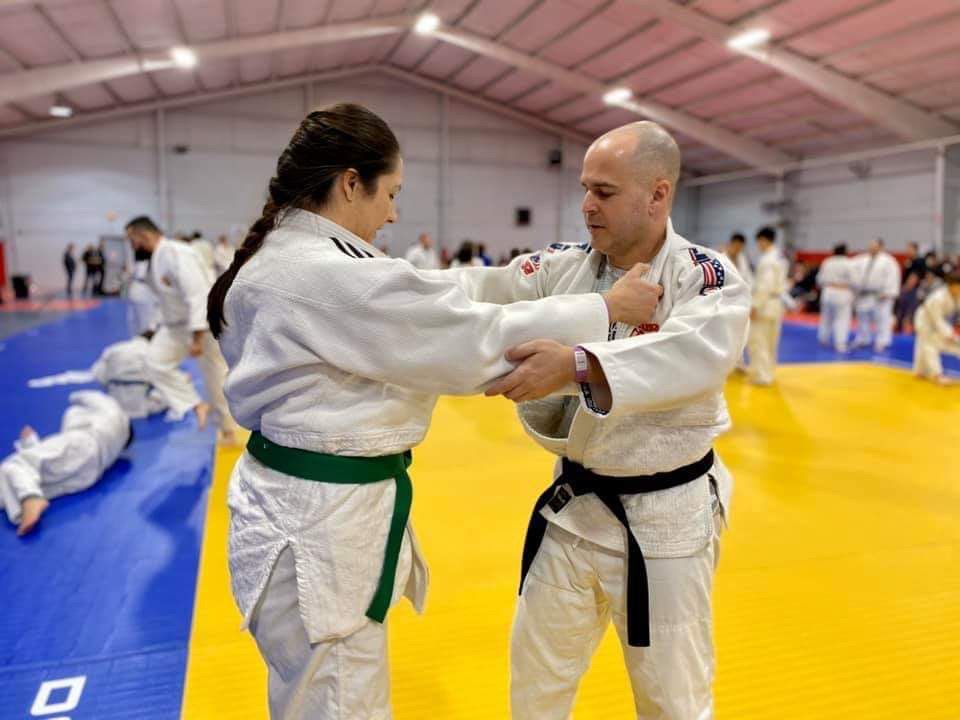
Judo is more than a workout, it is a repeatable way to train your attention when life gets loud.
In Pasadena, schedules fill up fast, traffic can feel like a full time job, and it is easy to bounce from one notification to the next without ever feeling truly locked in. That is one reason we teach Judo as a skill set you can use off the mat, not just during class. The throws and grappling are real, but so is the focus you build in the process.
Judo forces you to pay attention to what matters right now: posture, balance, timing, breathing, and decision making under pressure. Over time, that kind of practice can shape the way you handle work, school, family routines, and stress. If you are searching for Martial Arts in Pasadena because you want sharper focus and a better day to day baseline, this is a practical place to start.
Below are nine ways our Judo Classes in Pasadena support attention, resilience, and a calmer, more capable daily life, with a little science and a lot of real training experience behind it.
1. Mindful movement trains your attention like a muscle
Judo is constant feedback. If your stance is off by an inch, you feel it. If your hips drift, your balance tells on you immediately. That built in honesty makes you stay present, because drifting mentally usually shows up physically.
We coach students to notice small details: foot placement, grip pressure, posture, and the direction of force. When you practice that kind of body awareness a few times a week, you start catching distractions earlier in daily life too. You may notice you are multitasking when you should not be, or that you are rushing through a task without thinking. The goal is not perfection. It is noticing, correcting, and moving forward.
2. Strategic thinking carries over to work and school decisions
Judo looks fast, but it is also chess with grips. You learn to read patterns, set traps, and choose high percentage options instead of forcing whatever you feel like doing in the moment. That mindset is focus in action: you are not just busy, you are deliberate.
In class, we build this with simple progressions. You learn an entry, then a follow up, then what to do when it does not work. That process mirrors real life problem solving. At work, you plan, you execute, you adapt. At school, you study, you test, you adjust. Training helps you get comfortable with that loop without spiraling when the first plan fails.
3. Controlled breathing helps you stay calm in real Pasadena stress
Breathing is not a buzzword in Judo, it is a survival tool. When you tense up and hold your breath, you gas out fast. When you breathe well, you stay relaxed enough to feel timing and react intelligently.
We cue students to exhale through effort, reset between exchanges, and avoid the shallow, panicky breathing that spikes stress. That habit transfers. You can use it during a hard conversation, a deadline, or a long commute where you feel your shoulders creeping up toward your ears. Controlled breathing is one of the simplest focus tools you can practice anywhere, and Judo gives you a reason to practice it under real pressure.
4. Learning how to fall builds a calm relationship with setbacks
One of the first things we teach is how to fall safely. It sounds purely physical, but the mental effect is big. When you trust that you can hit the ground and recover, your fear response changes. You become less brittle.
That matters outside the gym. Daily life includes missed turns, bad meetings, embarrassing moments, and plans that blow up. Judo teaches you to accept impact, protect yourself, and get back to base. That is resilience, and it is hard to fake. The mat is a safe place to practice it until it becomes normal.
5. Discipline and routine make your week easier to manage
Focus is not just willpower. It is structure. A consistent training schedule becomes an anchor in a busy week, especially for Pasadena families juggling school, youth sports, and work shifts.
When you show up for class, you practice being the kind of person who follows through. Over time, that discipline spreads to other areas:
• You get better at starting tasks even when you do not feel like it
• You learn to break big goals into smaller steps you can actually execute
• You become more aware of sleep, hydration, and recovery because you feel the difference
• You make time decisions faster because you know what your priorities are
That is not glamorous, but it is the stuff that makes daily life feel less scattered.
6. Stress reduction comes from real effort and real reset
There is a specific kind of relief that comes from grappling training. You are fully engaged, fully present, and your brain does not have much room left for looping thoughts. After class, many students describe that calm, loose feeling that shows up when your body has worked hard and your mind has had a break.
From a mental health angle, exercise supports mood through neurochemicals like endorphins and dopamine, and Judo adds a social, skill based layer that keeps training interesting. That combination can be especially helpful in Pasadena, where many adults carry physical and mental load from industrial jobs, long hours, or just nonstop responsibilities. Training is not an escape from life, but it can be a reset that makes life easier to handle.
7. Judo supports brain health and cognitive function, and research is catching up
We love tradition, but we also pay attention to what research says. Studies on martial arts and Judo are increasingly pointing to measurable cognitive benefits. In one 12 week Judo program, participants showed increased peripheral BDNF, a protein associated with brain health and neuroplasticity, along with improvements in executive functions like selective attention and cognitive flexibility. Research also notes gains in balance and strength, especially in older adults, which matters because physical stability supports mental confidence too.
Other recent work highlights benefits across age groups, including neurodevelopmental improvements in young children and better working memory and brain region changes in long term older practitioners. You do not need to memorize the studies to benefit from them. The takeaway is simple: learning coordinated, demanding movement patterns while managing stress can support how your brain performs.
8. Emotional regulation improves because you practice staying composed
Judo puts you in emotionally charged moments in a controlled setting. You feel frustration when a technique does not land. You feel nerves before sparring. You feel the urge to muscle through something that needs timing instead. Those moments are not problems, they are practice reps for emotional control.
We coach students to pause, breathe, and choose the next best action. That is emotional regulation. With time, you may notice you react less intensely at home or at work. You may recover faster after a mistake. You may get better at listening instead of interrupting, or at responding instead of snapping. It is not magic. It is repetition.
9. Kids and seniors both gain focus, confidence, and real life readiness
Judo is unusually flexible as a lifelong practice. For kids, the benefits often show up as better concentration, improved discipline, stronger time management, and a healthier relationship with effort. When a child learns to follow instructions, wait for the right moment, and keep trying after a failed attempt, that can translate to schoolwork and routines at home.
For seniors, the combination of balance training, coordination, safe falling skills, and cognitive engagement is powerful. Research suggests Judo can improve executive function and physical measures that help prevent age related decline. Practically speaking, it also helps you feel capable in your body, and that confidence tends to spill into everyday choices, from walking more steadily to staying socially engaged.
What focus looks like inside a typical class
To make the benefits concrete, it helps to know what we are actually doing on the mat. While each class varies by level, our sessions generally follow a structure that builds attention step by step:
1. A short warm up that wakes up balance, hips, and core control
2. Technique instruction with clear cues you can apply immediately
3. Drilling for timing and consistency, not just memorizing moves
4. Positional practice or controlled sparring to test decision making under pressure
5. A quick cool down and reset so you leave feeling better than when you arrived
That flow matters because focus is trained in layers. First you learn the movement. Then you learn to apply it while tired. Then you learn to apply it while someone is resisting. That is where daily life benefits start to show up.
How often should you train to feel changes in daily life?
Most people notice small improvements quickly: better mood after class, less mental clutter, and a clearer sense of progress. For deeper changes like sharper concentration under pressure and better emotional control, consistency is the key. We typically recommend training two to three times per week if your schedule allows, because the brain and body adapt through repetition.
If you are brand new, do not overthink it. Start with a pace you can sustain, then build. In Pasadena, the best routine is the one you can keep through school seasons, work shifts, and real life curveballs.
Ready to Begin
If you want a sharper mind and a steadier daily rhythm, Judo is a surprisingly practical route, and you do not need to be an athlete to start. We keep training progressive, safe, and detailed, because attention grows when you feel confident enough to focus instead of worry.
Our Judo Classes in Pasadena are built for beginners through advanced students, and we keep the logistics straightforward too: evening classes on Monday, Wednesday, and Friday, a 99 per month intro option, and a free trial so you can see how the room feels in person. When you are ready, we would love to help you train with purpose at Champion Martial Arts & Fitness.
Strengthen both your body and mindset by joining a martial arts class at Champion Martial Arts & Fitness.