Judo is more than a martial art, it is a practical way to stay calm, think clearly, and solve problems with less friction.
In Pasadena, life moves fast, and the problems we face are not always dramatic, but they are constant. A tough day at work, a misunderstanding at home, a schedule that keeps shifting, a kid who feels overwhelmed, a project that feels bigger than your time and energy. We teach Judo on the mat, but what surprises many students is how often the same principles show up everywhere else.
Judo is built around the idea that you do not have to meet force with force. You can redirect, unbalance, and choose a smarter angle. In training, that might mean turning an opponent’s push into an opportunity. In daily life, it might mean turning stress, conflict, or confusion into a clear next step.
Our goal in this article is simple: show you how to take core Judo principles and use them as a real problem solving framework in Pasadena, whether you are a parent, a student, a working professional, or someone who just wants fewer mental knots in the day.
Why Judo works as a problem solving system
Judo has structure. It has rules, timing, and feedback. That is exactly why it transfers so well to everyday problem solving. When we practice, we learn to look for leverage, not brute strength. We learn to breathe under pressure. We learn to adjust when the situation changes, because it always changes.
There are a few pillars inside Judo that matter most for daily life. The big one is Seiryoku Zenyo, maximum efficiency with minimum effort. It is not about being lazy. It is about removing wasted motion, wasted energy, and wasted emotion so you can move forward with purpose.
At the same time, Judo is not just technical. It is ethical and social. It asks you to respect training partners, read the room, and keep control even when your heart rate climbs. Those habits become problem solving habits, almost without you noticing.
Seiryoku Zenyo: solve problems with maximum efficiency
When most people get stuck, it is rarely because the problem is impossible. It is because the approach is expensive: too many steps, too many assumptions, too much effort in the wrong place. Seiryoku Zenyo teaches you to ask: what is the simplest action that creates real change?
In Judo, that might mean using timing and angle instead of trying to overpower someone. In daily life, it might mean stopping the mental wrestling match and reorganizing the situation so the solution becomes obvious.
Here is how we coach students to apply Seiryoku Zenyo off the mat:
1. Define the real problem in one sentence, not the symptoms.
2. Identify the biggest point of leverage, the one action that shifts everything.
3. Remove extra steps, especially the steps that exist only because of habit.
4. Choose a calm pace you can repeat daily, because consistency beats intensity.
5. Review the result and adjust, like you would after a round of training.
This is not theory. It is the same loop we use in practice: attempt, observe, refine. Over time, you start solving problems faster, not because life gets easier, but because you waste less energy fighting the wrong battle.
Jita Kyoei: cooperation wins more often than conflict
Another core Judo idea is Jita Kyoei, mutual welfare and benefit. On the mat, you need training partners to improve. You cannot get better alone. That truth is even more obvious in daily life, especially in families and workplaces.
A lot of conflict comes from treating a situation like a contest. Someone has to win, someone has to lose. Jita Kyoei shifts the goal: we aim for outcomes where everyone can move forward with dignity. That does not mean you avoid hard conversations. It means you stop trying to crush the other side and start looking for a shared path.
In Pasadena, we see this show up most with busy households. Parents are juggling work, school, traffic, and everything that sneaks into the calendar. When the home feels tense, a Judo mindset helps you ask: what would a cooperative solution look like, even if we disagree?
A simple example is chores or screen time. You can try to control the situation with pure force, and sometimes that works for a day or two. Or you can build a structure that keeps everyone on the same side. Agreements, routines, and clear expectations are basically the off-mat version of rules and safety in training.
Mushin: stop overthinking and respond to what is real
Mushin is often translated as no mind. It does not mean you stop thinking. It means you stop getting trapped by your own thoughts, especially the ones driven by ego, fear, or old assumptions.
In Judo, Mushin shows up when you react naturally. You feel the movement, you take the opening, you stay present. In everyday problem solving, Mushin helps when your mind is spinning. You know the feeling: too many tabs open, too many what ifs, and suddenly you cannot choose anything.
We teach a practical way to build Mushin that you can use anywhere:
• Pause and breathe slowly for a few cycles before you respond.
• Name what you actually know, not what you suspect.
• Pick one next action you can complete in ten minutes or less.
• Let the next step teach you what to do after that.
This is especially helpful in high-stress communication. A tense email. A sudden schedule change. A disagreement that catches you off guard. Mushin helps you avoid the snap reaction that creates a second problem on top of the first.
Zanshin: awareness that prevents problems from growing
Zanshin is awareness, the kind that stays switched on. In Judo, it means you do not relax too early. You stay aware of spacing, balance, grips, and timing. Off the mat, Zanshin means you notice small signals before they become big problems.
Awareness is not paranoia. It is attention. It is noticing patterns. It is hearing the tone in a conversation. It is recognizing that your energy is dropping before you make a bad decision. Zanshin is one of the most useful habits for problem prevention, and prevention is the quiet form of problem solving that saves the most time.
For example, if you know you get short-tempered when you skip lunch, Zanshin is building a plan that prevents that crash. If you know your week explodes when you do not plan Sunday night, Zanshin is setting aside fifteen minutes to look at the schedule and prepare.
This is the kind of life skill that pairs naturally with Martial Arts in Pasadena, because training itself is a practice in paying attention. You learn quickly that focus has consequences, and so does distraction.
Adaptability: the Judo skill that fixes real life fast
A Judo match is a series of changing puzzles. The grip changes, the opponent moves, the angle shifts, and you adapt. That adaptability becomes a mental habit, and it is one of the best tools for modern life.
At work, adaptability looks like adjusting your plan when new information shows up. At home, it looks like staying flexible when a kid has a rough day or the schedule falls apart. In relationships, it looks like listening for what is underneath the words, not just reacting to the surface message.
We build adaptability through live practice and structured drills. You get used to the idea that there is no perfect plan, only a good plan that you can revise. When you carry that into everyday problem solving, you stop freezing when something changes. You just shift your stance and keep moving.
Youth Judo in Pasadena: problem solving skills kids can feel
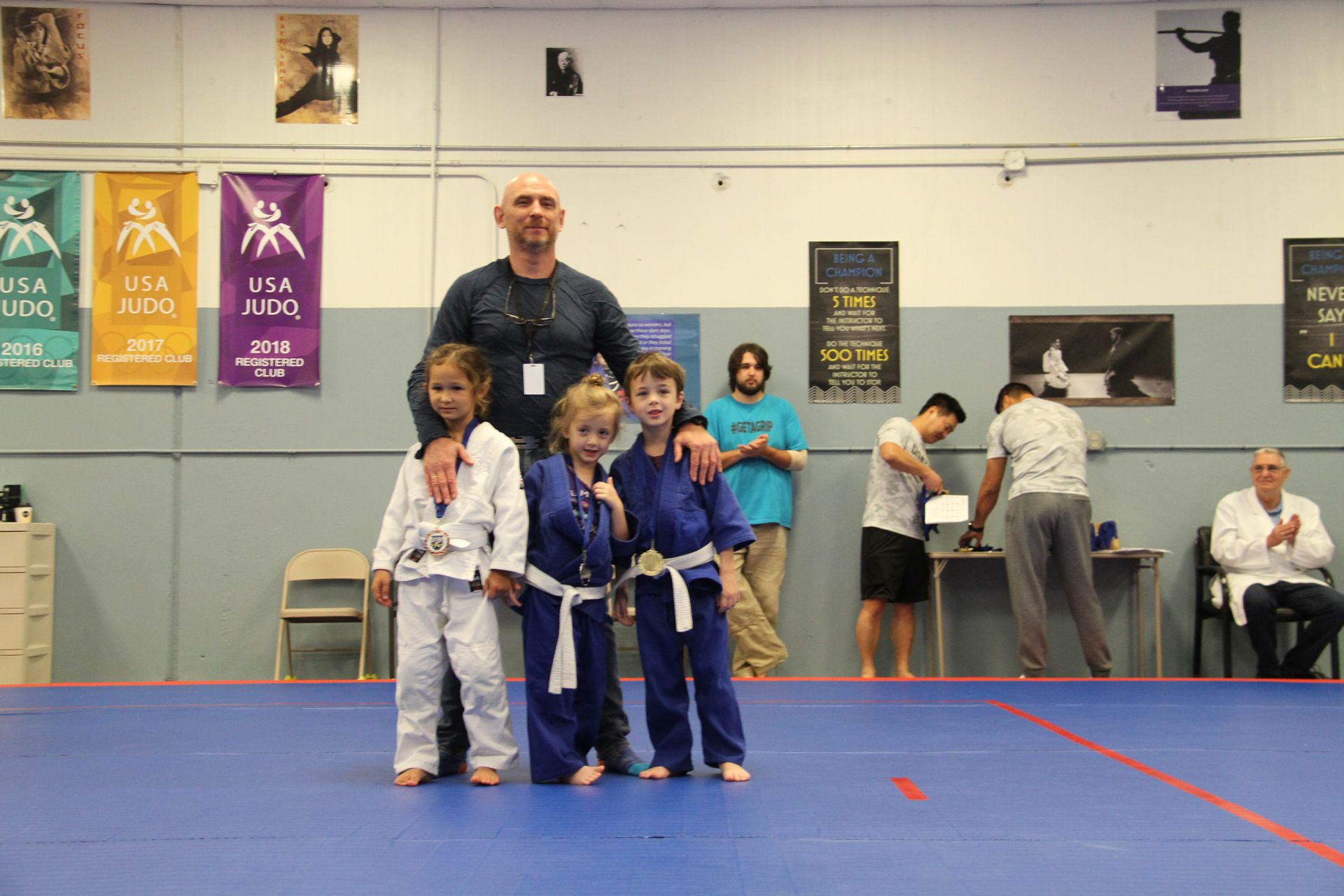
Kids do not need more pressure. Kids need tools. One of the reasons families look for youth Judo in Pasadena is that it teaches problem solving in a physical, understandable way. A child learns quickly that frustration does not help. Trying harder in the wrong direction does not help. Getting upset does not create leverage.
Judo gives children a safe place to experience challenge, fail a little, reset, and try again. That is a growth mindset, but it is not just a slogan. It is a lived experience. Kids learn to set goals, track progress, and stay disciplined even when something feels difficult.
We also see big benefits in focus and confidence. When a child learns to pay attention to timing and balance, attention becomes a skill, not just a demand from adults. Confidence grows too, because the child knows: I can figure things out. I can stay calm. I can improve.
And yes, there is also a practical side. Kids learn body control, spatial awareness, and safe falling skills, which parents tend to appreciate for obvious reasons.
A Pasadena approach: using Judo thinking in common local routines
Problem solving is not just what you do in emergencies. It is what you do in traffic, at the grocery store, in school drop-off lines, and during long work weeks. Pasadena has the same everyday stress points as any busy city, and Judo principles fit right into them.
Seiryoku Zenyo can be as simple as planning errands in a way that saves time and reduces friction. Zanshin can be noticing when your week is getting overloaded before it breaks. Mushin can be choosing not to escalate a tense moment when you are tired. Jita Kyoei can be approaching a disagreement like a shared puzzle instead of a battle.
If you want a practical mini-checklist, here is a simple way to use Judo thinking in the middle of a normal day:
• Look for leverage: what is the smallest action that improves the situation?
• Stay balanced: do not solve one problem by creating three more problems.
• Yield to win: redirect the energy instead of meeting it head-on.
• Keep awareness: notice early signals and address them while they are small.
• Reset quickly: a short pause can stop a long spiral.
These are not just martial arts ideas. This is a clean way to live with less wasted energy, which most of us could use.
Building the habit: practice makes problem solving automatic
A lot of advice sounds good until real stress shows up. That is why training matters. The value of Judo is that it is practice under pressure, safely and progressively. You train your body, but you also train your decision-making.
We structure classes so you can build skills step by step, regardless of your starting point. Beginners learn how to move, fall safely, and understand basic principles. More experienced students refine timing, setups, and transitions. Across all levels, the real goal is the same: develop calm control that you can apply anywhere.
If you want these principles to show up in your real life, do not just read them. Practice them. Start small. Pick one principle, apply it for a week, and notice what changes. That is the Judo way: repeat what works, adjust what does not, and keep going.
Take the Next Step
Building a problem solving mindset is not about becoming tougher in every moment. It is about becoming more effective, more aware, and less reactive when life gets messy. Judo gives you a clear framework for that, and the benefits tend to show up in work, school, and relationships in ways you can actually feel.
When you are ready to train in a supportive environment here in Pasadena, Champion Martial Arts & Fitness is where we put those principles into action through structured classes and coaching that meets you where you are. You bring the goals, we bring the process, and the progress follows.
Experience how martial arts builds discipline and focus by joining a class at Champion Martial Arts & Fitness.