
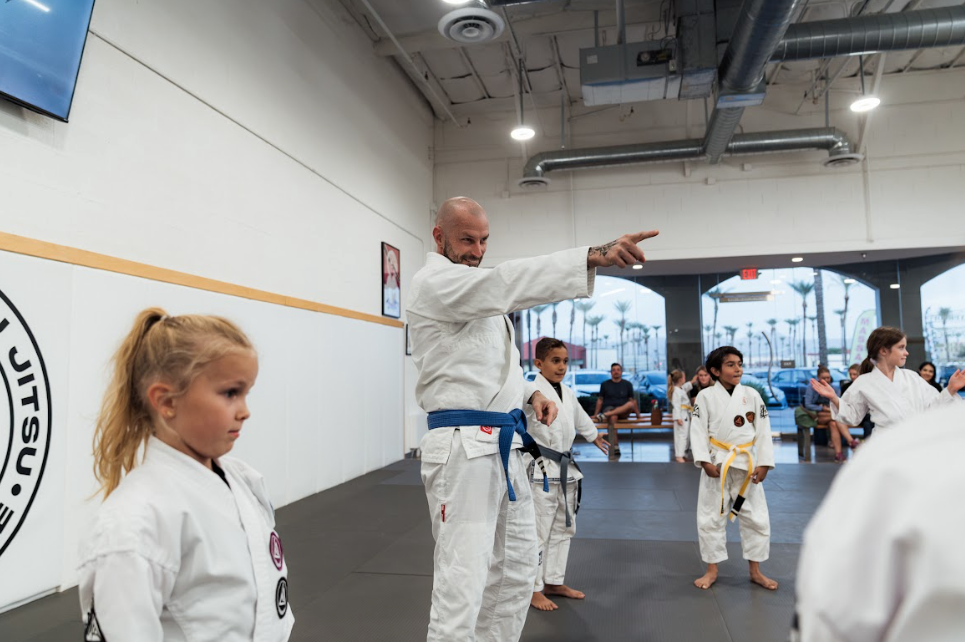
Youth Martial Arts gives active kids a place to move with purpose, not just burn steam.
If your child seems like a nonstop motion machine, you are not alone. We meet Pasadena families every week who are looking for something more useful than “just wear them out” after school. You want a structured activity that helps your child feel proud of progress, not simply exhausted.
That’s where Youth Martial Arts fits so well. When we coach kids, we are not aiming to create little fighters. We are teaching your child how to control movement, follow a plan, and stay focused in a room full of other energetic kids doing the same thing. Over time, that kind of structure starts showing up at home and at school in ways parents actually notice.
In this guide, we’ll break down why Martial Arts in Pasadena works especially well for high-energy kids, what skills get built beyond punches and kicks, and how to choose the right class track so your child can thrive instead of feeling overwhelmed.
Why high-energy kids often struggle with typical activities
A lot of youth activities are either “free play” or “sit still and listen.” Many high-energy kids need something in between: clear rules plus frequent movement. When that balance is missing, you may see common patterns like blurting out, quitting early, or bouncing between interests because nothing feels engaging enough.
Another challenge is that kids often don’t know what to do with big emotions. Excitement and frustration can look the same in a busy afternoon. If a child has no safe way to practice calming down, energy can spill into roughhousing, arguing, or difficulty transitioning from school mode to home mode.
Youth Martial Arts helps because it trains the same skills kids are still developing: stopping on command, waiting a turn, listening while moving, and resetting after a mistake. It gives your child a place where the expectation is “bring your energy, and we’ll teach you how to aim it.”
How Youth Martial Arts channels energy instead of just draining it
“Burning energy” sounds good, but it’s not the whole goal. If we only tire kids out, we miss the chance to teach control. Our classes are built around purposeful movement, which means your child is practicing how to use energy on demand: speed up, slow down, pause, and go again with intention.
Structure creates calm without killing enthusiasm
High-energy kids typically respond well to routines. When class has a familiar rhythm, your child doesn’t have to guess what comes next. That predictability reduces anxious energy and helps kids settle faster, even if they walked in buzzing from the day.
We keep instructions simple and consistent, then we reinforce them through drills. It’s not strict for the sake of being strict. It’s structure that makes the room feel safe and understandable.
Clear rules turn “wild” movement into “coached” movement
In Youth Martial Arts in Pasadena, we use rules that kids can follow in real time: hands to yourself unless the drill calls for contact, eyes on the coach, freeze when you hear the cue, and respect your partner’s space. Those rules matter because kids learn self-control by practicing it repeatedly, not by hearing about it once.
A good class also gives kids frequent chances to succeed. When your child can earn stripes, belts, or skill checks through effort, energy starts turning into motivation.
Goal-based progress keeps kids engaged longer
Many kids quit activities when progress feels fuzzy. Martial arts is different because goals are visible. Your child can feel the difference between “I kind of know it” and “I can do it cleanly.” That feedback loop helps high-energy kids stay with a program long enough to see real growth.
When your child has a clear next target, it’s easier to focus. Instead of bouncing from activity to activity, many kids begin building pride around sticking with something.
What kids learn beyond Kicks and Punches
Parents often come in thinking about fitness, self-defense, or confidence, and those benefits are real. But the deeper value of Youth Martial Arts is the set of life skills your child practices every class, sometimes without even realizing it.
Here’s what we see consistently when kids train in a structured youth program:
• Focus under distraction, because class requires listening while others are moving nearby
• Discipline through routines, like lining up, following directions, and completing the full warm-up
• Confidence from earned progress, not empty praise
• Respect for coaches and partners, practiced in small moments like taking turns and using self-control
• Resilience, because mistakes are normal and improvement comes from repeating the basics
These are not “nice ideas.” They are trained behaviors. And when a child practices them weekly, those habits often start transferring into homework time, chores, and social situations.
Why Youth Martial Arts in Pasadena works so well after school
Pasadena kids carry a lot of energy out of the school day. Even kids who behave perfectly in class can be bursting by the time the final bell rings. After-school time becomes the pressure release, and if there’s no plan, it can turn into chaos quickly.
Youth Martial Arts in Pasadena gives your family something many households need: a reliable routine. A scheduled class creates a clean transition from school to home. Your child gets to move, sweat, and refocus, and you get a calmer evening rhythm more often than not.
We also find that evening routines improve when kids train consistently. When your child knows class is coming, choices at home change a little. It becomes easier to get shoes on, finish a snack, and head out the door. That may sound small, but families feel the difference.
Choosing the right program track for your child’s personality
Not every kid learns the same way. Some kids love fast-paced drills. Some need extra time to warm up socially. Some are cautious about contact. We organize training in age-appropriate groups because maturity and attention span change a lot as kids grow.
Younger kids: movement, coordination, and listening skills
For little kids, we focus on basics that matter for channeling energy: balance, coordination, safe falling skills, and following simple directions quickly. We use short drills and games with purpose so kids stay engaged while learning how to control their bodies.
School-age kids: skill development and confidence through repetition
As kids get older, we can build longer combinations and more detailed technique. This age group often benefits the most from belt goals. The structure helps kids stay invested, and the process teaches patience, because progress is earned step by step.
Teens: responsibility, resilience, and a strong training mindset
Teens usually want training that feels real. We keep it challenging and respectful. Many teens find martial arts becomes their outlet for stress, a way to build confidence without having to talk about confidence, and a place where effort is recognized.
BJJ, Judo, Taekwondo, and MMA style training: what’s the difference for kids?
Parents ask this a lot, and it’s a smart question. Different styles can fit different temperaments, and we like helping you choose what matches your child.
Brazilian Jiu-Jitsu (BJJ) focuses on grappling, control, and problem-solving. Many high-energy kids like it because it feels like a physical chess match, and it teaches calm decision-making under pressure.
Judo emphasizes throws, balance, and safe falling. It’s a great option for building body awareness and coordination, and it gives kids a clear sense of how to move with control.
Taekwondo tends to include a lot of kicking, stance work, and patterns that sharpen coordination. Kids who like clear forms and visible technique milestones often enjoy it.
MMA style training can blend skills in a structured way, but for kids it should still be age-appropriate, safety-first, and focused on fundamentals. The best youth classes keep contact controlled and emphasize learning, not winning.
No matter the style, the real question is this: does class teach your child to control energy, follow direction, and keep improving? That’s where the benefits stack up.
What a great Youth Martial Arts class looks like day to day
A parent-friendly youth program has a few non-negotiables: safety, structure, and a plan. When you watch class, you should be able to tell that we’re not improvising. We’re coaching.
A typical class flow includes warm-ups that build athletic basics, technique drills that teach fundamentals, and partner work that reinforces control and respect. We also include age-appropriate games at times, not as filler, but as a way to keep kids moving while practicing skills like timing, balance, and listening.
To keep it practical, here are signs your child is in the right environment:
1. Your child is moving most of class, not standing around confused
2. Instructions are clear and repeated consistently, so kids know what to do
3. Coaches correct behavior calmly and quickly, without shaming
4. Partners are supervised closely, especially during contact drills
5. Progress is measured, so your child can feel improvement week to week
That combination is what turns “high energy” into “high potential.”
Safety, confidence, and shy beginners
A common concern is whether Youth Martial Arts is safe for kids who have never tried it, or for kids who are shy. Our answer is that beginner-friendly training is supposed to be welcoming, not intimidating.
We introduce skills gradually and keep contact controlled and appropriate for age and experience. Confidence builds when a child feels safe enough to try, mess up, and try again. For shy kids, the structure helps because they don’t have to guess how to act. They just follow the routine, and comfort grows naturally.
If your child is nervous at first, that’s fine. Many kids are. The key is consistent attendance so the unfamiliar becomes familiar. Once your child knows the rhythm of class, you’ll often see a different posture walking out than walking in.
FAQs Pasadena parents ask about Youth Martial Arts
What age should my child start?
Many kids can start when they can follow simple directions and participate safely in a group setting. Age-based classes help match expectations to development.
Is martial arts good for kids with lots of energy?
Yes, because it gives energy a job. Youth Martial Arts teaches kids to start, stop, and reset on command, which is exactly what high-energy kids need.
Will this help with focus and behavior at school?
It can. We train focus as a skill through listening, repetition, and consistent rules. The more regularly your child trains, the more likely you are to notice carryover.
How often should my child train to see results?
Consistency matters more than intensity. Many families start with a couple classes per week and adjust based on schedules and goals.
Can martial arts help with bullying or confidence?
We focus on confidence, awareness, and self-control. When kids carry themselves with more calm confidence, social situations often get easier to navigate.
Take the Next Step
The big win with Youth Martial Arts is not just that kids get tired. It’s that kids learn how to manage momentum, follow structure, and feel proud of progress. When your child has a place to move with purpose, energy stops feeling like a problem and starts looking like potential.
If you want a program in Pasadena that treats kid development seriously while still keeping class fun and active, we built our youth training at Champion Martial Arts & Fitness around exactly that balance. You can learn more about our approach and see where Youth Martial Arts in Pasadena fits your family’s weekly routine.
Give your child a positive outlet for growth and learning through martial arts classes at Champion Martial Arts & Fitness.